Three businesses – and the question of the right balance

 AI
AII am standing here feeling pulled in three directions. Three businesses, all of them demanding my attention, and I can feel the strain building. When I concentrate on Haushelden , FlightRoom falls behind, and the other way round. Which was not the plan at all.
That I need help is clear enough — but where do I go from here? Haushelden, FlightRoom and my coaching business are three competing priorities that all need solving at the same time. Haushelden is already quite far along, while FlightRoom demands a completely different kind of attention and expertise.
To make sense of that, let us look at the projects one at a time. Haushelden is a to-do app that is already well advanced. Its purpose is to organise households more efficiently and make daily life easier. The software has potential, but it needs continuous development and contact with institutions to widen its reach.
That takes more than technical knowledge — it takes the communication skills to approach potential partners. The app has to work flawlessly and offer users genuine value. Finding that balance is one of the challenges Haushelden brings with it.

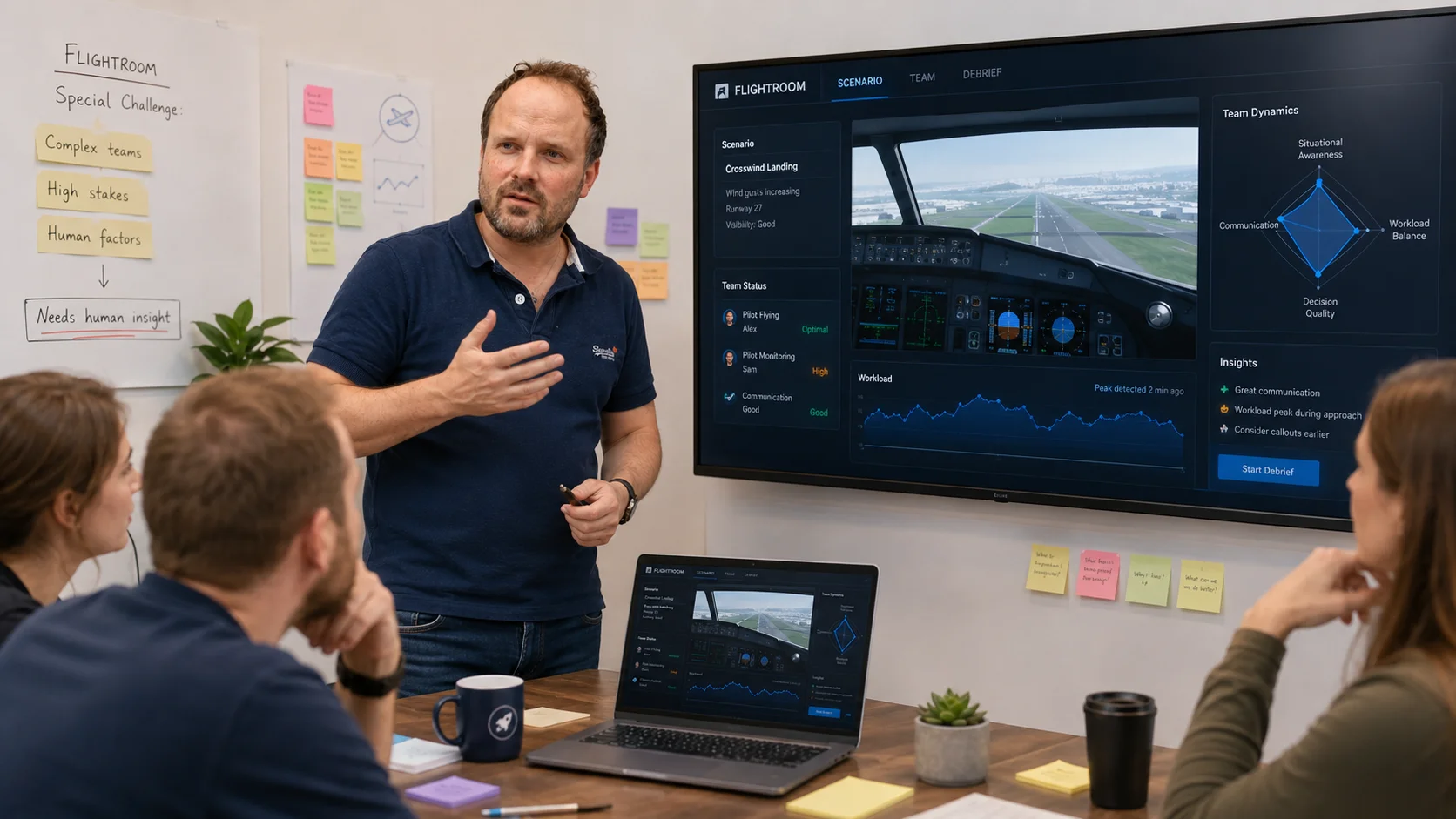
FlightRoom is a different building site altogether, and far more than a piece of software. It is a tool aimed at team dynamics and better collaboration. The focus here is less on technical specifications and more on the interactions and processes inside teams.
The challenge with FlightRoom is that it has to work in an agile context, which places particular demands on management and development. Agile methods like Scrum require a flexible, iterative approach — and that means not just technical knowledge but a deep understanding of how teams work.
My coaching business is the third cornerstone of the current situation. It is about passing on my experience and knowledge to other founders. That is not only a source of income but also a way of staying in touch with the community and collecting fresh feedback.
This business suffers from my attention being split three ways as well. There are times when I wonder whether I am putting in enough hours to genuinely make a difference. Balancing the coaching against the other projects is a constant challenge.
With all that in mind, I have accepted that I cannot manage all of it on my own. The operational support from AI helps, but it is not enough. AI can automate certain tasks and speed up processes, but it does not replace the human expertise FlightRoom in particular needs.
A coach with the right experience could make the decisive difference here. Someone who understands FlightRoom's particular demands and can nurture team dynamics. Finding that person is currently one of my highest priorities.
In an agile context like FlightRoom's, the challenges are bigger still. The focus at the moment is on the base suite, while the more complex Scrum requirements are still ahead. And that eats resources on a serious scale.
Operational support from an AI is a start, but not the answer to everything. AI can take on plenty of tasks, but it cannot replace human creativity or an understanding of how teams work. That is where a coach comes in, closing the gap between the technology and the human interaction.
Haushelden by contrast is already well developed. It is essentially a to-do app that will keep evolving over time. That still takes resources, though. My wife could help here, even though she has never run a company.
Bringing her in could be genuinely valuable, since she would bring new perspectives and approaches. A fresh view of the business processes could help rethink existing structures and make them more efficient. That option is currently under consideration.
In the meantime the question stands: how do I split my time efficiently across these projects? The answer seems to lie in finding outside help. Operational support from an AI is a start, but not the answer to everything.
Finding outside help is not a simple process. It takes time and careful thought to find the right person with the right skills and the right motivation. That search is a project in itself, to be handled alongside everything already running.
Three businesses, three directions — my challenge is to find the right way through.
FlightRoom has to be built in a very particular way. It cannot simply be handed off to an AI, because it is not only about features but about team dynamics. Recognising that is essential to moving the project forward.
Team dynamics is a complex field that takes deep understanding and a fine touch. It is not just about technical solutions but about the human element, which can decide whether a project succeeds or fails.
In an agile context like FlightRoom's, the challenges are bigger still. The focus at the moment is on the base suite, while the more complex Scrum requirements are still ahead. And that eats resources on a serious scale.
Scarce resources force difficult decisions about where limited time and energy should go. Prioritising is what keeps efficiency high while making sure the important parts of a project do not get neglected.

The operational support from AI helps, but it is not enough. It will probably come down to finding someone who genuinely knows this field. A coach who understands FlightRoom's particular demands would be ideal.
A coach could help not only with the technical side but with building a strategy that supports FlightRoom's long-term goals. That strategic support is what keeps the project durable and successful.
The coaching business also suffers from my attention being split three ways. If I could put more energy into it, new opportunities would open up. Without clear priorities it stays difficult.
A big part of the coaching business is the contact with my clients. Those relationships decide whether the business works, and they need constant care and attention. Without that personal touch, clients can stop feeling valued.
- Haushelden: well advanced, needs support from partners.
- FlightRoom: the complexity calls for specialist expertise.
- Coaching business: room to grow, but attention divided.
What is still open? The question of how to reorder my priorities without one area suffering for it. I am curious what bringing in more experts will do to the way things develop.
Working with an experienced coach could make the decisive difference and help me find the balance between the projects. It could raise efficiency while making sure all three are heading in the right direction.
Which leaves one question: if you have something spanning several areas yourself — how do you divide your attention? Where does your focus go when everything seems important at once?
It stays open, and I will keep working on it. The answers may matter not only to me but to others in a similar position. Finding the right balance is a constant challenge that calls for creative, flexible solutions.
GamificationRetentionStartupTeam leadershipProduct development