Week 11: Launching the Interactive 3D World for Kids – Tackling Emergency Detection Challenges

In the eleventh week since development began, our interactive world for kids has taken shape. The Mumelos, our virtual creatures, can now chat with children and even respond with voice. The virtual garden where kids can roam is now a reality. This week was marked by challenges, not least due to personal upheavals that slowed the pace.
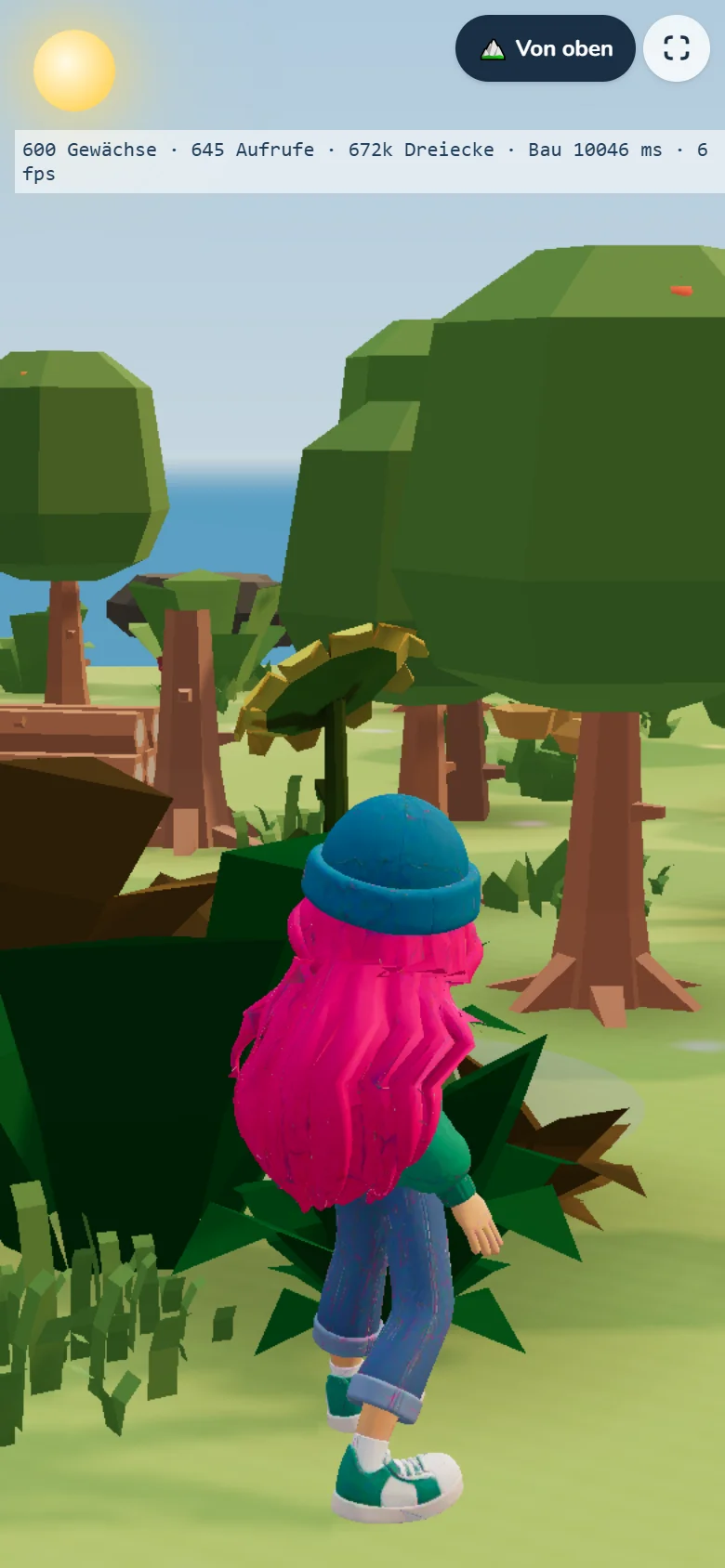
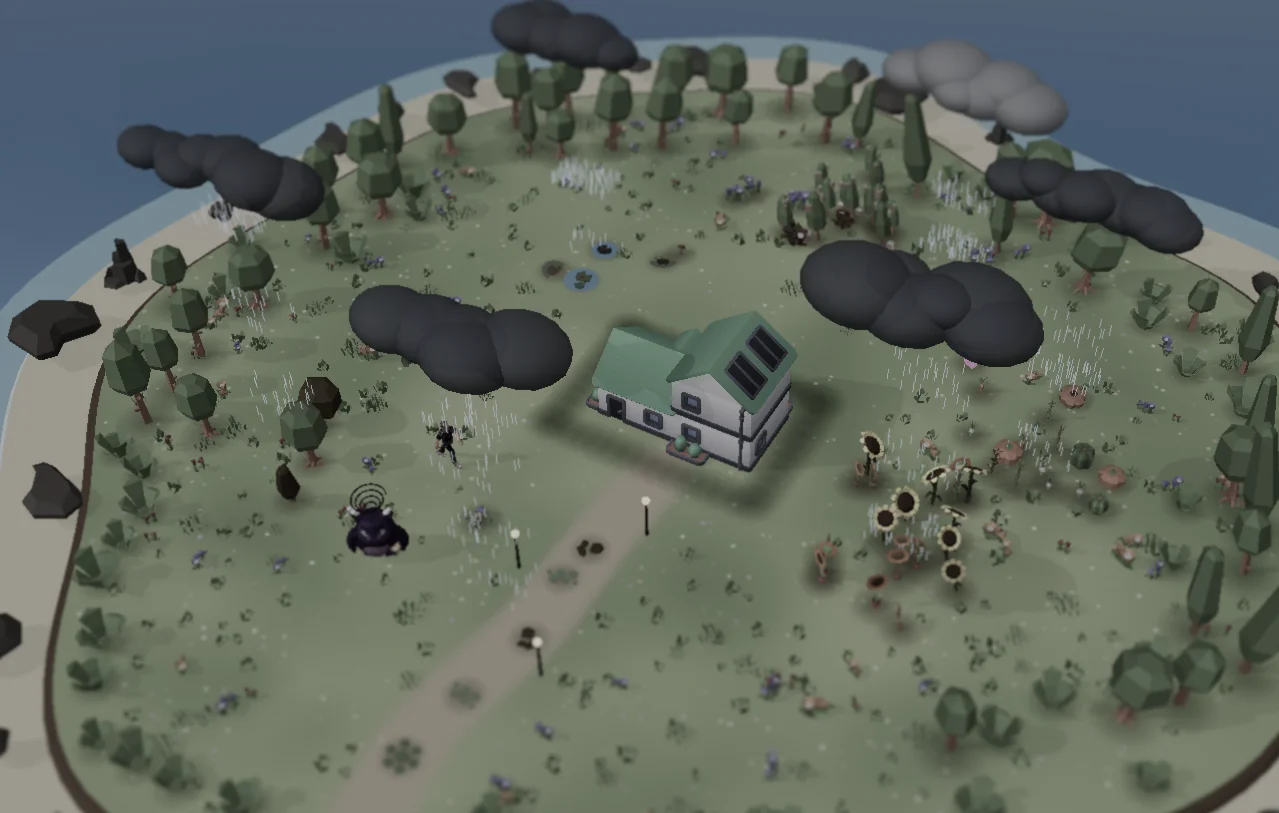
Our latest project, a walkable 3D world, shows how far we've come in a short time. Within a month, we've managed to create an environment where families can build a virtual house together. Everyone contributes by completing tasks, while the Mumelos motivate and support the children.
The decision to develop a 3D world was not only a technical challenge but also a strategic one. We wanted to create an experience that goes beyond merely using an app and becomes an integral part of family life. The idea that children and parents can work on a project together was appealing to us from the start. It's a concept designed to strengthen both engagement and user bonding.
An interactive experience offers the opportunity to spark children's imagination while fostering important social skills. By collaborating with the Mumelos, children learn the importance of teamwork and how to achieve goals together. This type of playful learning is not only effective but also fun—a crucial factor in keeping children engaged long-term.
Parallel to development, we focused intensely on the competition submission, which was completed last week. A demo account that resets weekly allows for risk-free experimentation. But not everything went smoothly: the tax office requested documents, which meant additional work. These obligations led to some things being left unfinished and now needing to be caught up on.
The competition submission was an important milestone for us. It forced us to view our product in a new light and present it in a way that can stand in a competitive environment. The process of creating videos, screenshots, and texts to describe our app was educational. It helped us view our project from the perspective of end users and ensure it meets their expectations and needs.
Yet, while we focused on the competition, other things took a back seat. The daily life of a startup is often filled with unexpected challenges, and bureaucracy is one of them. The tax office's request came at an inconvenient time and required our full attention. In such moments, it's important to set priorities and remain flexible to maintain the balance between product development and administrative tasks.
A highlight is the new narrator voice in the game. The audio play, announced weeks ago, is finally voiced and expanded with new chapters. Bug fixes were also in full swing. A small but significant addition is the integration of a breathing exercise in the combat system. Children should learn to calm down when they're angry—a vital skill that's useful in real life too.
The idea to integrate breathing exercises into the game came when we considered how to help children manage their emotions. Anger is a feeling everyone knows, and children, in particular, often struggle to control it. By offering a playful way to calm down, we aim to provide children with tools they can use outside the game as well.
This integration shows the importance of thinking outside the box and finding innovative solutions that are beneficial both in the game and in real life. The breathing exercises are an example of how playful learning can help impart practical skills that remain relevant throughout life.
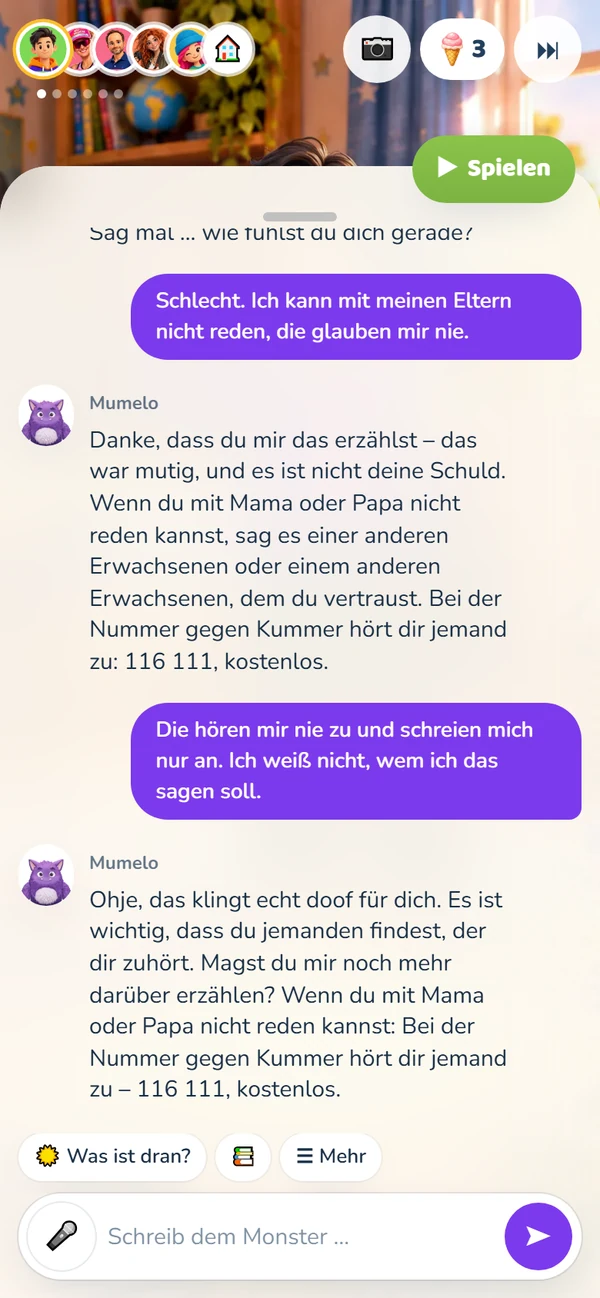
But where there's light, there's also shadow. Our AI has not been reliable enough to detect emergencies. Previously, it recognized only 1 out of 13 cases; now it's 39 out of 39. However, the app currently can't do more than refer to an emergency number. This limitation shows how necessary further improvements are.
Improving emergency detection was important to me, even though it will likely only make a difference in a few weeks or months when we have more users. It's crucial that the app can identify emotional emergencies and respond appropriately. The fact that we improved the detection rate to 39 out of 39 cases is a great success, but it also shows that we have a long way to go to make the app truly safe.
A problem many developers of AI systems know is the balance between sensitivity and specificity. A system that's too sensitive can trigger false alarms, while one that's too specific might miss important signals. Our goal is to create reliable detection that's both precise and sensitive enough to meet the needs of our young users.
If you have something you want people to take up: Do your users drop off at the same point, or is it something entirely different with me?
This week brought a lot of productivity despite the challenges. The competition is over, and the deadline forced us to slow down. But this deceleration created space for creativity. I'm curious to see how things develop and what new challenges await us.
The deceleration that followed the competition was unexpected but welcome. It gave us the opportunity to step back and reflect on the progress made so far. Often, the pressure of a deadline forces us to work more focused, but it can also stifle creativity. Without this pressure, we were able to develop new ideas and rethink existing concepts.
One of the questions that keeps coming up is how we can maintain the balance between innovation and stability. In a fast-paced environment, it's tempting to constantly develop new features, but it's equally important to stabilize and optimize the existing system. This balance is crucial for the long-term success of our project.
Our next step is clear: improving emergency detection remains a priority. We're experimenting with different approaches to make the AI even more precise. At the same time, we must maintain the balance between new features and platform stability—a task that continually challenges us.
Improving emergency detection requires a deep understanding of children's emotional needs. We're working on developing algorithms that not only respond to keywords but also capture the context and mood of the conversation. This is a complex process that requires a lot of research and testing, but it's a crucial step to ensure the safety of our users.
At the same time, we're working on platform stability. New features are exciting, but they must not come at the expense of reliability. Our users rely on the app to function smoothly, and it's our responsibility to ensure that. We test intensively to ensure that all new features are seamlessly integrated and don't cause unexpected problems.
What remains is the question of how the new features will impact user engagement. Will children and parents utilize the full potential of the 3D world? And how will the integration of breathing exercises in the combat system be received? The answers to these questions will become clear in the coming weeks.
User engagement is a central theme in the development of our app. We know that a successful product must not only be functional but also emotionally appealing. The 3D world and breathing exercises are our answer to the question of how we can enhance the user experience and strengthen user engagement. But whether these measures will have the desired effect remains to be seen.
An important factor in user engagement is user feedback. We plan to increasingly engage in dialogue with our users in the coming weeks to gather their opinions and suggestions. Only in this way can we ensure that we're on the right track and meeting the needs of our target audience.
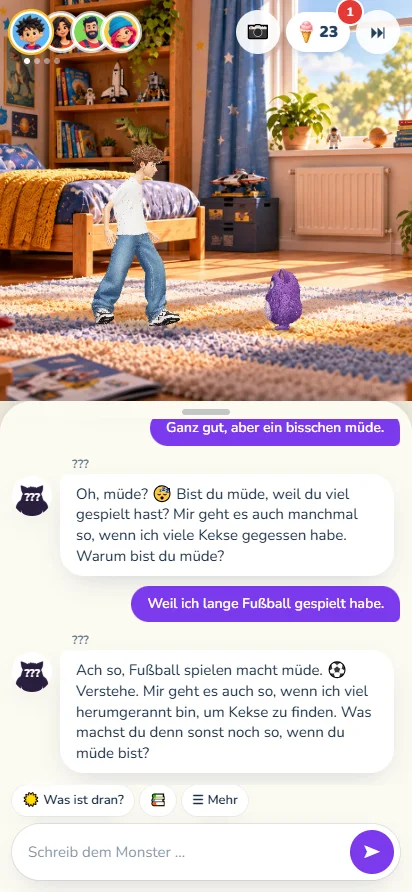
The challenge is to preserve the essence of what makes our app special while exploring new paths. Innovation is important, but it must not come at the expense of usability. We need to ensure that every new feature enhances the app's value and isn't introduced just for novelty's sake.
It's a constant process of learning and adapting. We observe how user interaction evolves and adjust our strategy accordingly. This agility is crucial in a rapidly changing digital world. And that's exactly what makes our work so exciting and challenging.
This is where the appeal of our work lies: continuous development and the opportunity to learn from everything. What if the breathing exercises find application not only in the game but also in real life? If you face similar challenges, how do you handle them? Share your thoughts—we're eager to hear your perspectives.
The idea that our work could have an impact on people's lives beyond the app is motivating. If children learn to manage their emotions through our games, then we've achieved our goal. But the path there is full of challenges, and we know we still have a lot to learn.
We hope you'll join us on this journey and share your experiences with us. Every piece of feedback is valuable and helps us improve our product. Together, we can achieve something great.