Team & agility
How the quest framework makes your user stories faster – without pressure or overtime

Sound familiar? You cut your user stories carefully, you think they are realistic and doable. And still they drag on. In the daily you keep hearing "something else suddenly came up" — or "we underestimated the effort".
That frustrates you, because what you actually want is to concentrate on the result, not on excuses or unplanned delays.
As someone who was a developer himself and later a Product Owner (PO), I can tell you: this problem is widespread. And I wish someone had shown me back then how to tackle it differently.
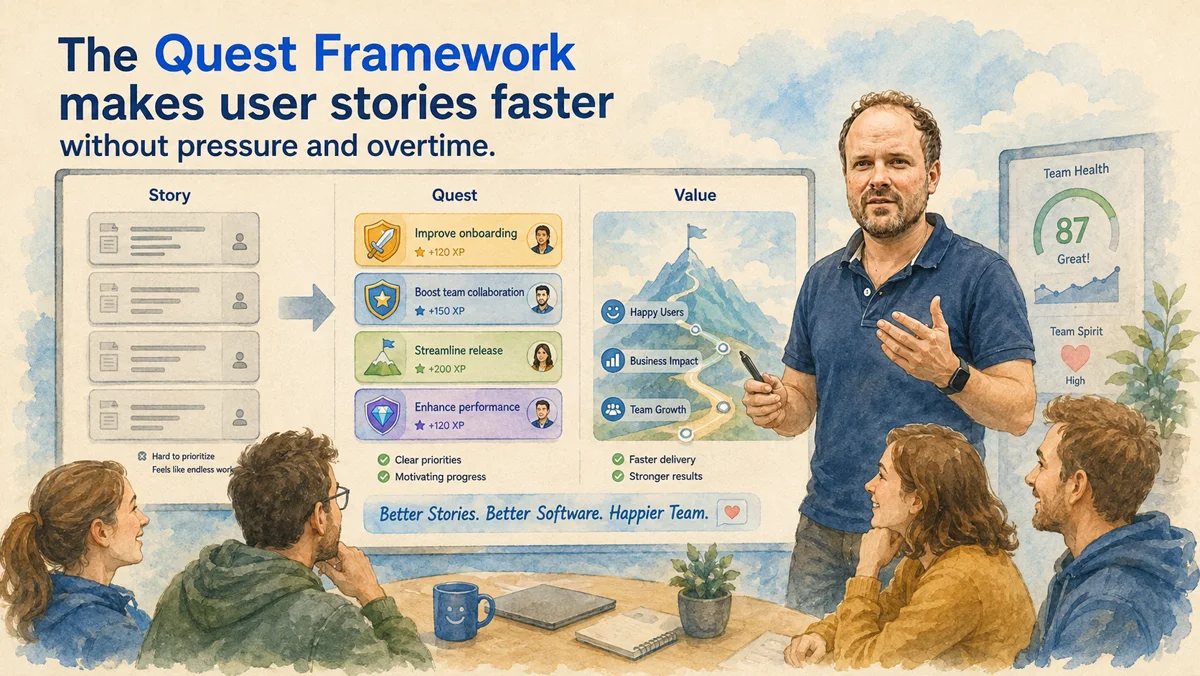
Why user stories take longer even though you planned well
 AI
AIThe core problem is that pure time or effort estimates are often not enough. Stories are shaped not only by technical challenges but by the motivation and inner attitude of the developers.
When teams are not truly engaged, or when the story stays unclear, "scope creep" often creeps in — additional requirements or tasks appearing out of nowhere.
The developers then often complain that the story was not clear enough — and probably rightly so. The trouble is only that this did not come up in the refinement meeting but during implementation.
In most cases the cause is a motivation problem.
That creates frustration on both sides: developers feel under pressure, often with overtime, and product owners hear the same explanations in the daily instead of seeing clear progress.
In the end what suffers most is the focus on the outcome — the actual value for the customer.
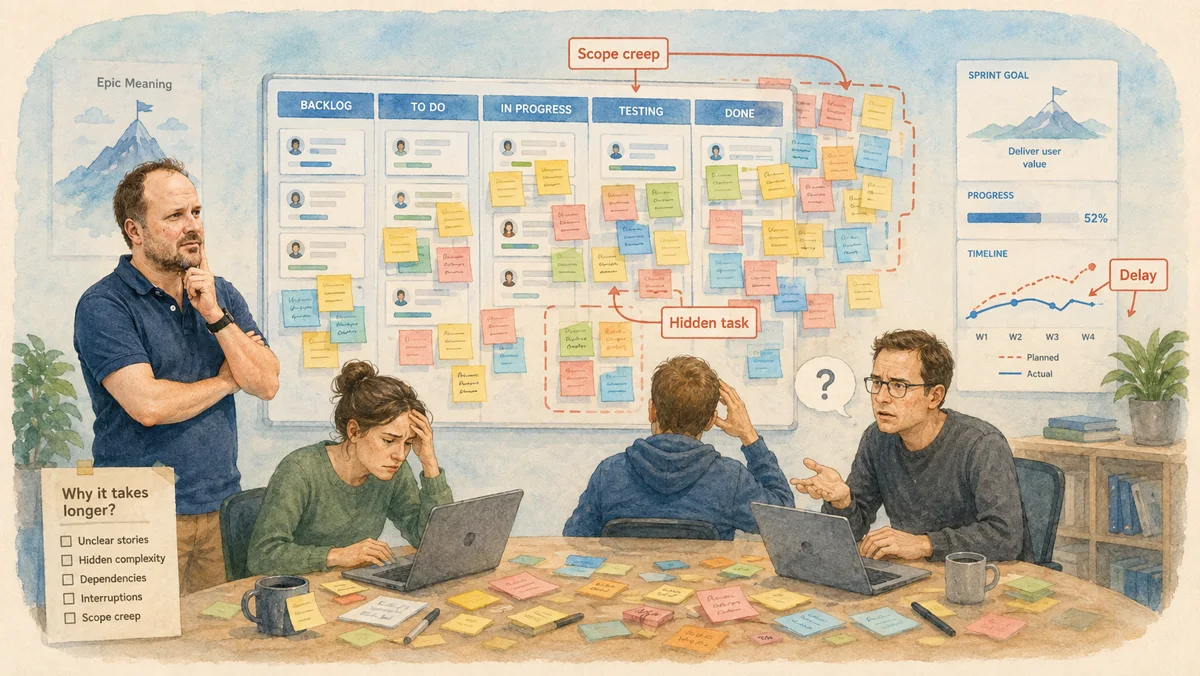
Finishing user stories ahead of schedule — no overtime, clear focus on value
 AI
AIWhat if your stories were finished not only on time but even early? If the team were motivated not just to tear off the minimum but to keep the customer benefit deliberately in view? And all of that with no extra work and no stress?
Imagine being able to talk about progress in the daily — instead of about obstacles and unplanned changes. Your team would concentrate on creating value instead of on time wasted or dragged out.
My method: awaken motivation and make user stories more efficient
 AI
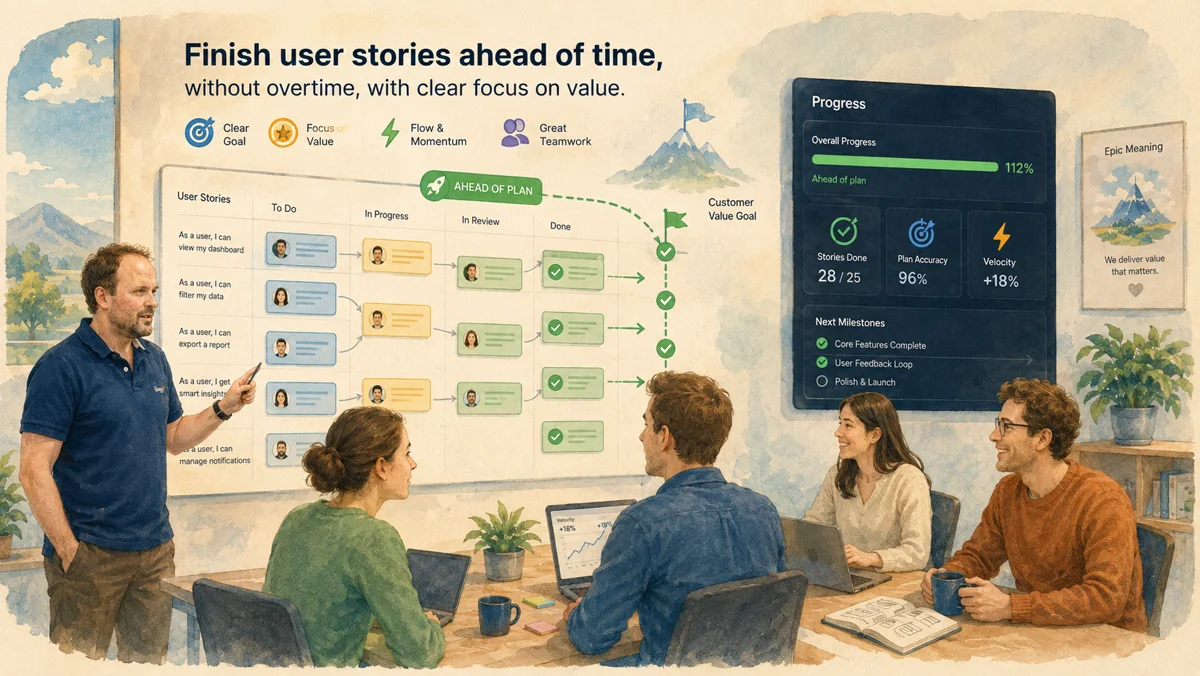
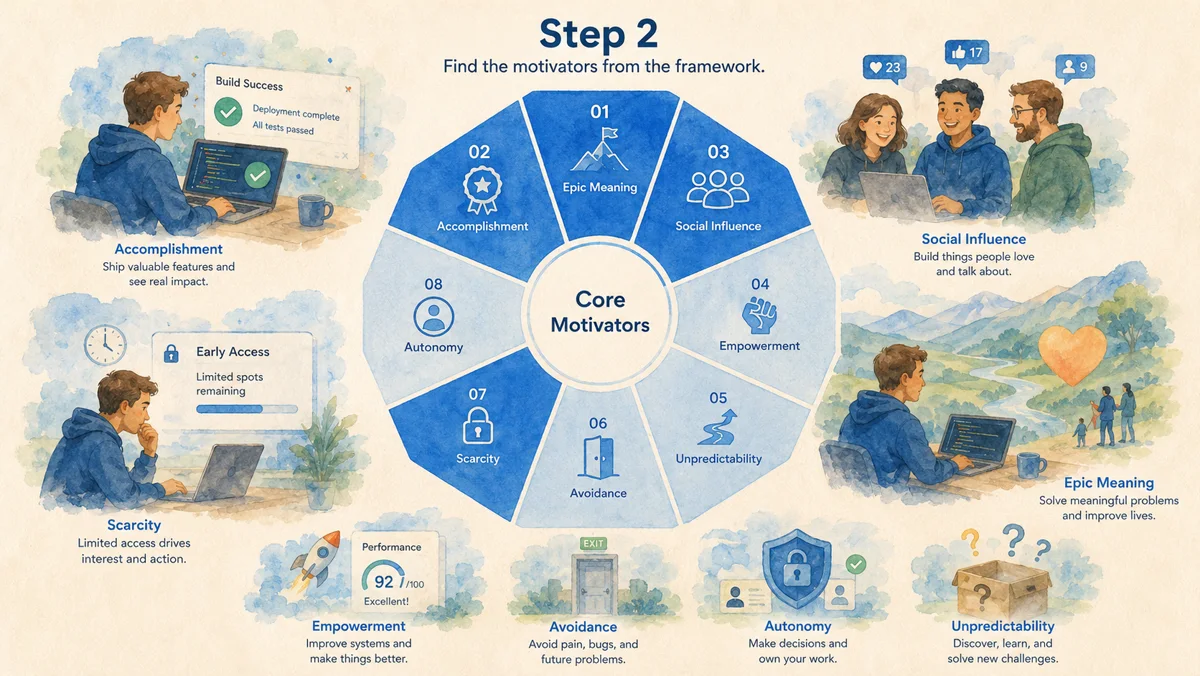
AIHere comes the game changer: motivation is the key. And classic time tracking or pure effort estimates will not get you there. That is why I use the Octalysis framework by Yu-kai Chou — a model that makes the 8 most important human motivators tangible.
What does Octalysis do?
It shows which intrinsic (e.g. meaning, autonomy) and extrinsic (e.g. rewards, social recognition) factors drive people. In the context of your development team that means, concretely:
- Foster autonomy: developers get room to find solutions on their own responsibility and to shape their stories themselves.
- Convey meaning: a clear focus on customer benefit motivates more than sheer deadline pressure.
- Social recognition: visible successes and mutual feedback strengthen team spirit.
- Make progress something you feel: small intermediate goals create a sense of success and momentum.
How does that help concretely with user stories
By building these motivators deliberately into your process, you raise the developers' intrinsic motivation. They do not just want to finish fast but early — and with higher quality.
Overtime becomes unnecessary because the work runs more focused and more efficiently. The scope stays stable because the team really is working on customer benefit.
Instead of classic user stories: anchor motivation in the story format itself
 AI
AIMost user stories follow a familiar pattern:
"As a user I want [function] so that I [benefit]."
That sounds sensible — but in practice it is often too abstract and emotionally detached from the development team. This format addresses almost exclusively the end user. In doing so it neglects a decisive factor: the developers' motivation to implement this story with enthusiasm.
And that is exactly where my method starts.
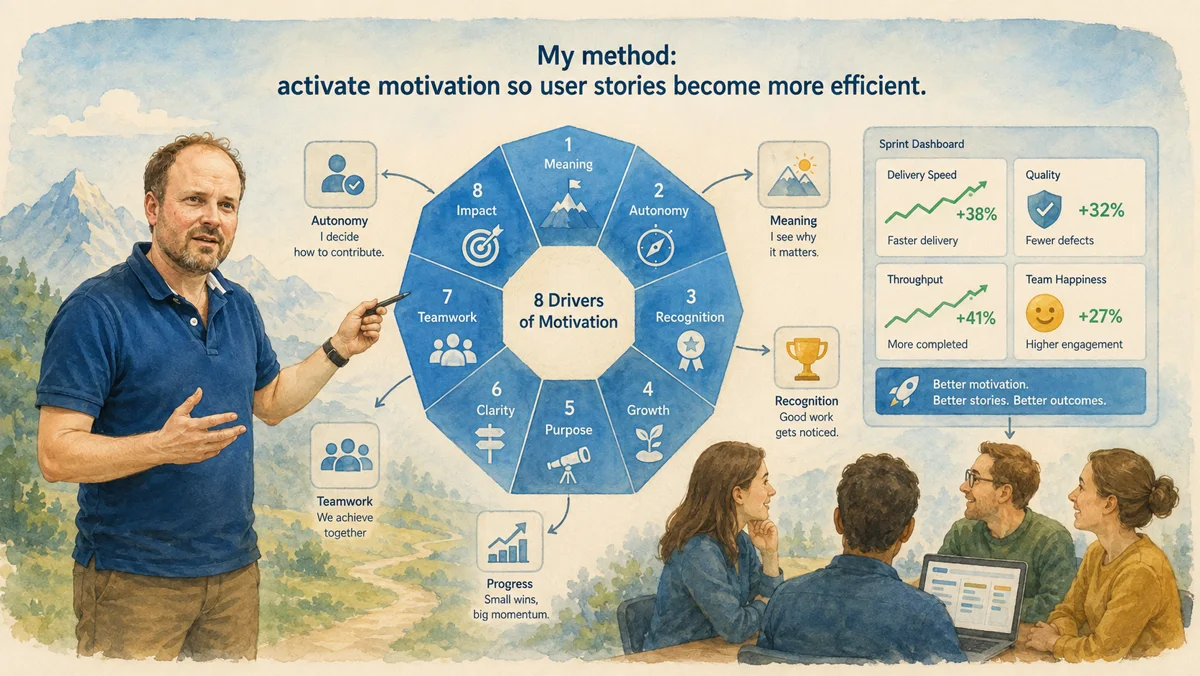
The key: the quest format for motivating user stories
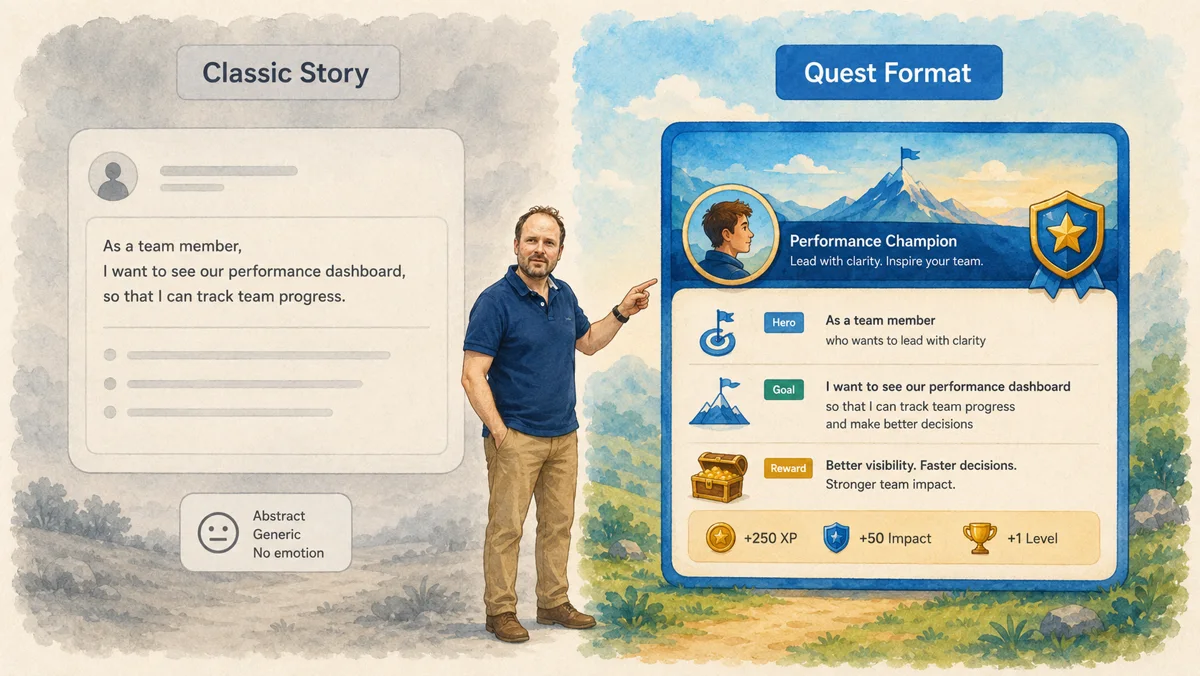
Instead of classic stories I use a format based on the Octalysis framework that embeds the developers' motivators directly into the story. This format works like a quest from a game:
(developer motivation) – (goal of the story) — and receive (gamification reward)
An example:
Help the user to enter a secure password, so that their account does not get hacked, and receive 20 XP.
The "20 XP" stand symbolically for a gamification reward — it can take different shapes depending on the team and the type of motivation. What matters is this: the story does not only address business or user value but makes the implementation motivating for the developers too.
Why this format works
The quest format serves several functions at once:
It states the goal clearly and tangibly — as in a classic user story.
It involves developers emotionally, by addressing them as active "heroes" rather than neutral executors.
It makes progress visible and links it to a reward — a central principle from game mechanics that demonstrably raises engagement.
It works preventively against scope creep, because the motivation forces the story to be "thought through completely" — including reward and intended effect.
This format changes the attitude in the team. Developers no longer feel like "implementers of requirements" but like shapers of progress — with meaning, responsibility and visible success.
How to turn classic user stories into motivating quests
 AI
AIStep 1: recognise the weakness of the classic story
 AI
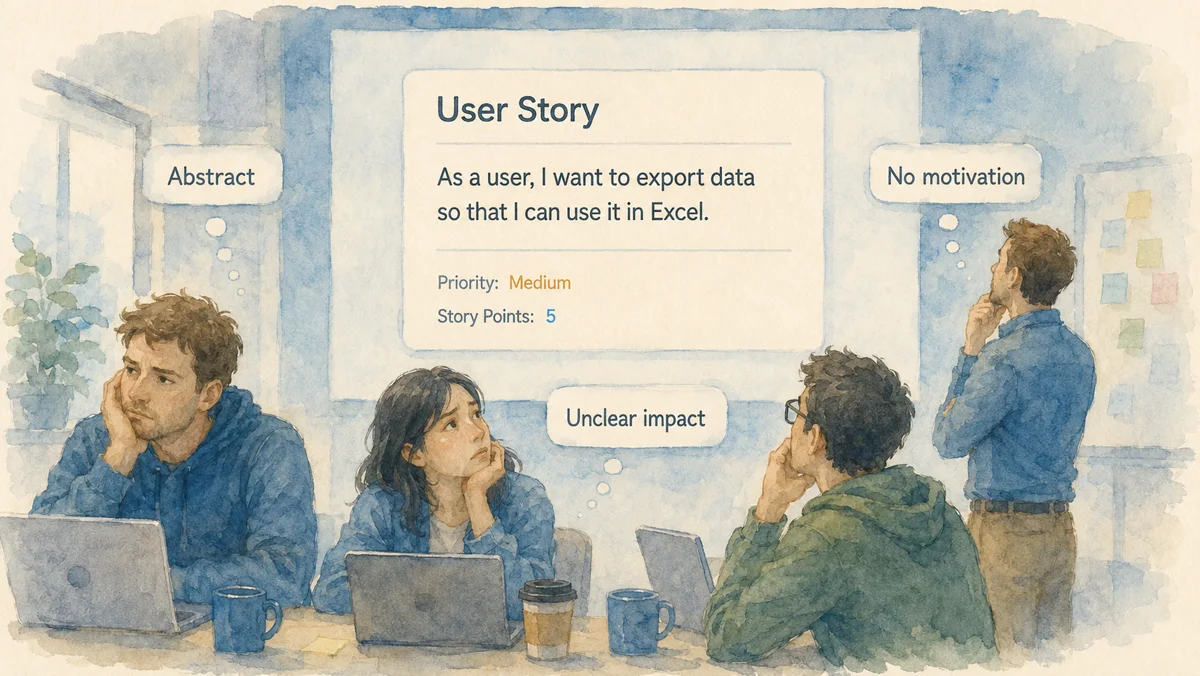
AIThe standard story often reads like this:
"As a user I want to change my email address so that I can keep my contact details up to date."
This statement contains no motivation for the team. It says neither why this matters right now nor what impact fast delivery has — and it does not invite identification either.
Step 2: find the motivators from the Octalysis framework
 AI
AIAsk yourself (or better: your team) what could be motivating about this task. Examples:
Core Drive 1 — Epic Meaning & Calling: does this feature contribute to something bigger?
Core Drive 2 — Development & Accomplishment: is there a tangible sense of achievement?
Core Drive 5 — Social Influence: does it protect, support or make someone seen?
Core Drive 6 — Scarcity & Impatience: is it something needed quickly, or something rare?
Step 3: formulate the story as a quest
 AI
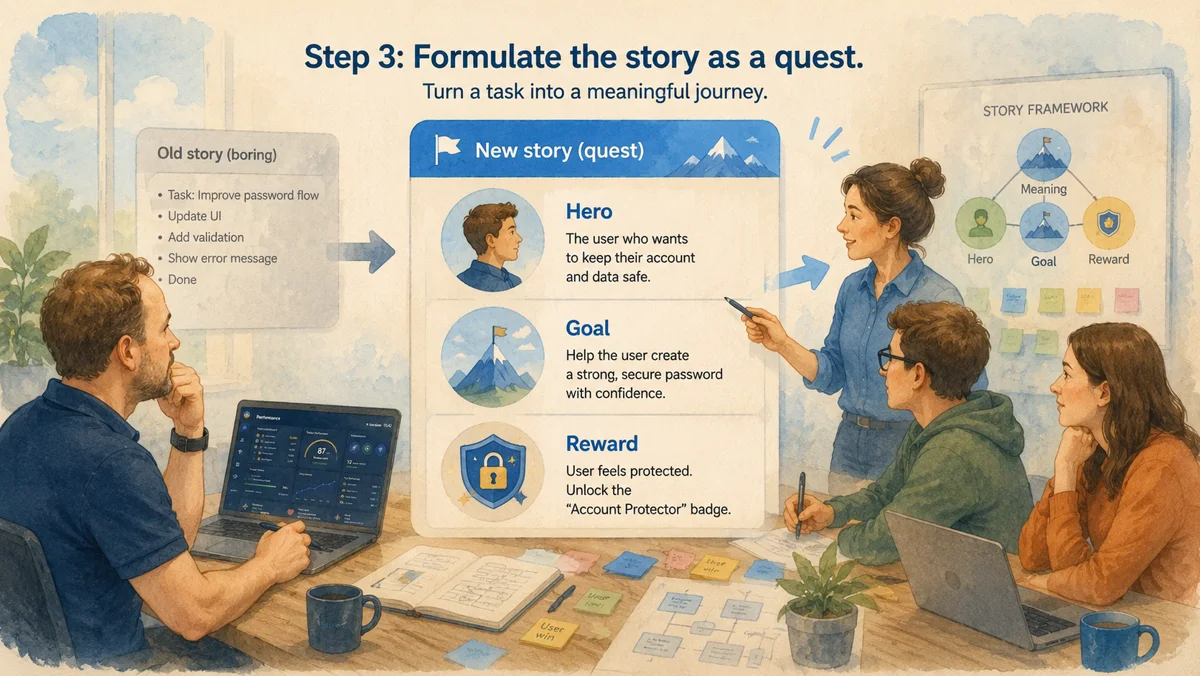
AINow you convert it:
Example 1 — changing the email address
Help the user to update their email address themselves, so that their communication arrives safely and earn 15 XP for your support effort.
— Motivation: taking responsibility (CD1), protecting users (CD5)
— Reward: XP, symbolising success at the support level
Example 2 — raising password strength
Protect a player's account by helping them set a strong password, and thereby unlock the security badge "Protector".
— Motivation: protecting users (CD1/CD5), achievement (CD2), symbolism (badge)
Example 3 — optimising load times
Improve the load time of the home page so that users get into the product faster — and crack this week's performance challenge.
— Motivation: challenge (CD2/CD6), measurable progress, gamification via the "challenge"
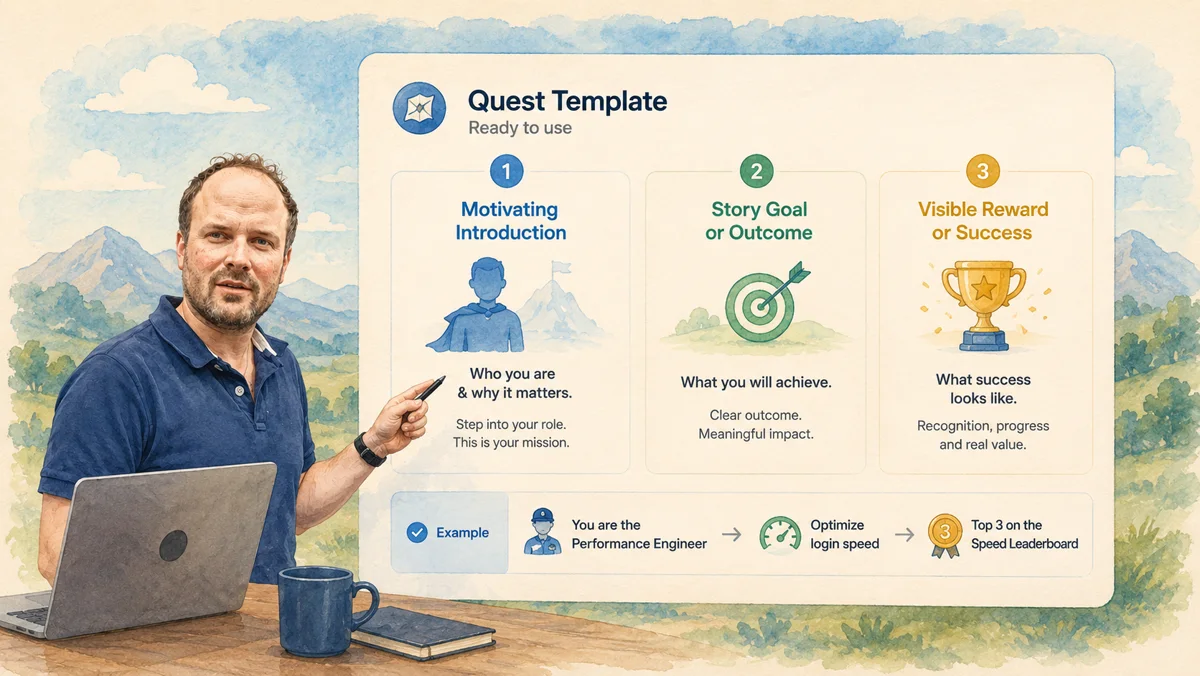
Quest template ready to use
 AI
AI[motivating opening / hero role],
[what should be achieved — the goal of the story],
[reward or outcome in the game context / visible success]
Example template filled in:
Optimise the login process,
so that users get into the system in under 3 seconds,
and earn yourself a place on the "speed leaderboard".
In closing: the quest format is not a detail — it is a lever
 AI
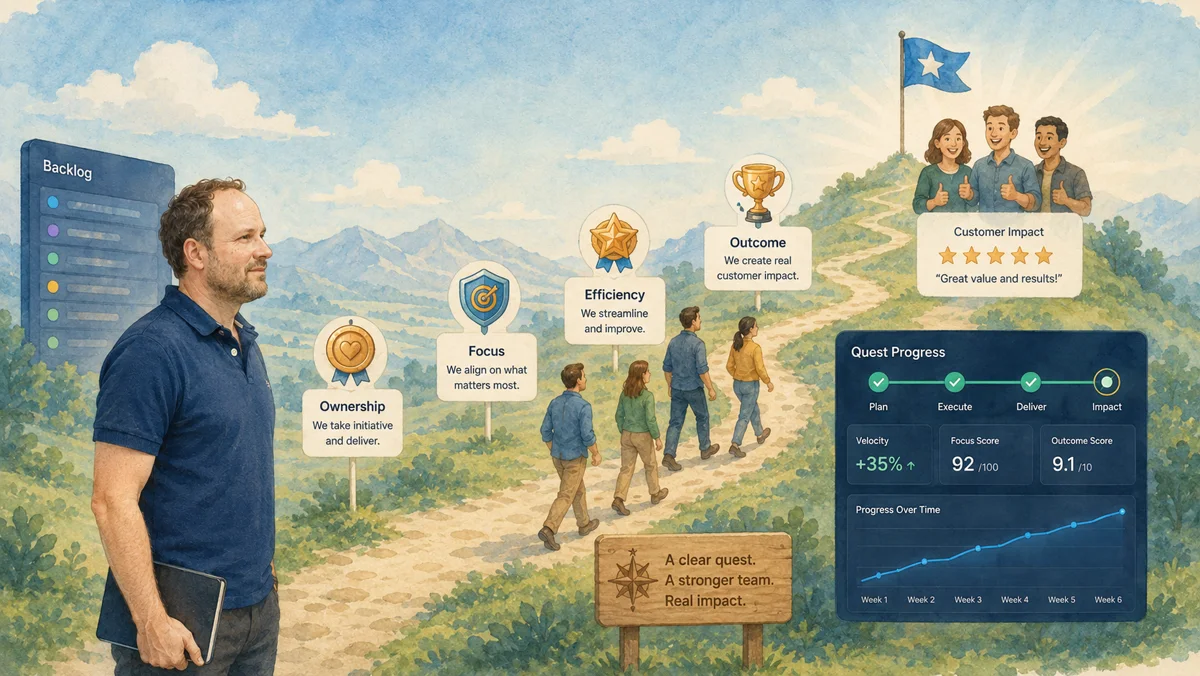
AIBy deliberately aiming your user-story format at motivation, you shift your team's focus from "what do we have to do?" to "what do we achieve — and why is it worth it?". You speak not only analytically but emotionally — and that strengthens ownership, efficiency and orientation towards results.