Team & agility
When teams function but do not feel: how real connection grows in scaled systems

 AI
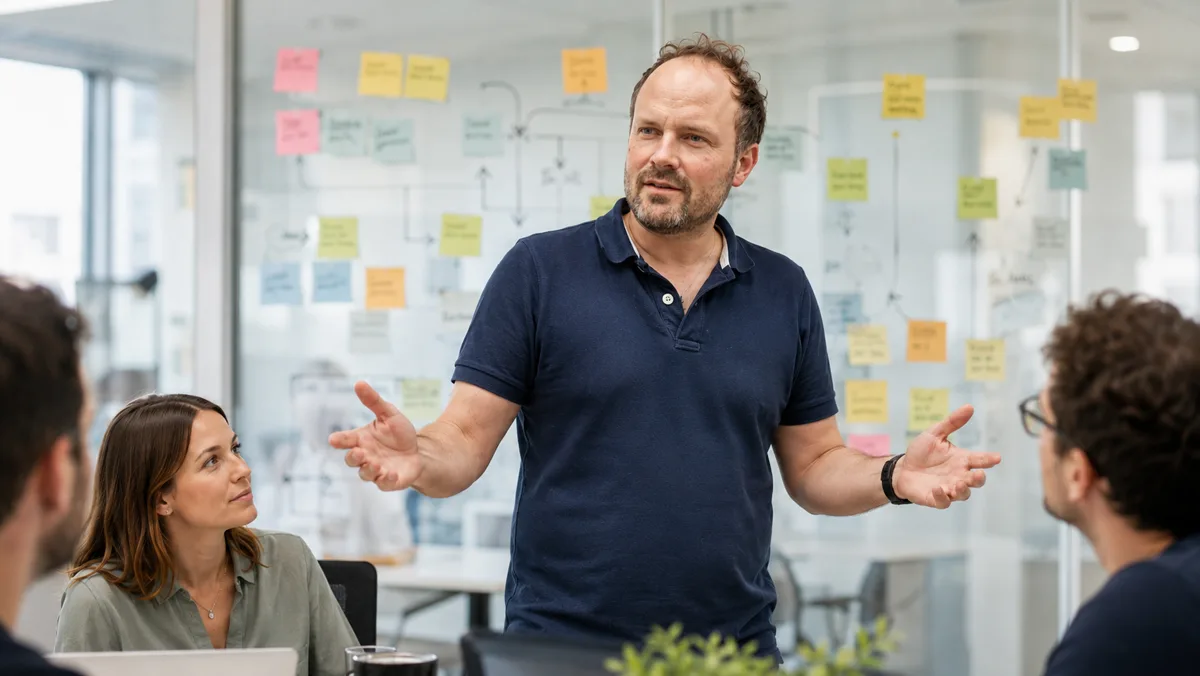
AIAgile structures are everywhere.
The meetings are cleanly timed, the boards up to date, the roles filled.
Plenty of teams function.
But look closely and it often does not feel like a team.
😬 What really hurts
 AI
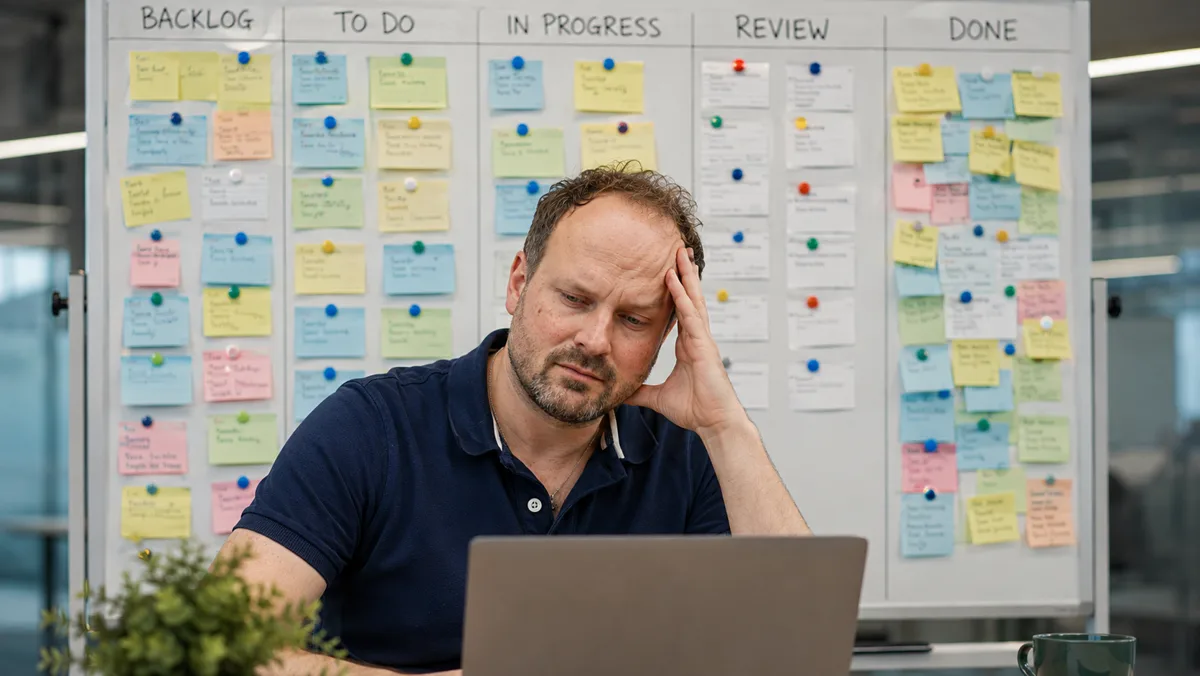
AIWhat is missing hardly shows in daily work. But over time it costs you everything:
- People do their tasks — but nobody fights for the sprint goal.
- There are dailies — but no real coordination.
- Estimates get made — but nobody takes responsibility.
- The board is full — but nobody sees the whole.
- Plans get made — but hardly anything really gets finished.
The result?
- Delays, justifications, frustration
- Teams that "look productive" but do not deliver
- Product owners who feel left alone
- Stakeholders who lose trust
- Retros that feel like "Groundhog Day"
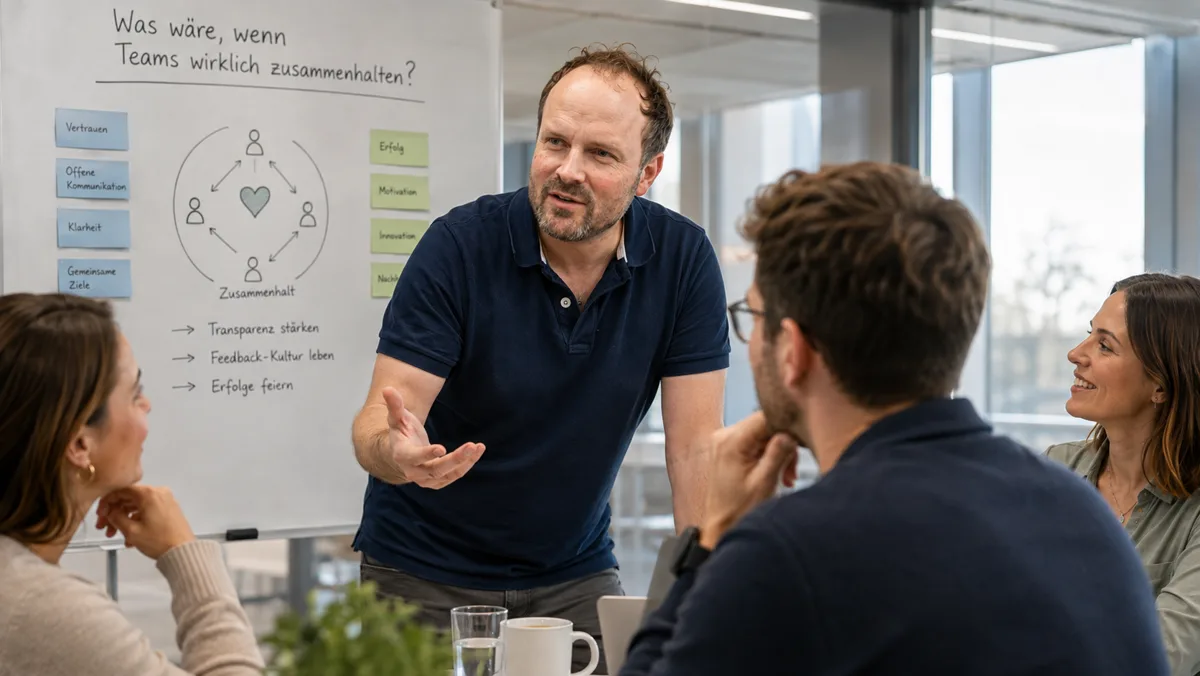
What if teams did not just work but really held together?
 AI
AI- If dailies were a place for real synchronisation — not just status reports
- If everybody knew what really counts in the sprint — and responsibility became tangible
- If new team members felt part of the crew straight away — not like guests
- If the goal did not only sit in Jira — but were carried together
- If it were not only tasks getting done — but real progress you can feel
Especially demanding in scaled, hybrid systems
 AI
AIThe larger the system, the harder it gets to produce real alignment and a sense of us.
In exactly these situations it takes more than methods and meetings:
Remote onboarding without connection
 AI
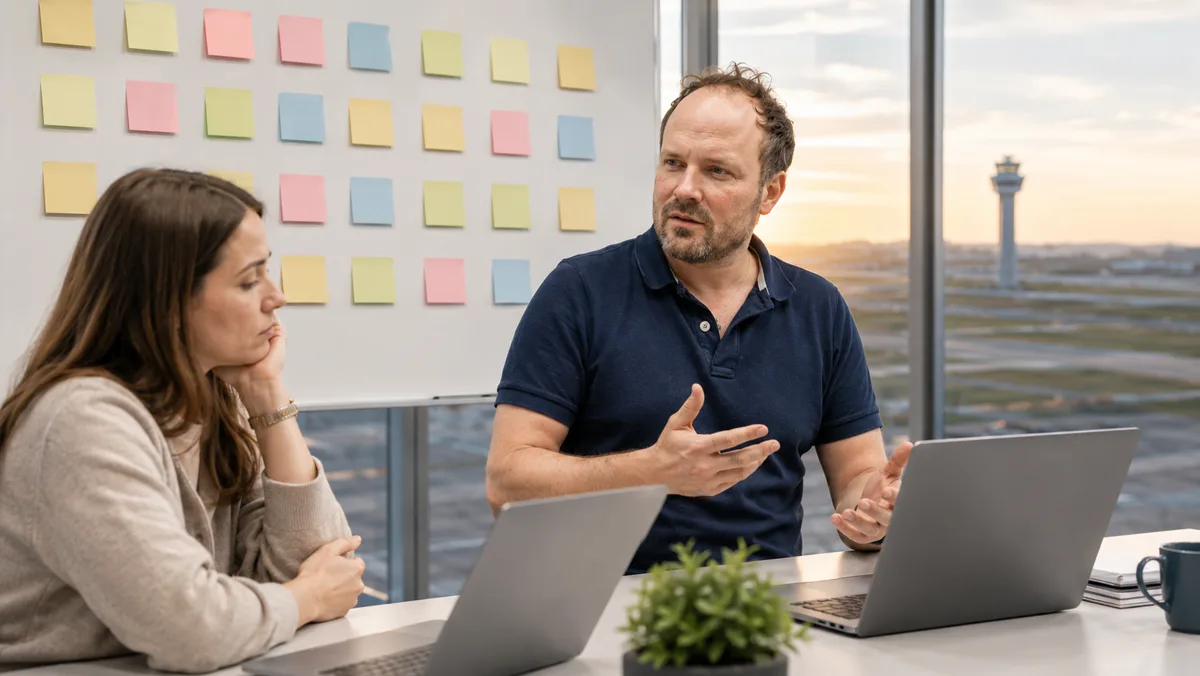
AINew colleagues start — but the sense of team never arrives.
You know each other only from calls. Responsibility stays diffuse.
The consequence: everyone does "their thing", but nobody feels truly responsible.
👉 A good solution has to help make roles something you experience — not just something explainable.
And it has to let new members build a sense of belonging straight away.
PI plannings without real alignment
 AI
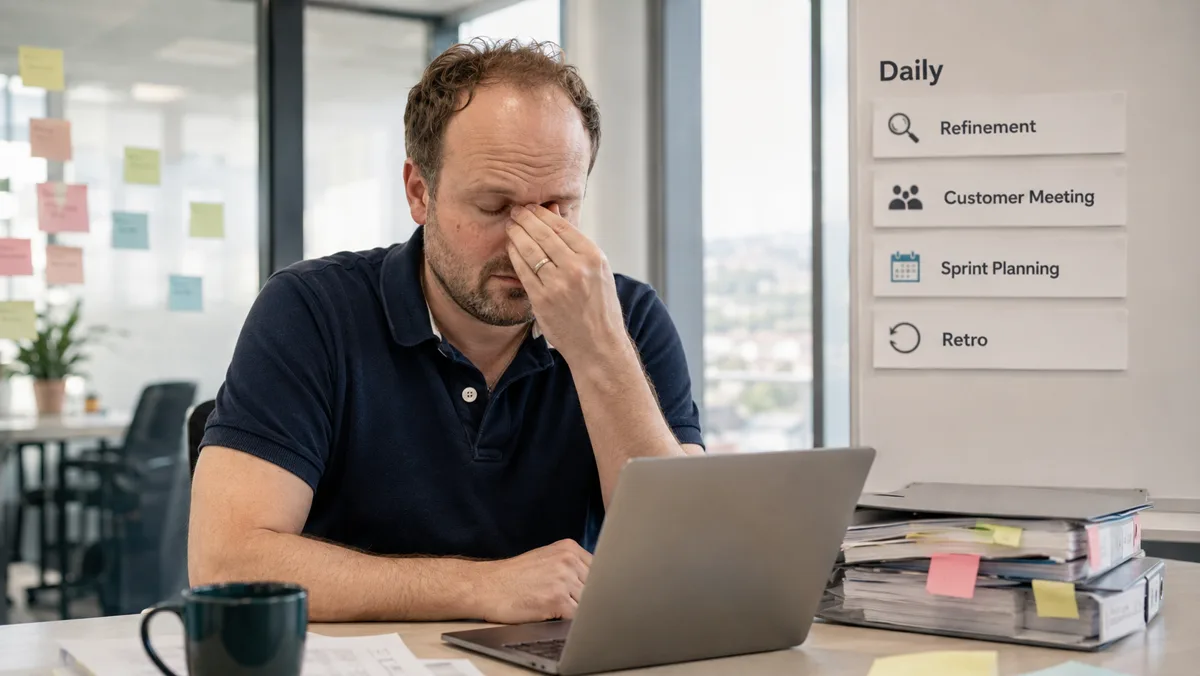
AIIn many scaled environments the big room planning is formally planned —
but emotionally empty. The roadmap gets pushed through, the boards get filled.
But no real commitment arises between teams and goals.
👉 It takes formats that start before the boards.
Formats that create real connection and shared motivation — before anybody clicks "commit".
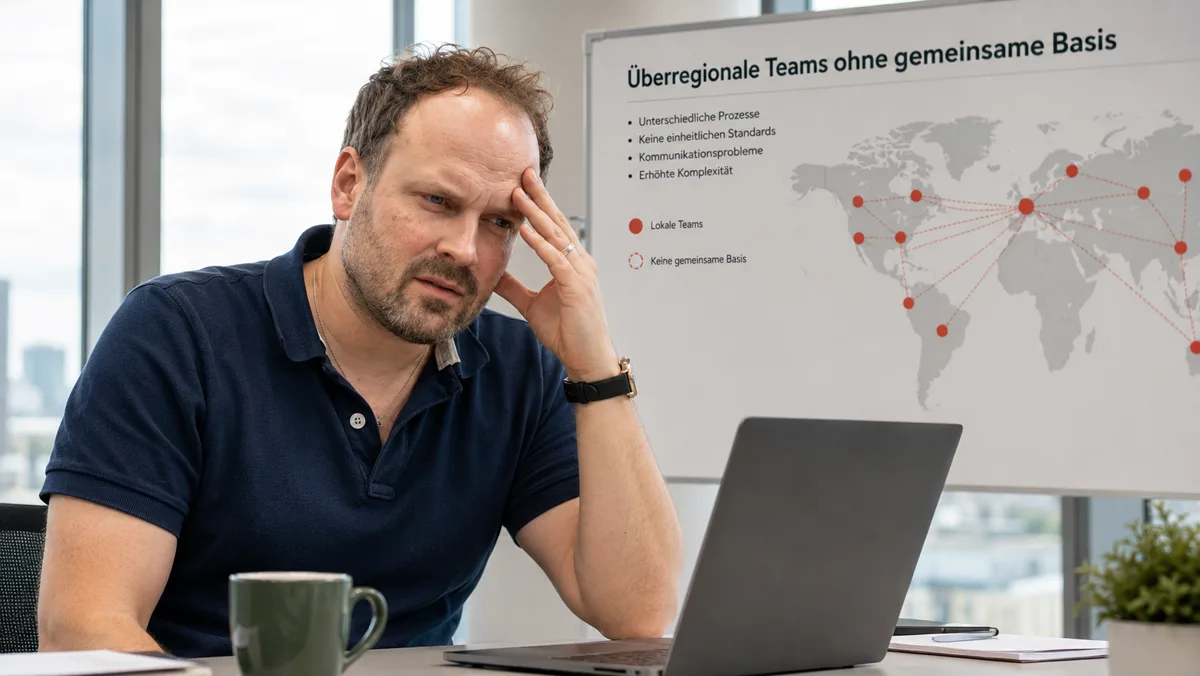
Cross-regional teams without a common basis
 AI
AIWhen teams are spread across time zones, cultures and locations,
informal connections get lost.
Communication becomes correct — but not empathetic.
Conflicts get avoided — not resolved.
👉 A solution has to create room for real encounter,
where trust grows out of acting together — not out of policies.
The more complex the setup, the more urgently it needs occasions
in which teams do not just coordinate but really experience one another.
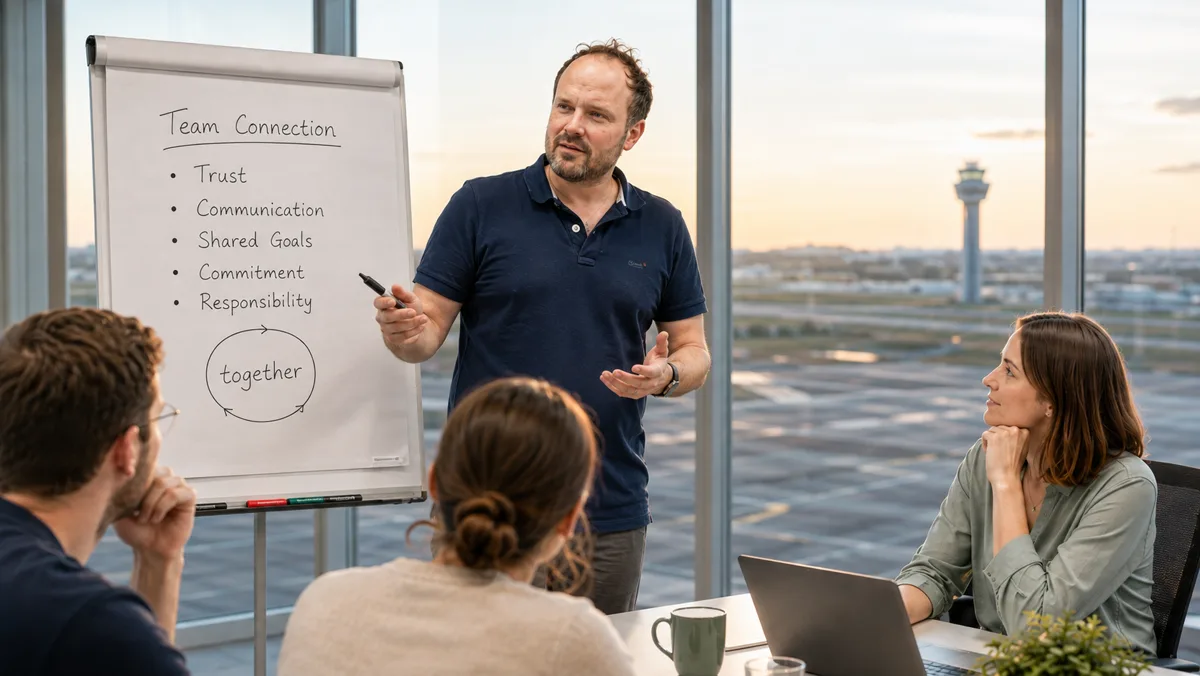
How real connection grows — even without physical closeness
 AI
AIWhat is missing is a shared experience that:
- creates emotional safety in the team
- makes roles and responsibilities something you experience rather than something you are told
- makes collaboration under stress visible and open to reflection
- brings teams closer to one another without feeling artificial
In a project with several distributed teams that became the precondition:
before technical planning or sprint goals became tangible, a foundation was needed.
A moment in which everyone involved feels part of a larger whole —
not through announcements but through experience.
The solution was not a framework, not a tool and not coaching.
But a scenario that drew everyone out of their shell, put them into new roles — and in doing so showed how the team really works.
There, in a protected space, responsibility became tangible:
Who steps up? Who hesitates? Who moderates, who decides?
Suddenly it was clear what had not been said until then –
and what had been blocking real daily work.
Only then did planning, roadmaps and backlog work begin.
But on a new foundation: experienced together, understood together.
Research on team connection and responsibility
 AI
AI- Trust and psychological safety increase the willingness to take responsibility and to work actively towards shared goals (Edmondson, 1999).
- Shared experiences strengthen neural connections that improve collaboration and communication (Boyatzis & McKee, 2005).
- Simulation-based training as used in aviation leads to better communication and fewer errors under stress (Salas et al., 2006).
- Responsibility that is experienced, not merely communicated, motivates teams more lastingly and has a positive effect on productivity and on reaching goals (Deci & Ryan, 2000).
These findings underpin why conventional methods such as pure status meetings or virtual coffee breaks are often not enough — and why it takes experiences that genuinely connect.
If you want to know more
 AI
AIThen take a look at Flightroom — the format built for exactly that:
making responsibility something you experience.
Together. Playfully. Effectively.