Week 8: Data Privacy Migration Complete – But Spatial Recognition Remains a Hurdle

 AI
Traditionally, now would be the time to focus intensely on the upcoming competition. After all, it's only a week until the big day. But in my project, reality looks a bit different. The to-do list remains long, and the challenges are greater than expected.
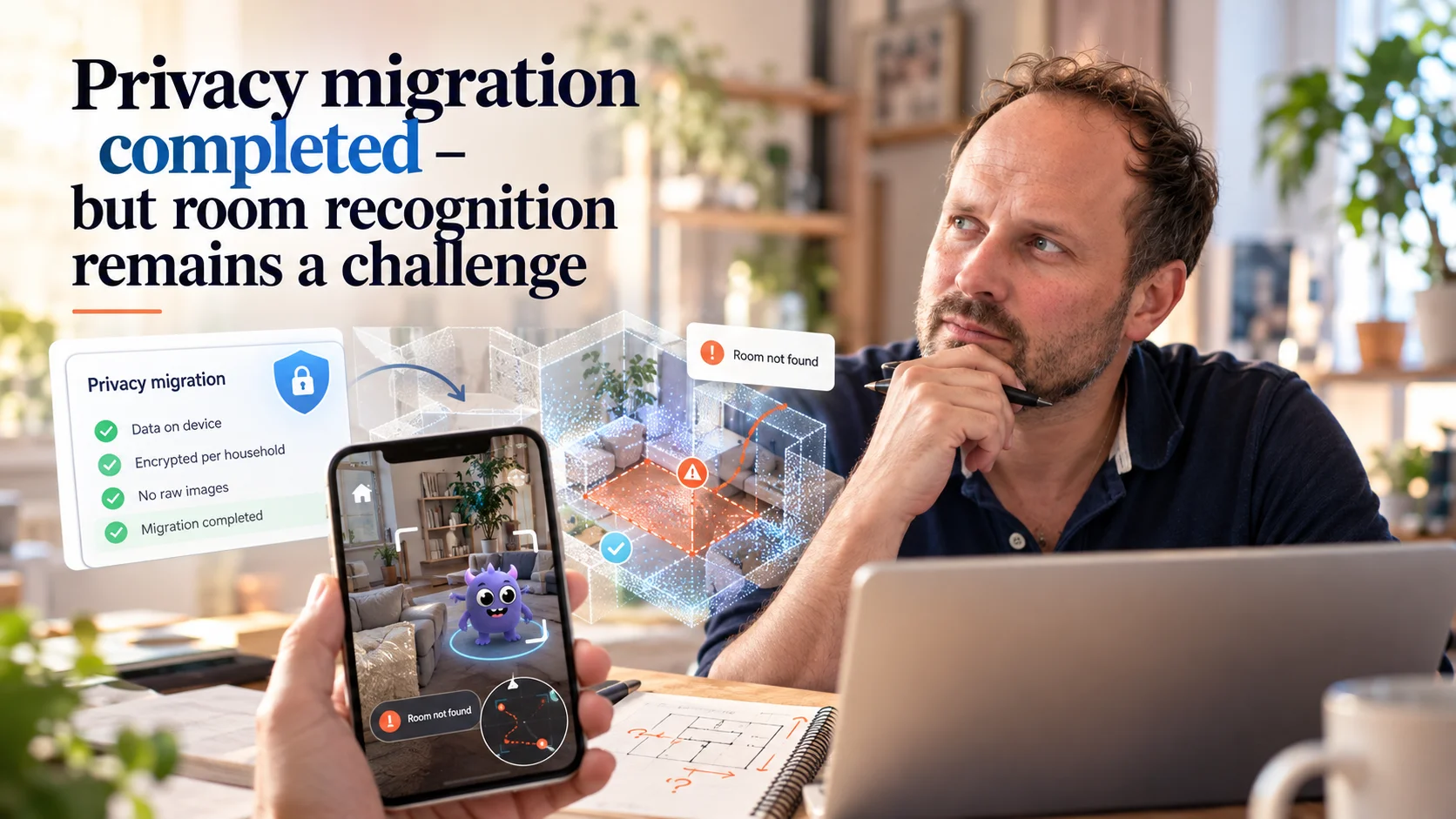
In week 8, we finally found a suitable name for the monsters, which is a small victory amidst the challenges. However, the real concern revolves around augmented reality: spatial recognition remains an unsolvable problem. Despite intense efforts, we could only achieve an improvement of three to four percent. That sounds like little, and indeed it is.
Why is this so important? The data privacy requirements in the private family environment are relentless. Many functions that would be technically possible are excluded for this reason alone. Here lies one of the major bets of the project: the data migration to Germany is now complete. This was a crucial step to meet the data privacy requirements, which are particularly high in our target group.
 AI
The move of the data to Germany was a significant step. Initially, many settings were still running on international defaults, such as with the cloud APIs. Now everything has been moved to Germany. This migration was a major infrastructure change, accompanied by intensive quality checks. Each of these checks was necessary to ensure we meet the high standards.
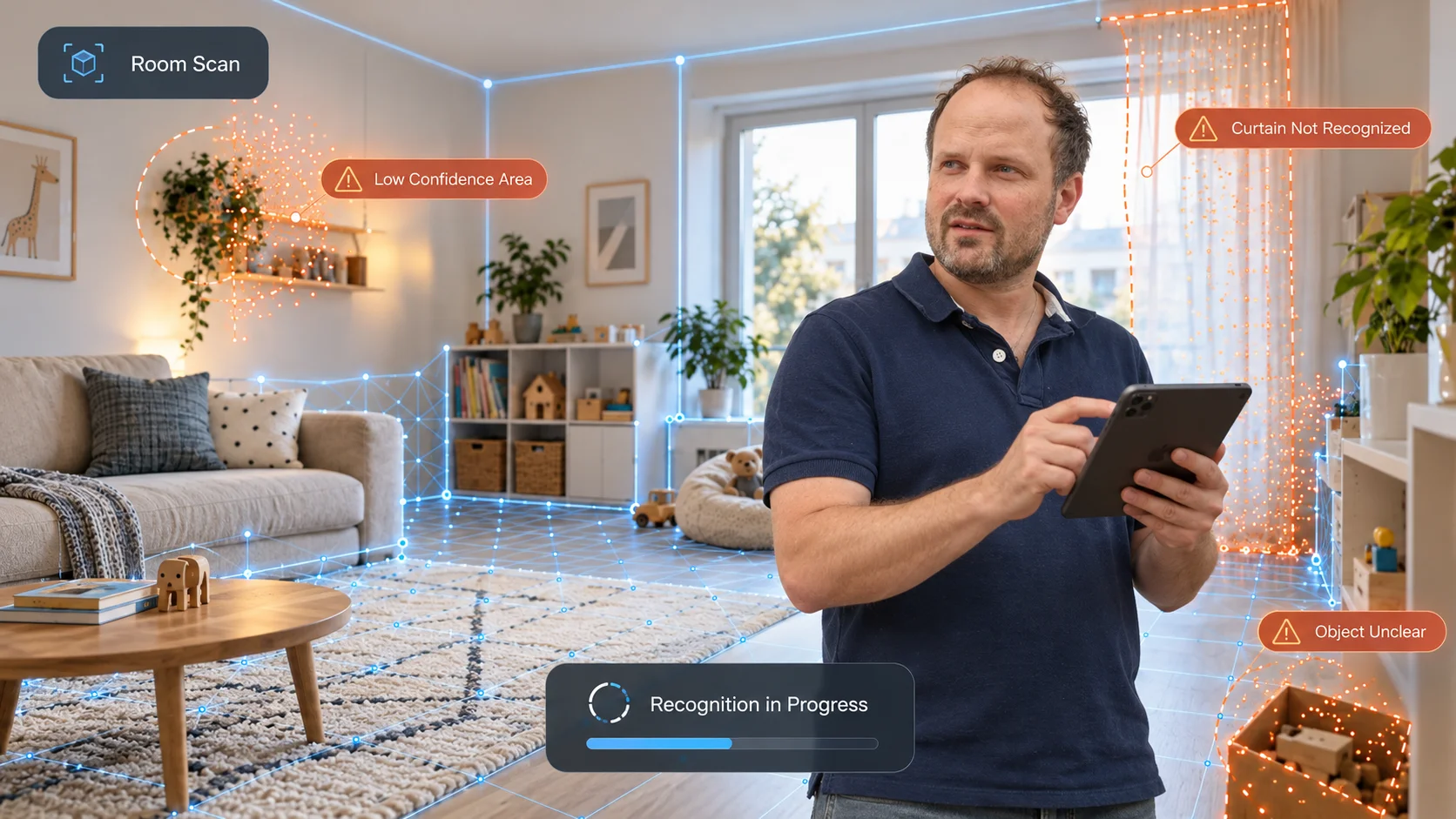
However, progress in spatial recognition leaves much to be desired. The insufficient recognition rate makes use in the private environment insecure. This is frustrating because the effort was considerable. We tried various approaches, including implementing new algorithms, which only brought minimal improvements. The pressure to find a working solution increases with each day.
The problem is not only technical but structural. Here, the conflict between high data privacy requirements and possibilities in the augmented reality field becomes apparent. You might know this, where technology meets regulations. The challenge is to find a solution that is both technically feasible and compliant with data privacy.
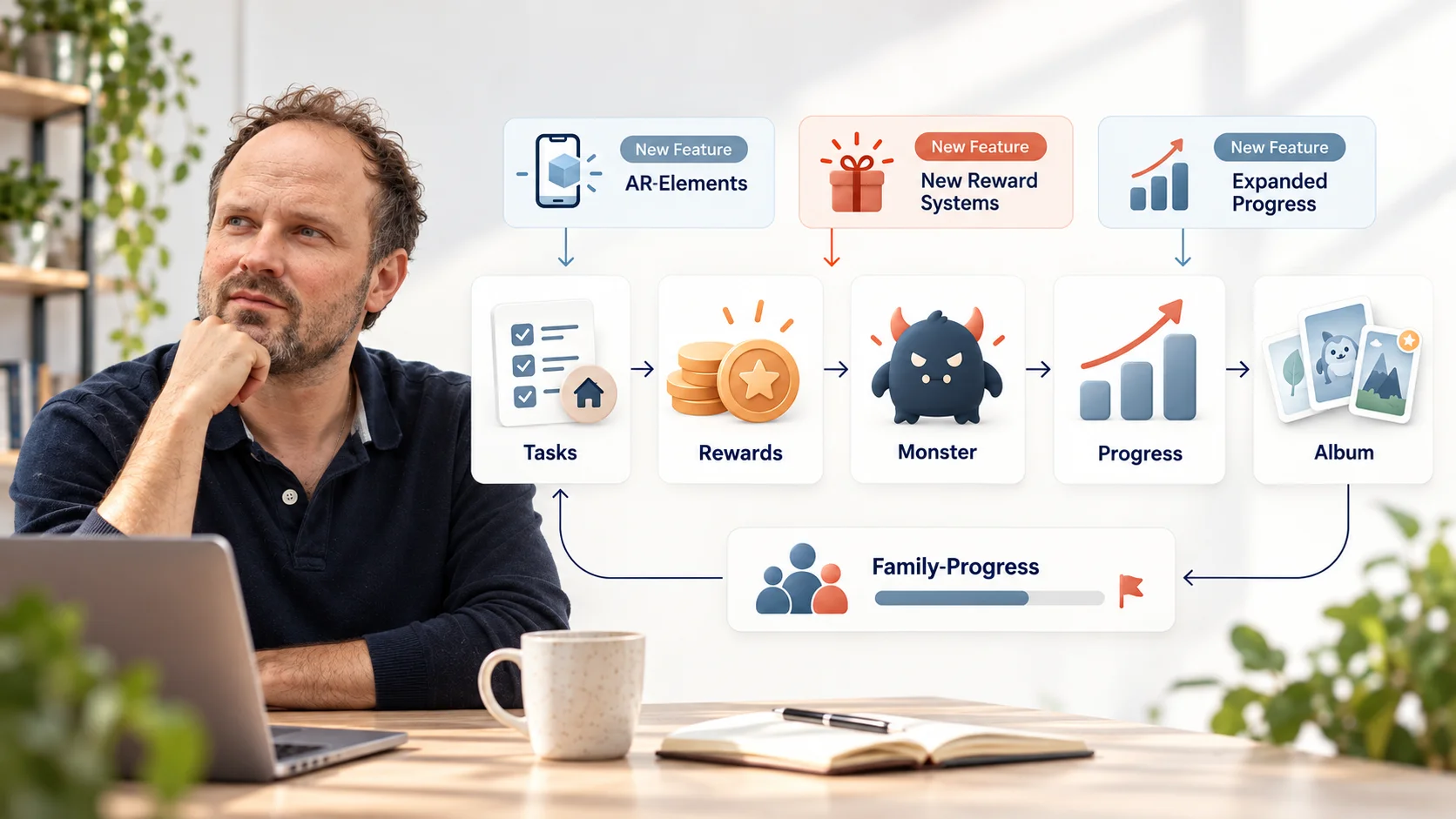
Meanwhile, there have been some developments in the game economy. Small adjustments in the product are intended to better support children in their independence and emotional perception. The goal is to increase monetization potential. These changes are part of a larger plan to make the product not only functional but also economically successful.
- Name for monsters found – a small success
- Data migration completed – all data now in Germany
- Spatial recognition remains problematic – minimal improvement despite efforts
- Game economy adjusted – focus on supporting children
 AI
The next steps are clear: further efforts in the augmented reality area, with the attempt to improve spatial recognition. Whether this will succeed remains open. But that's exactly what makes it appealing. The uncertainty about the outcome of the efforts is also a source of motivation.
What remains open? Whether the adjustments in augmented reality will actually bring the desired breakthrough. And how the data privacy requirements will affect the project in the long term. These uncertainties are challenges to be mastered. At the same time, they offer the opportunity to develop innovative solutions that may even go beyond the original goal.
Have you experienced similar challenges in your project? How do you deal with data privacy and technical limitations? It would be exciting to hear about your experiences. Maybe there are approaches we haven't considered yet.