Gamification & learning
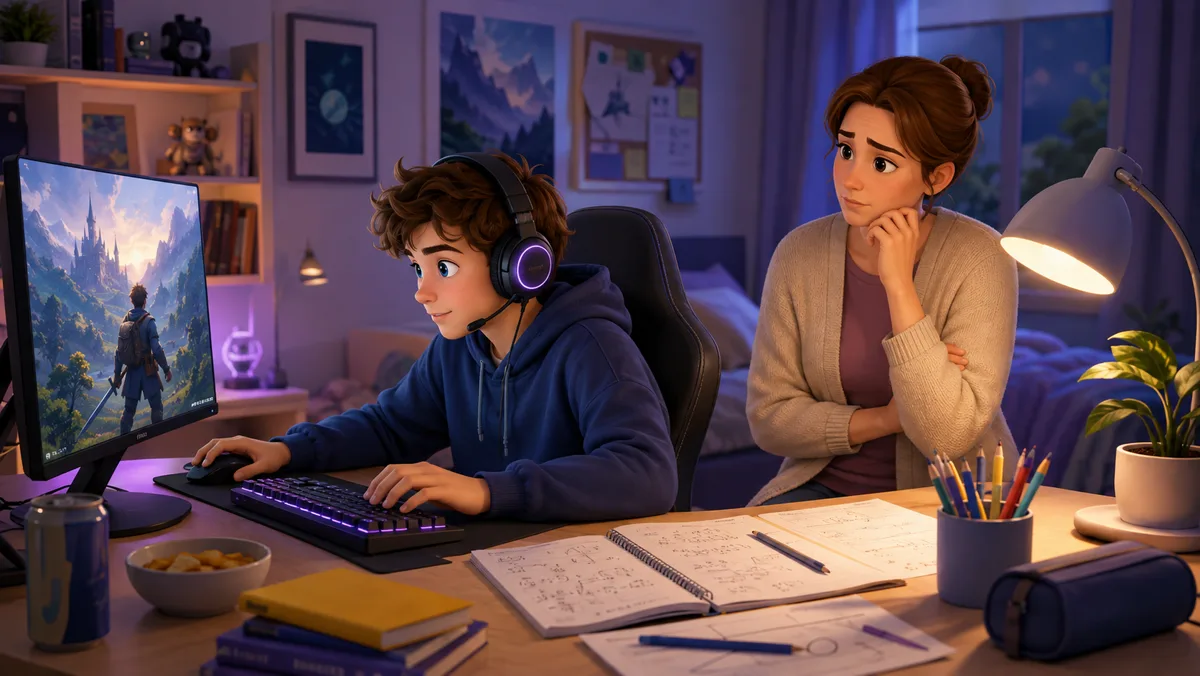
50 hours of gaming – why your child plays instead of learning

 AI
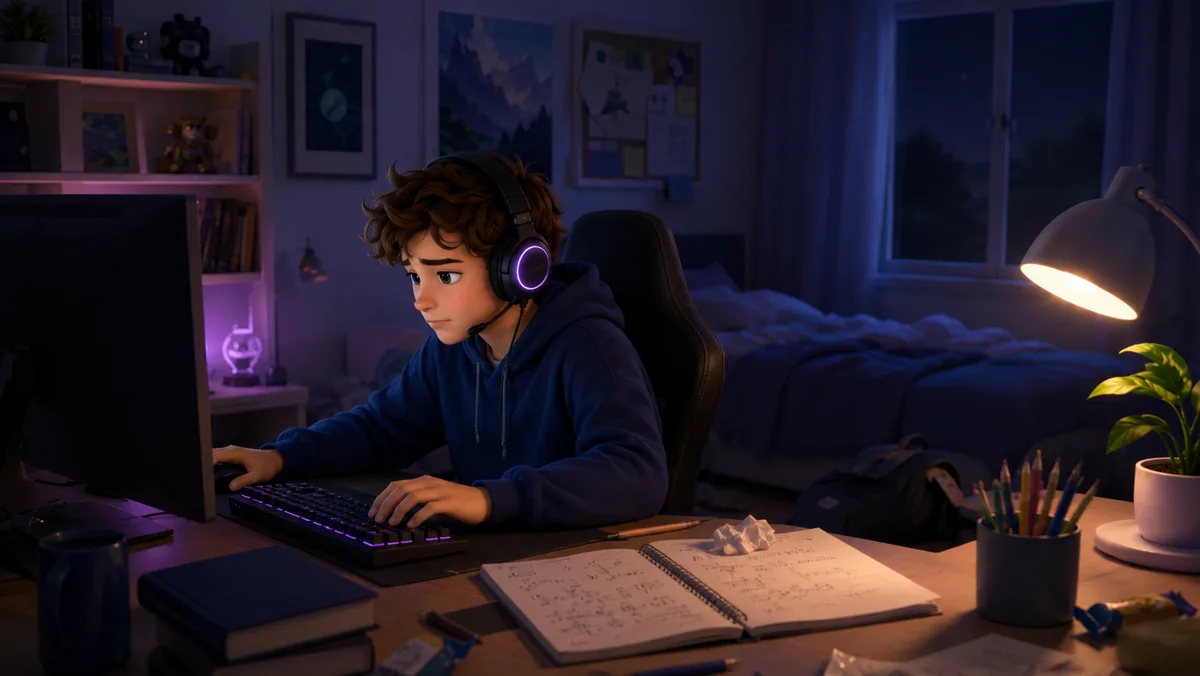
AIThe full-time job at the screen
 AI
AIBut perhaps we are asking the wrong question. Perhaps it is not about how much is played, but why. What makes a game like World of Warcraft or Fortnite so much more motivating than learning vocabulary or solving a maths problem?
And what actually goes on in the head of a child who would rather raid, level or loot — than do homework?
The answer lies not only in the game itself but in the system the child lives in. And that is exactly where a closer look pays off.
No time to read? Jump straight to the solution for families.
Why games motivate so strongly — and school often does not
 AI
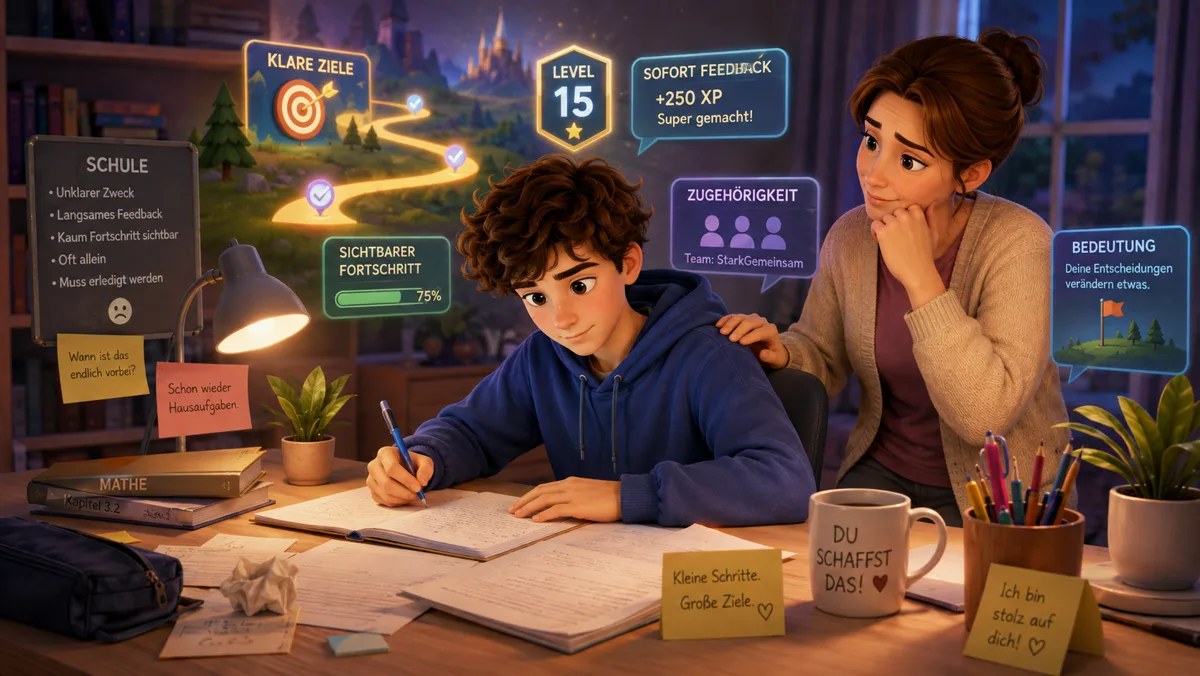
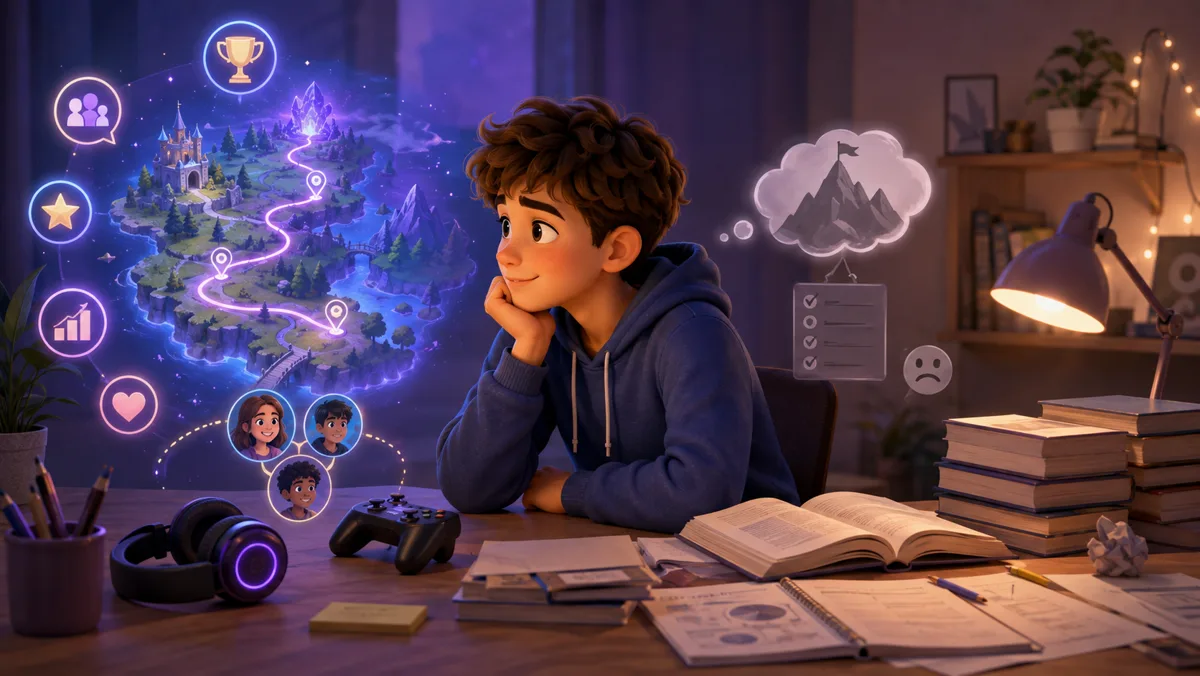
AI- Clear goals. In the game the child always knows what to do — and how far it still is to the goal.
- Immediate feedback. Success (or failure) is reported back at once — no waiting for marks.
- Progression. Experience points, levels, new abilities — progress is visible, tangible and rewarding.
- Social belonging. In guilds, teams or arenas children experience belonging, status and community.
- Meaning. Fictional though it is — the story of the game gives the actions a frame, a meaning.
Motivation researcher Yu-Kai Chou calls these the "Core Drives": eight basic psychological drives that games address almost completely — while school often only hints at them.
It is not even that school has to be "boring". It is simply not designedto motivate. It is rarely adaptive, gives hardly any immediate feedback, allows little autonomy and often feels like a one-way street: tasks get done, marks get handed out — with no real sense of meaning for the child.
 AI
AI"Empowerment of Creativity & Feedback — people love to try things out and see what happens."
— Yu-kai Chou
Why bans do not help — and punishment often achieves the opposite
 AI
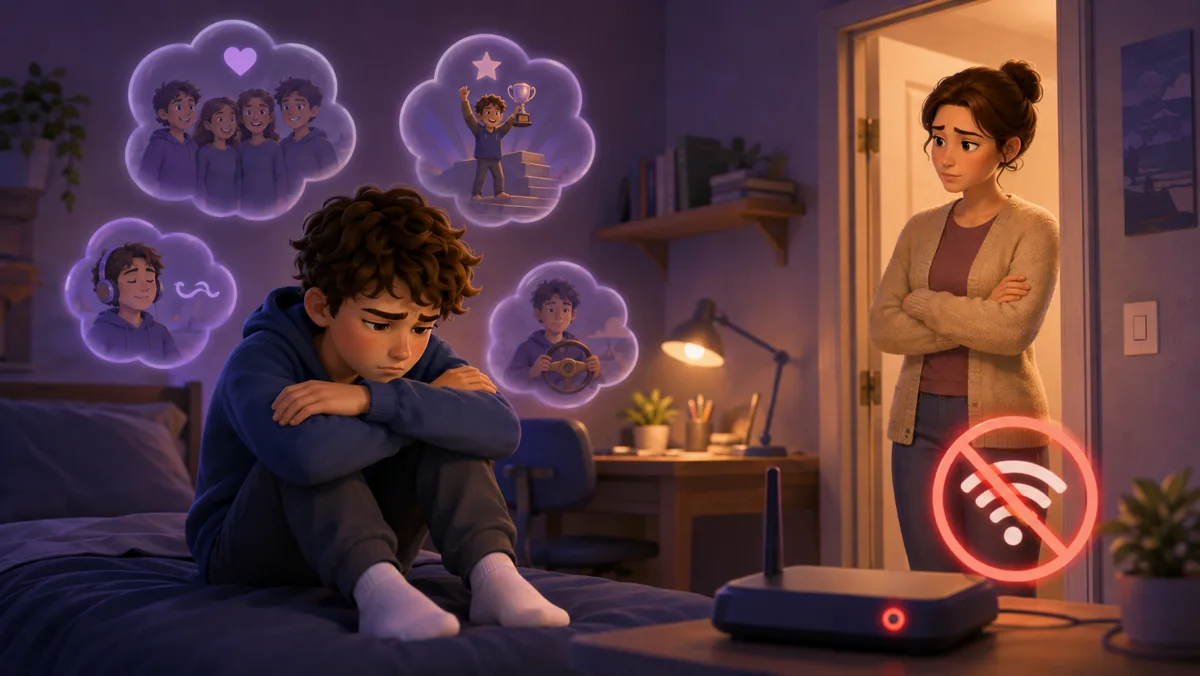
AIBut such measures usually fall short. They treat the symptom — all that playing — and overlook the deeper reasons that let the behaviour arise in the first place.
This is exactly what systems thinker Donella Meadows calls a classic symptomatic fix: a short-term solution that leaves the actual problem untouched. In her words: "Shifting the burden to the symptomatic solution."
Such an intervention does work in the short term — the child plays less — but the original motivation remains: the need for success, control, belonging, excitement or simply relief from the frustration of school.
Take the game away and another outlet gets found. The cause moves on — the behaviour shifts.
Punishment breeds resistance — and reward?
 AI
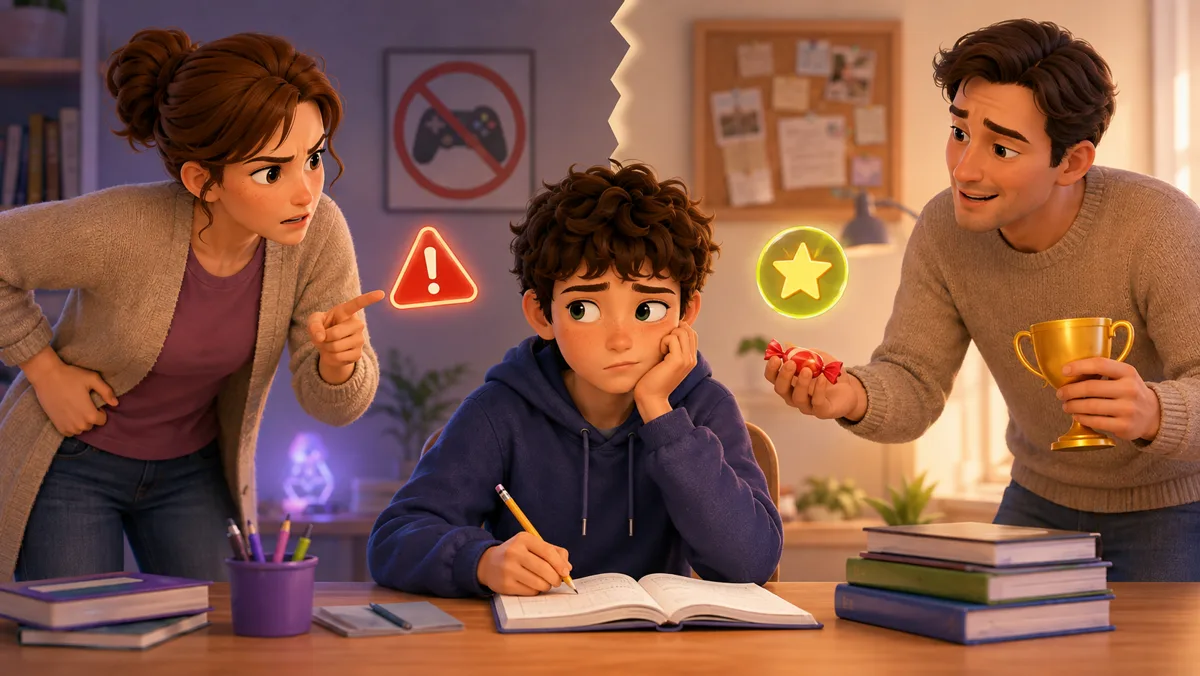
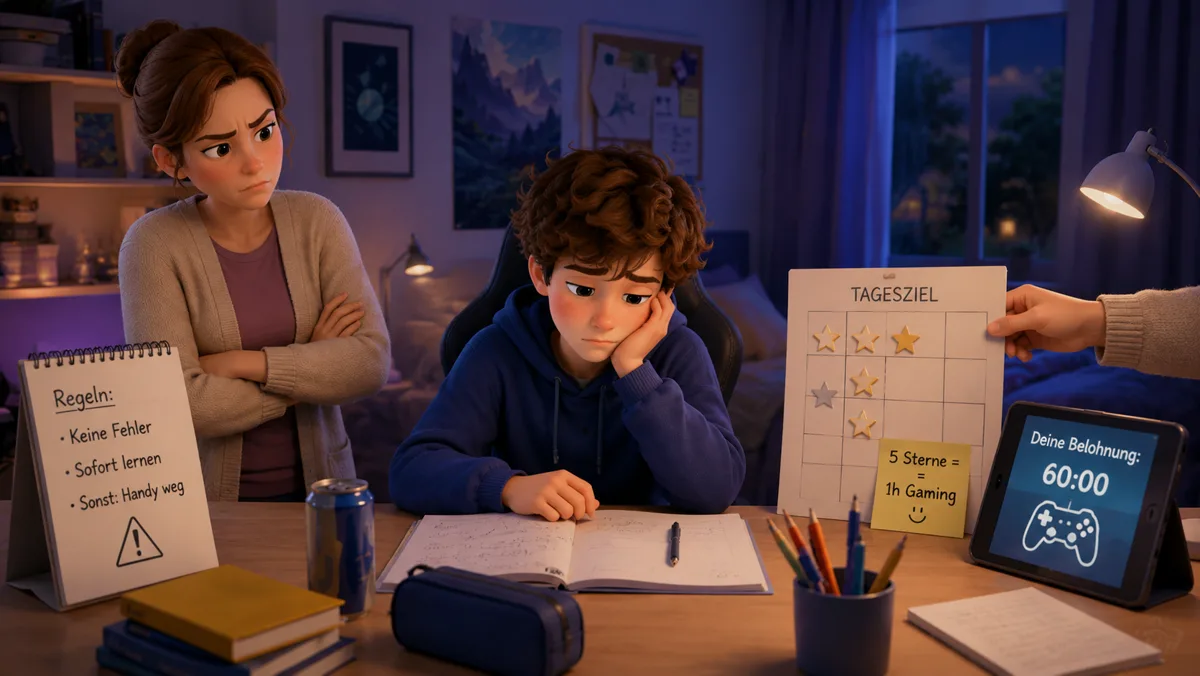
AIReward sounds better. But it has its pitfalls too. As soon as a child learns in order to get a reward, the motivation shifts outwards. It no longer learns out of interest or pride — but in order to "win".
 AI
AIThat feels controlling, especially to older children. And as soon as the reward stops, the behaviour usually falls back.
The answer lies not in more controlbut in better understanding: what is missing in the child's everyday life that it gets from the game? And how can what the game provides be made at least partly available in real life?
"People react more strongly to the fear of loss than to reward — but long-term learning grows out of positive reinforcement."
— Daniel Kahnemann
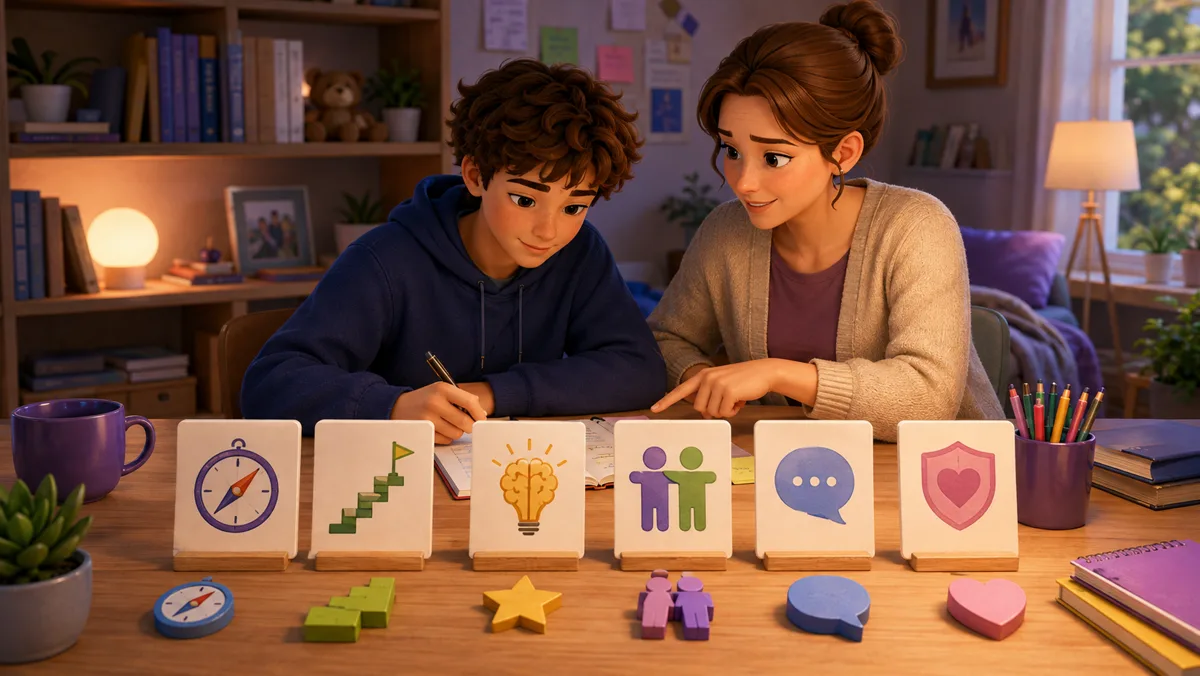
What the system needs so that a child wants to learn of its own accord
 AI
AISo the most important question is not: "How do we get the child away from the computer?"
But: "What would have to change in everyday life for school or learning to become as motivating as the game?"
That is not a naive demand. It does not mean school suddenly has to work like a role-playing game. But in the immediate surroundings parents can create the central conditions that, according to Meadows and modern motivation research, drive learning from the inside out .
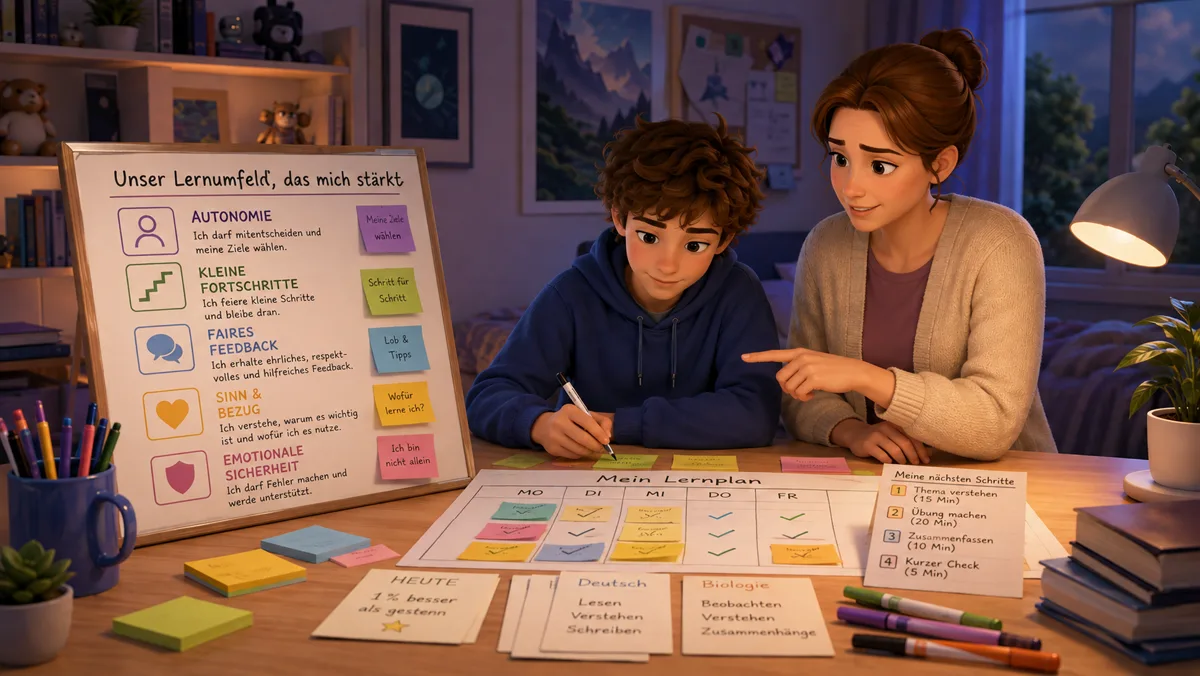
What parents can change in the system:
 AI
AI- Allow more autonomy.
When children get a say — for example when or how they learn — they experience more self-determination and show initiative more often. - Make small steps of progress visible.
Progress motivates. Parents can bring learning steps to awareness: through visualisations, conversations or simply honest praise. It is not about celebrating performance — but the effort. - Load content with meaning.
Learning feels pointless when it has no bearing on your own world. But learning vocabulary for your favourite game? Or applying maths to analyse game statistics? That can work. - Strengthen social connection.
Learning needs relationship. Parents who are present, who listen and think along without controlling, create a safe space. Study friendships or sibling teams can help too. - Give direct, fair feedback.
Children learn better when they get a response straight away. Not in the tone of a marker, but as a real sparring partner: "What worked well? What can you do better?" - Cultivate a friendly attitude towards mistakes.
In games mistakes are normal — you try, fail, try again. Learning needs exactly this mindset: no drama over setbacks, but curiosity and composure.
Many of these principles match the Core Drives, which according to Yu-Kai Chou make games so irresistible. They are not gimmicksbut deeply anchored human motivators.
When they are missing in everyday life, children look for them elsewhere — and often find them in the game.
"If you want to change an unwanted behaviour, do not change the behaviour — change the system that produces it."
— Donella Meadows
Play or escape? When gaming becomes a substitute
 AI
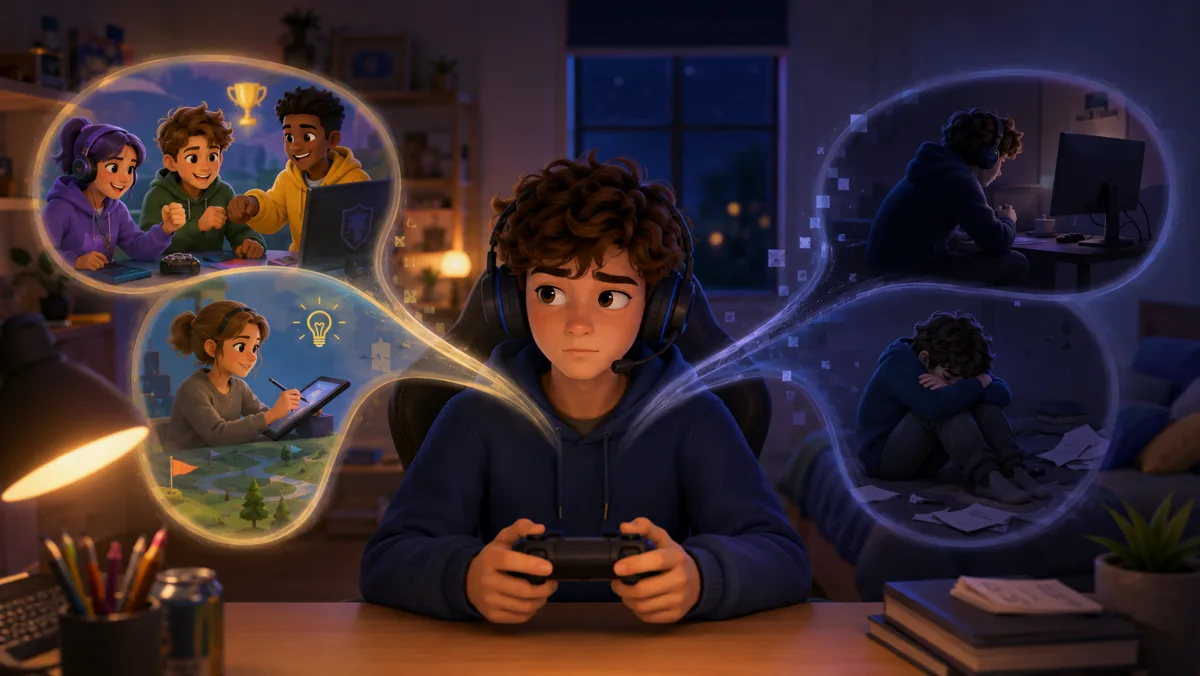
AIBut there is a point at which playing no longer happens out of desire but out of lack: of belonging, of a sense of achievement, of control over one's own life. Then the game becomes a substitute world — and that is exactly what specialists call escapism.
But how do you tell the difference?
Healthy gaming is curious, creative, social. Children talk about the game with enthusiasm, they laugh, try things out, think strategically, work in a team, take on challenges. They play because it gives them something.
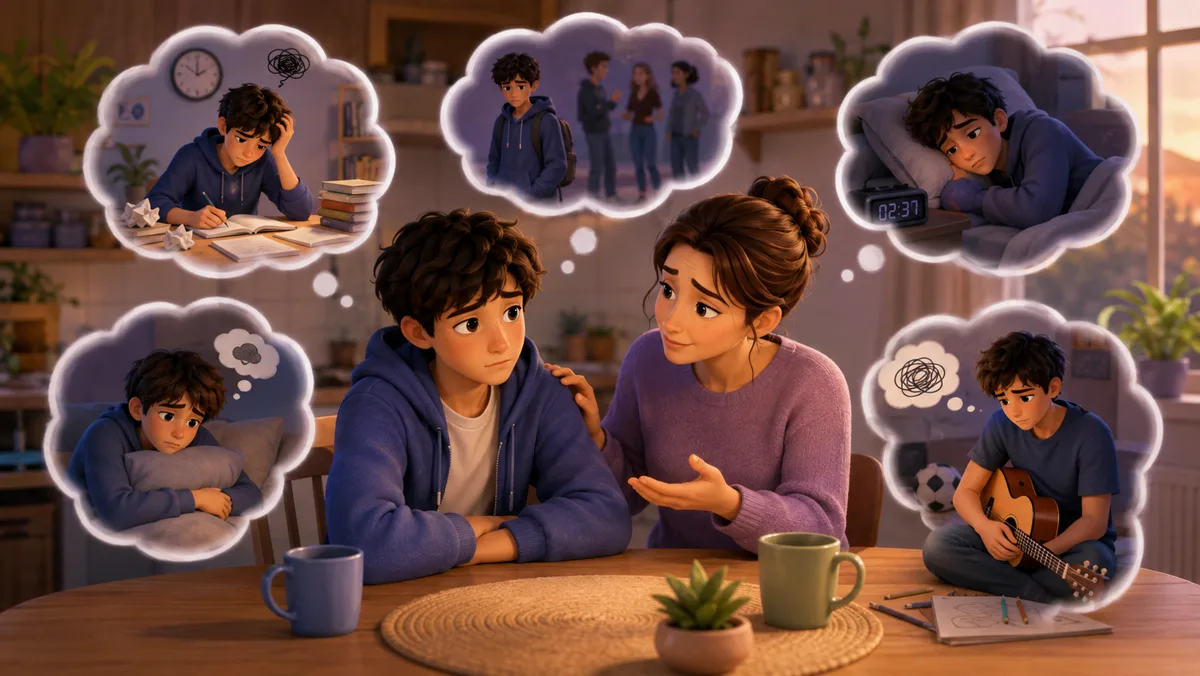
Escapist gaming looks different. It serves to avoid something: pressure, failure, overload, frustration or loneliness. Children play so that they do not have to feel something. They withdraw, avoid conversations, lose interest in everything outside the game — including things that used to give them joy.
Signs of escapist gaming
 AI
AIEscapist gaming on the other hand often serves avoidance: of school stress, fear of failure, emotional overload or social insecurity.
But how do you recognise that? Not through control — through honest, open conversations.
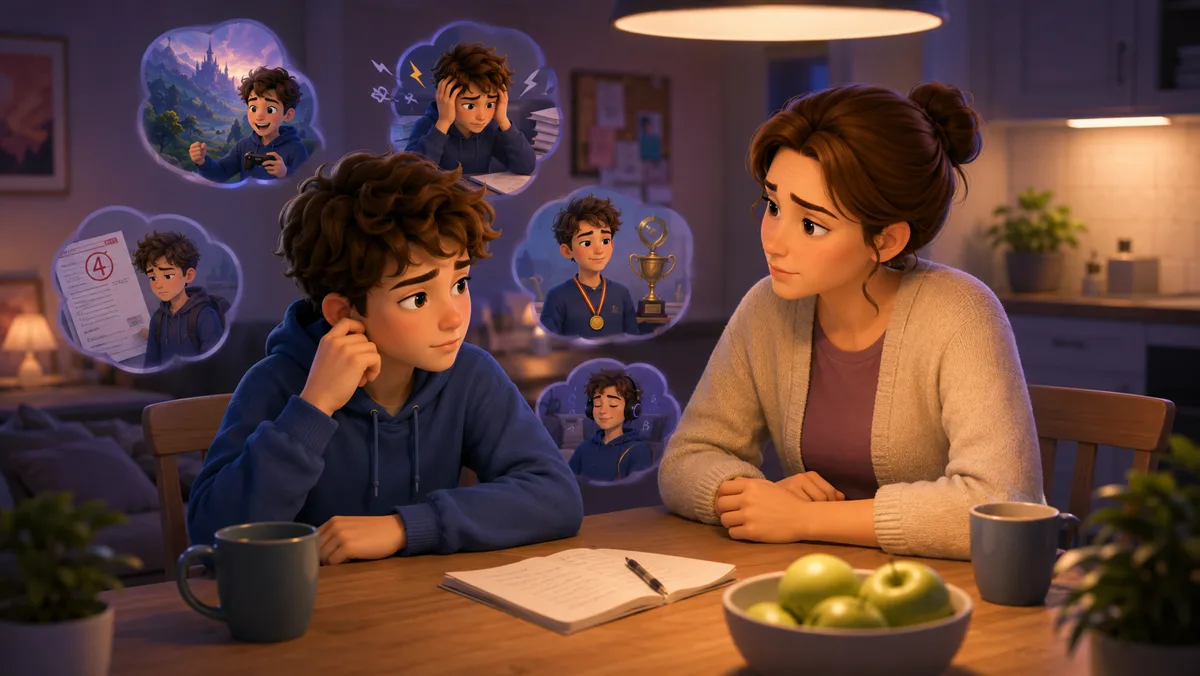
These questions help parents understand on a deeper level what is really going on:
 AI
AI- "What do you especially like about the game?"
→ Points to needs that are being met: belonging, success, excitement, freedom. - "When is the game most fun for you — and when less so?"
→ Shows whether the playing happens voluntarily or more compulsively. - "What would be hard for you right now if you were not allowed to play?"
→ Reveals whether the game serves as an escape from something. - "Are there moments in the game that feel like a real achievement?"
→ Can help build parallels to the real world (keyword: self-efficacy). - "What was frustrating at school today — and what would have helped you?"
→ Brings sources of school stress into awareness without triggering guilt. - "What would you do if you had no internet today?"
→ A gentle way to find out how much the game overshadows everything else. - "What do you need to feel good again after a bad day at school?"
→ Shows whether the game has become a substitute for emotional regulation.
These questions are not a diagnostic checklistbut invitations to a dialogue. They tell the child: "I see you. I want to understand you. I trust you."
And that is exactly the first step out of any substitute world — back into real life.
Of course there are risks too: excessive gaming can lead to lack of sleep, social withdrawal or attention problems — above all when other areas of life are permanently neglected.
The art lies in not condemning the game but in recognising early when play turns into avoidance rather than a healthy pastime.
What parents can really do — without control, but with effect
 AI
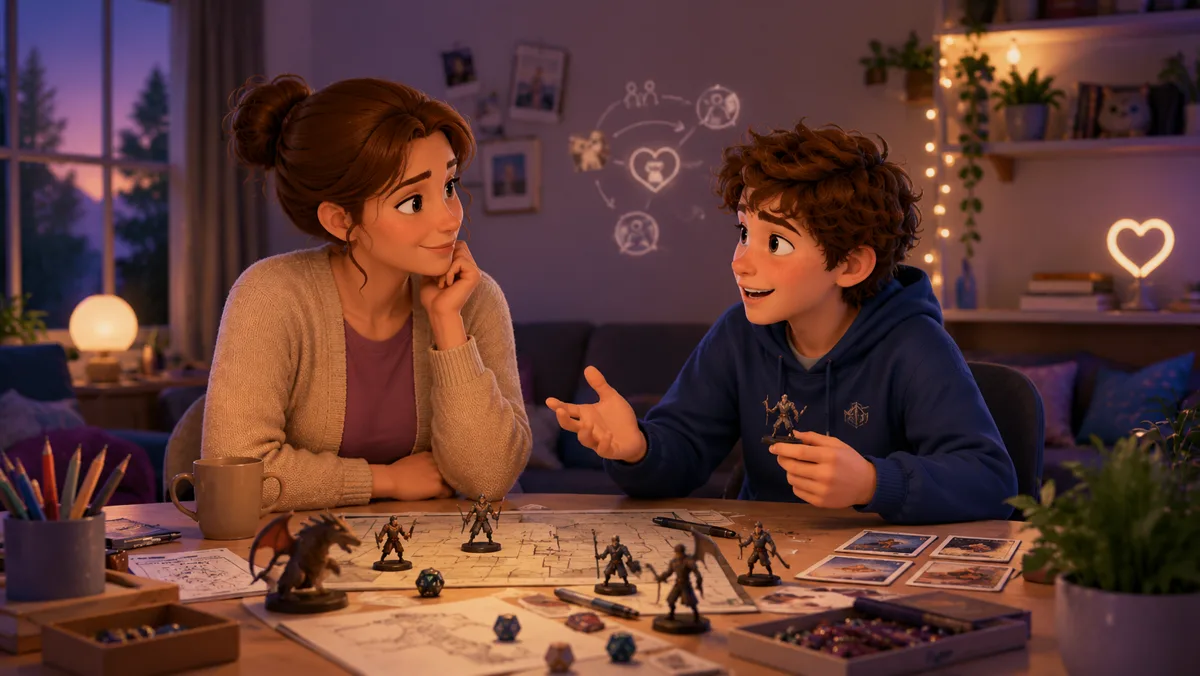
AIBut instead of counting the hours it pays to understand the quality of the gaming — and to shape the system around the child.
Because the question is not whether the game takes up too much space.
The question is: Why does real life have so little room beside it?
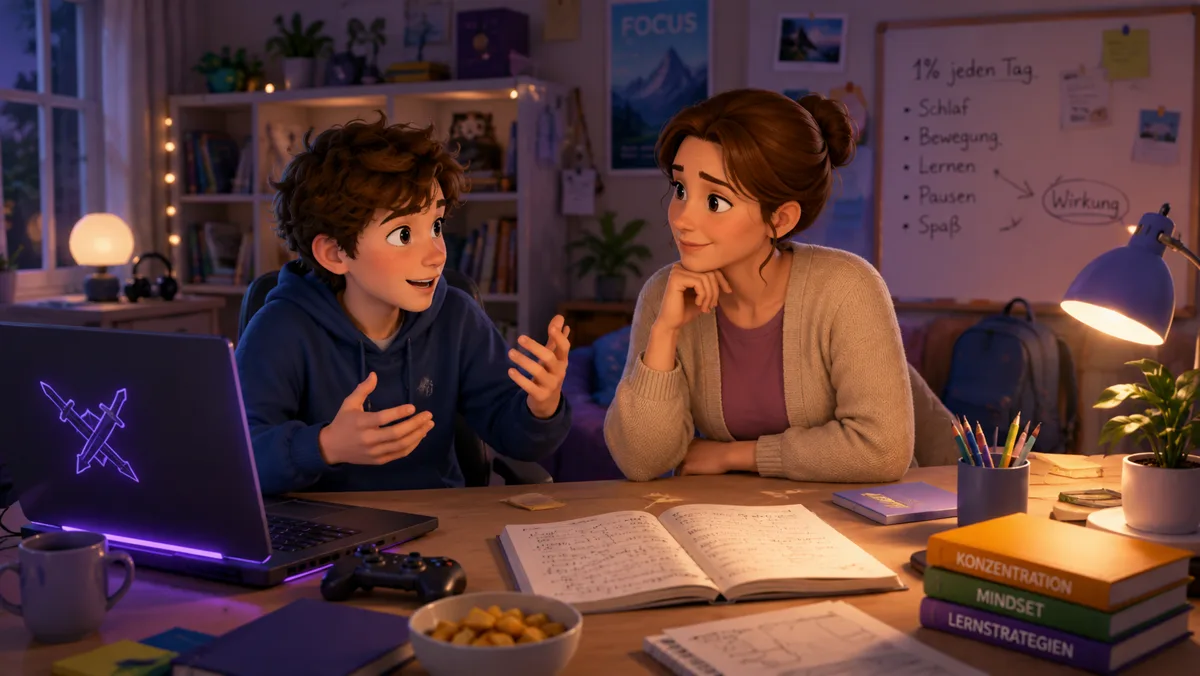
What parents can do in concrete terms:
 AI
AI- Show interest, do not judge.
Whoever listens without analysing straight away opens doors. Let your child explain what it experiences, what it feels, what challenges it. You do not have to like all of it — but you can understand it. - Connection before parenting.
Children need resonance, not control. When they sense that you are genuinely curious — not strategically but for real — closeness arises. And out of closeness grows trust. - Make learning an experience.
Use elements from games: clear goals, immediate feedback, visible progress. Not to replace school — but to give learning meaning again. - Think of the surroundings as a system.
Ask yourself: which conditions foster motivation? Where is autonomy, recognition or meaning missing? What in the family, at school or in free time can be adjusted — not the child, but the system? - Bear it, accompany, walk along.
Development is not a straight path. Some children need more time, others more safety. Parents who stay present instead of steering all the time are often rewarded with astonishing maturity.
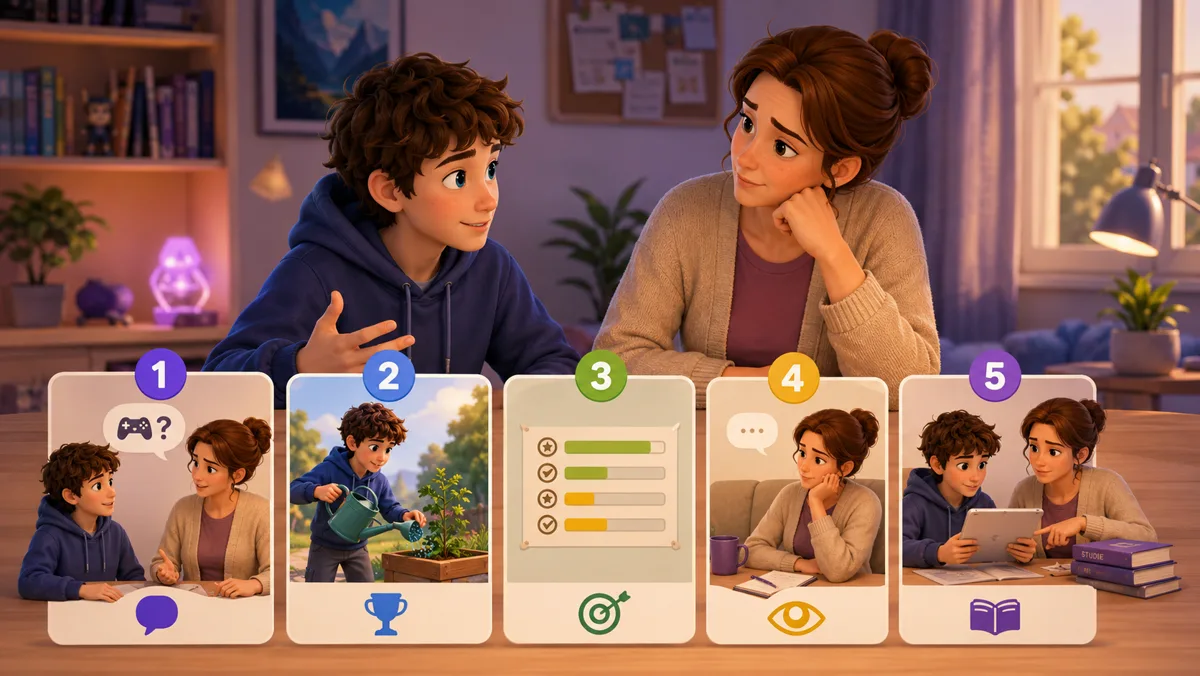
5 things you can do when your child games a lot
 AI
AI- Ask one open question about something in the game every week.
- Make a real sense of achievement possible outside the game.
- Build "level systems" for real learning goals (gamification).
- Observe without judging.
- Read a study about games together with your child.
What games actually give children — if you look closely
 AI
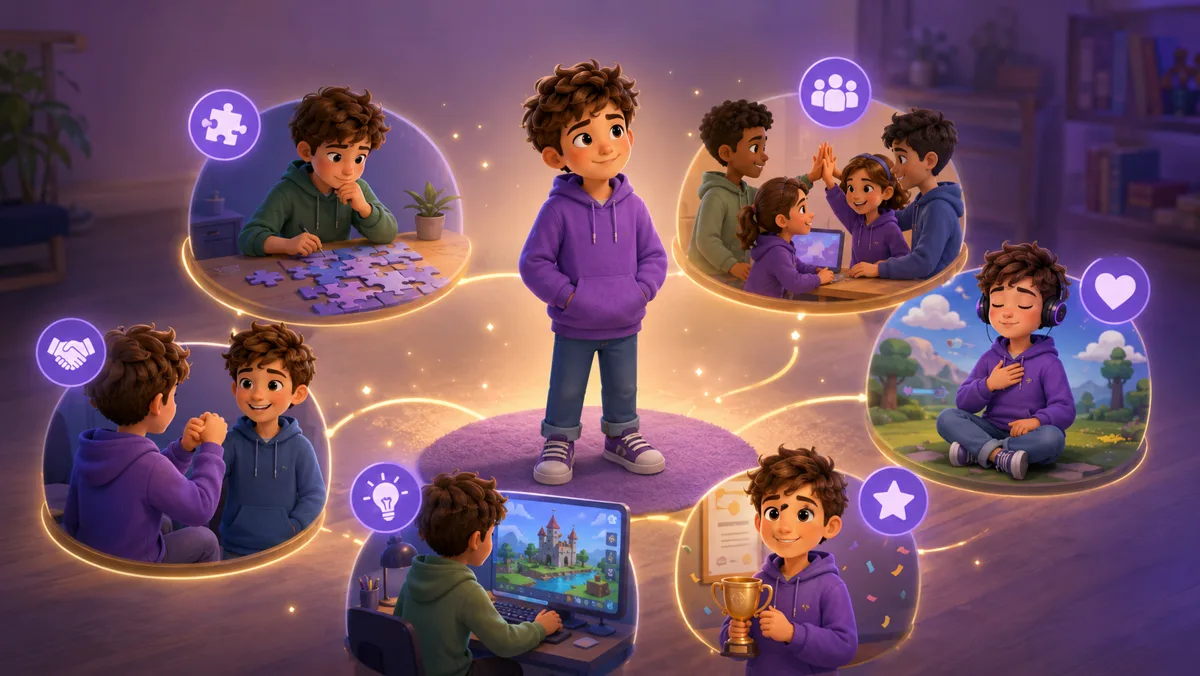
AIWhat is really lostwhen you take playing away from a child?
Because computer games — complex titles like Minecraft, World of Warcraft or League of Legends in particular — are far more than a pastime. Numerous studies now document the positive effects of games on young people's development:
- Cognitive abilities:
Studies show improvements in reaction time, problem solving, spatial thinking and decision making (e.g. Green & Bavelier, 2003; Granic et al., 2014). - Social skills:
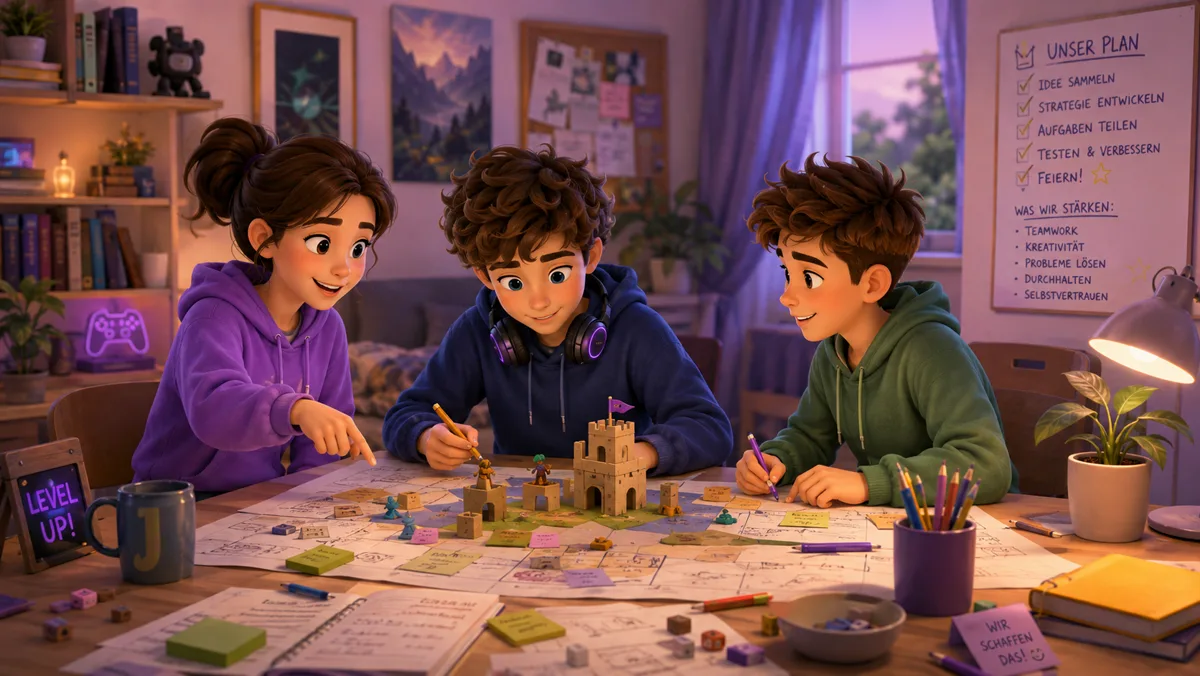
Multiplayer games foster teamwork, strategic communication and empathy — especially in competitive settings like the WoW arena or in cooperative survival in Minecraft (Ewoldsen et al., 2012). - Emotional self-regulation:
In the game children experience frustration, failure, pressure — and learn to deal with it. Games offer a training ground for perseverance, focus on goals and self-efficacy. - Self-worth & belonging:
In games children can experience what they often lack in everyday life: real recognition for what they achieve, belonging to a group, a clear sense of mattering. - Creativity & expression:
In sandbox or modding games above all, children develop complex worlds, systems, rules — abilities that often find no room at school.
Studies such as the one by Green & Bavelier (2003) show that action-rich games measurably improve visual attention and problem-solving skills.
And Granic et al. (2014) document positive effects on emotional self-regulation and social competence in a meta-analysis.
 AI
AIWhat this means for parents:
 AI
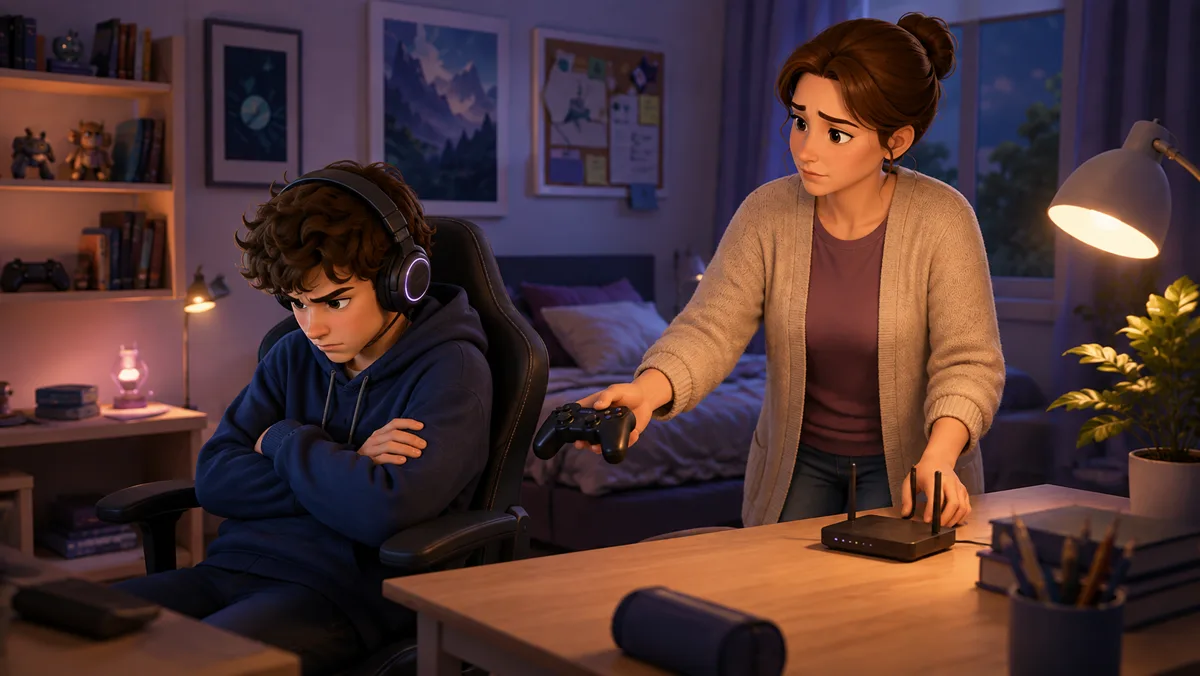
AIChildren who struggle at school or socially in particular experience the game as an outlet, a stage, a world in which they can grow.
Not every hour in front of the screen is the same.
It makes a big difference whether a child simply consumes — or whether it learns, creates, experiences, fights, solves, fails and gets back up.
So it holds: it is not time alone that is the problem.
The question is: What does the game give the child — and does the child get that outside it too?
In closing: not less play — but more real life
 AI
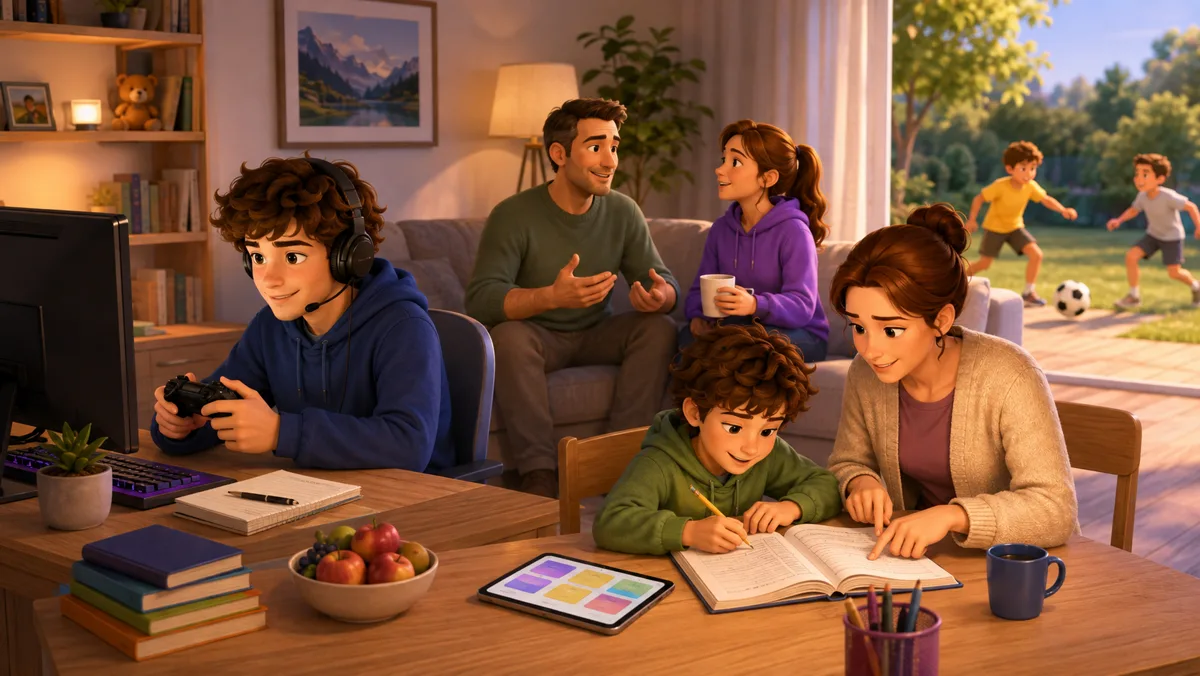
AIIt can be a hint. A symptom. A message. And whoever is willing to listen — not only to the gaming but to the system behind it — will understand what it is really about.
The game does not have to go.
What the game stands in for finally needs its place in real life.
Systems change when we stop fighting symptoms — and start understanding causes.
(after Donella Meadows)
What do you think — is your child fleeing, or on a journey?
UPDATE:
We have since launched an app for families that helps build media literacy and rediscover the motivation to learn. Take a look: https://haushelden.ai/