Product & growth
Customer lifetime value and subscriptions in EdTech

Imagine your child waking up gladly in the morning — because school is exciting.
Not because you have to motivate it, but because it motivates itself.
What if we could design our learning materials so that they have the same pull as the favourite game on the console?
And what if that were exactly the key — not only to more joy in learning, but also to the commercial success of education businesses?
Everyone deserves a learning world that fulfils them.
Yet in many classrooms that very fulfilment fades — routine has taken over.
And all the while an incredible force lies dormant in education: the ability to turn learning into real motivation. And the shift began long ago.
From 150 euros to millions in potential: what a single customer is worth today
A pupil is facing the Abitur. It is probably the most important exam of his school career so far.
So he reaches for study material — for three main subjects, one minor subject, revision booklets, exercise booklets. Six products at €25 each. The result: a customer lifetime value (CLV) of €150.
That is solid. Reliable. But also limited.
Because this CLV rests on a one-off need, a single moment of learning crisis.
But what happens when learning no longer only happens "at the last minute" — but continuously?
What if the platform builds not just exam fitnessbut genuine appetite for learning too?
What others have already achieved — and what that should tell us
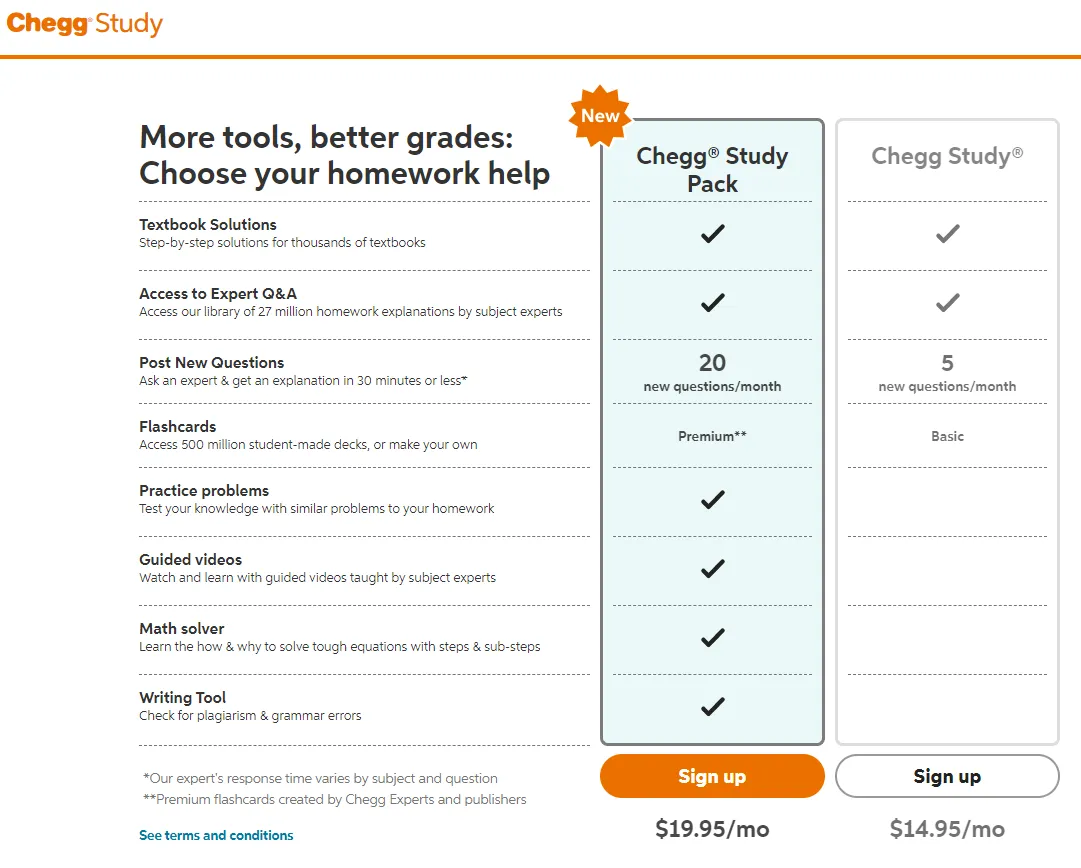
In the USA, Chegg shows how: a learning platformwhere pupils invest almost $20 a month — and not only at exam time.
At the time of its IPO, Chegg was worth 1.1 billion dollars. Why? Because it understood that learning is a continuous process — not a state of emergency.
What if we allowed the same shift in mindset in the German-speaking world?
A worked example
In Germany around 2.3 million pupils attend a Gymnasium.
A market share of just 4% would be 91,200 pupils.
At a monthly subscription price of €15 that would be around 16.4 million euros in annual revenue.
And that is only the tip of the iceberg:
- No more print deadlines
- Content that can be extended flexibly
- Real-time feedback instead of paper answer keys
- Closer to the reality pupils live in
A digital subscription model turns a linear book sale into a living learning system.
What has to change — and where the challenges lie
Of course: a platform on its own does not bring users.
Without clever online marketing, clearly defined KPIs and thought-through onboarding, every tool stays an empty shell.
That is why the right questions matter:
- Which features make users come back every day?
- Which part of the platform is so good that I would be sad if it were gone?
- What really motivates pupils — and what keeps them in the flow of learning?
These are not questions only founders or investors should ask — but everyone who shapes education.
Gamification is not a bonus — it is the missing piece of the puzzle
In education above all we need more than content — we need experiences.
Motivation arises where the brain gets to celebrate small victories.
Gamification — used properly — is not a gimmick but a design approach that gives users the feeling: This is where I belong. This is where I grow.
A strong subscription model combines:
- Continuous content
- An emotional user experience
- Relevant metrics such as CLV, cost per lead and retention
- Gamification design used strategically
In closing: the shift does not begin with technology — but with courage
Learning is allowed to excite again. Not only because it helps with exams — but because it feels good.
Because it gives children strength, relieves parents and inspires teachers.
Customer lifetime value is more than a metric.
It mirrors how much trust a user places in a learning system.
And that trust is exactly what we win when we offer more than books: a digital home for education.
And now?
Ask yourself:
would you recommend this platform to your own children?
If the answer is no — what would have to change?
Or put differently:
when will education start to shine again?
Perhaps today. Perhaps with your next concept.
Perhaps with one brave step out of the routine — and into what really counts.
Your next step: think further — and differently
If an article inspires you, it should not only be read but taken further in your own thinking. That is why I invite you to apply the ideas directly to your own education product or digital business model.
💡 1. Do the maths
How high is the average customer lifetime value (CLV) of your users at the moment?
And now imagine you went for a subscription model instead. What would change — in retention, in revenue, but also in the relationship to the product?
🧠 2. Think in usage — not only in revenue
Which features or content already make your users come back regularly today?
And what could you do to make them really look forward tothe next session? Perhaps through small gamification elements, clever UX or simply more heart in the details?
🔍 3. Play it through to the end
Suppose you launch a new digital education model on subscription tomorrow:
- What would be the one feature that really keeps users?
- How would the content have to feel — fresh, useful, perhaps even surprising?
- And hand on heart: would you use the product regularly yourself? If not — what would have to change?
Curious?
Then now may be exactly the right moment to think not only about business models but about real learning experiences. Because in the end what counts is not only how often somebody pays — but how much they want it.
What would your subscription model look like — one that does not just sell, but delights?
Current pricing models on German online education platforms:
| Name | Model | Pricing | Link |
| Cleverly | Single lessons | €22.50–40.00 per hour | https://cleverly.de/preise |
| StudySmarter | Monthly and annual subscription | €7.99/month €54.99/year |
https://www.studysmarter.de/magazine/studysmarter-studocu-vergleich/ |
| SofaTutor | Basic/Premium subscription | €11.99 per month €14.99 per month |
https://www.sofatutor.com/preise |
| Scoyo | 1/6/12-month subscription Discounts per child |
14,99€/8,99€/6,99€ effective per month |
https://www.scoyo.de/abos-und-preise/ |
| Grammario | In-app purchases | €9.99/month; €47.99 for 6 months €83.99 for 12 months |
https://apps.apple.com/de/app/grammario-grammatik-lernen/id1554138665 |
| FoBizz | School licence | Basic free School from €500 |
https://fobizz.com/preise/ |
| Know Unity | Annual subscription | €71.80 per year | https://knowunity.de/pro-plan |
| Hello World App | Private Beta | – | https://www.hhhelloworld.com/ |
| Scobees | Year-group and school licences | 0, €1,950–4,900/year | https://scobees.com/preise/ |
| Knowbody App | Class and school licences | Free / €150 per class / €400 per school |
https://knowbody.app/preise-und-lizenzen/ |
| Yuno | In-app purchases | €12.99/month €79.99/year |
https://apps.apple.com/de/app/yuno-wissen-zum-h%C3%B6ren/id1500143611 |
| Fox Education | Basic–Max licence per pupil |
€1/€1.50/€2 per pupil | https://foxeducation.com/de/schoolfox/packages-prices/ |
| Easy Tutor | One-off packages Monthly quotas |
€189.90/month €189.00/month €438.00 one-off |
https://www.easy-tutor.eu/preise/ |
| Edurino | Physical product bundle + extra figures | €159–219 starter €24.99 add-on |
https://www.edurino.com/ |
| Sdui | School licences | Individual | https://sdui.de/weiterfuehrende-schulen/ |
| to teach | Subscription | €0/€5/€10 month €0/€50/€100 year |
https://to-teach.ai/ |
| Fiete | Pupil subscription School subscription |
€9.90/month/pupil From €490/school |
https://www.fiete.ai/pricing |