Product & growth
Which US incubator or accelerator programme for which tech founder in 2026?

The USA has several hundred active programmes. Most of them do not fit you — and most of the terms are worse than you think. Here is how to find the right one anyway.
For the German market I have already broken down systematically once which incubator or accelerator programme fits which tech founder. The question I have been asked most often since is the obvious follow-up: and what does that look like in the USA?
The honest answer: harder to survey, more expensive in equity — and with a few programmes for which Germany simply has no equivalent.
Anyone working through the US landscape runs into the same basic problem as in Germany, just one size larger: almost every programme describes itself with the same three words. Mentorship. Network. Community.
That does not help. What helps is understanding what a programme gives you access to that you cannot buy for yourself — and what it costs you in shares.
If you want to search all the programmes researched here yourself and filter by type, sector, location and equity model, the full interactive database is at luciankatzbach.de/en/us-incubators.
The most important insight first: the US numbers are bigger — but not automatically better
Y Combinator gives you up to $500,000 for around 7 per cent. Techstars $220,000 for 5 per cent. That sounds like more money than any German programme. It is.
But the real value rarely lies in the cheque.
What counts in the USA is access to exactly the investor or customer network you would otherwise have to build up laboriously over months. A Y Combinator batch opens practically every follow-on round in the Silicon Valley ecosystem — not because of the money but because of the signal.
A Comcast NBCUniversal LIFT Labs pilot project opens direct access to a Fortune 50 corporation as your first large customer — with no capital and no equity given up, ever since the programme was completely restructured in 2023.
And as in Germany: many of the strongest US programmes take zero per cent equity. FinTech Innovation Lab New York, StartX, MassChallenge, Comcast NBCUniversal LIFT Labs, Google for Startups Accelerator, Village Capital — none of them take shares.
Anyone giving away 6 to 16 per cent of their company early for a programme should know very precisely what for.
Ten scenarios — and which programme fits each one
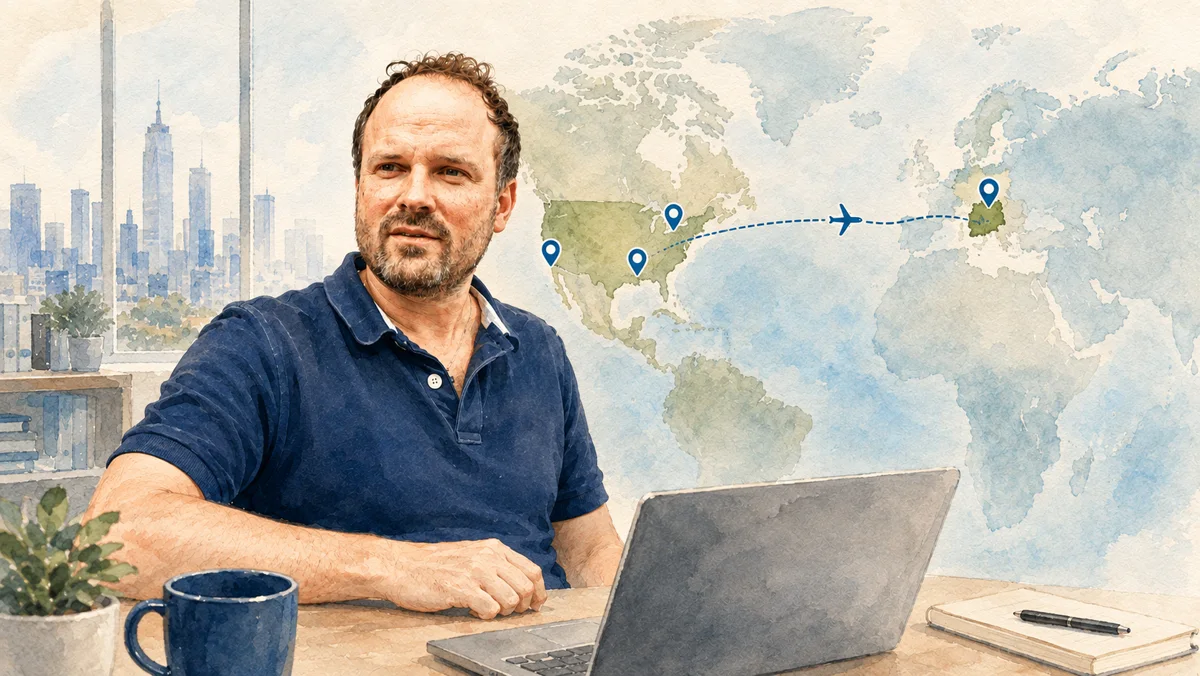
1. You are an international founder and want to enter the US market
 AI
AIVentureOut (New York) is the largest platform specifically for international startups that want to make the jump into the US market. No fixed investment model — instead one-week "Explore" programmes or three-month "Execute" programmes, tailored to your concrete market-entry strategy.
More than 1,000 alumni, over $2 billion in follow-on capital brokered. The curriculum is cut to five competences: enterprise sales, digital marketing, messaging, branding, fundraising.
If you want to carry a German idea one-to-one into the US market, this is the most structured way in.
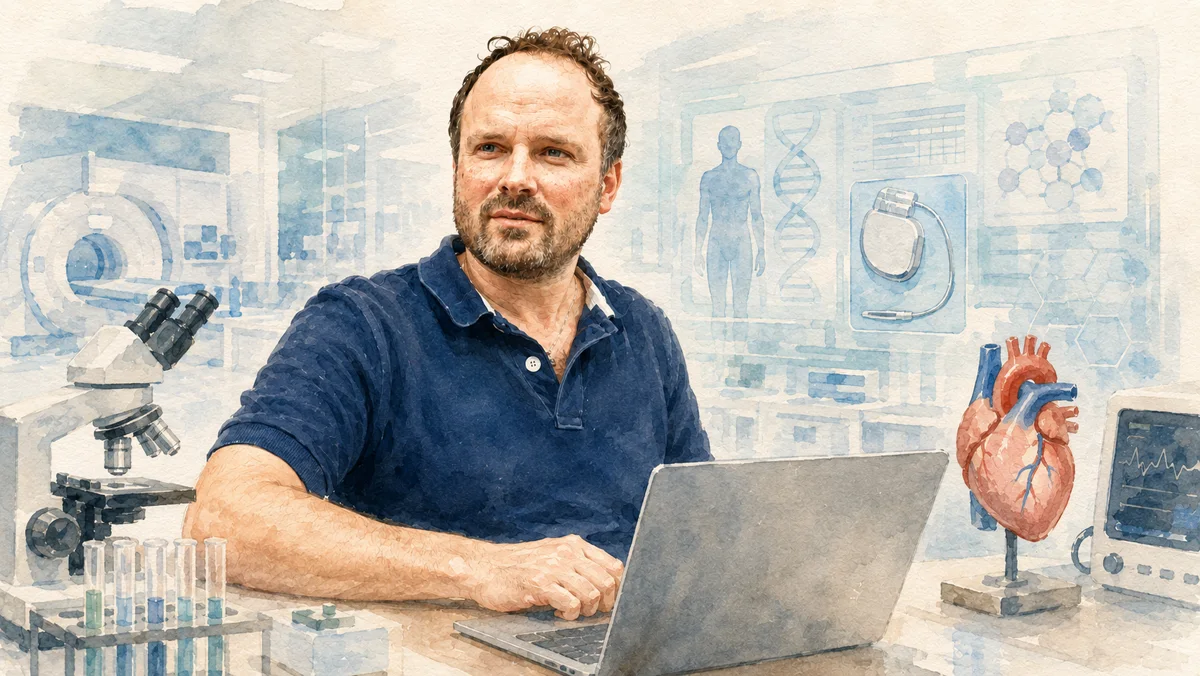
2. You are building a HealthTech or MedTech startup
 AI
AIMedTech Innovator (Los Angeles, remote-capable) is by its own account the largest and highest-performing MedTech accelerator in the world — fully virtual since 2015, open to companies up to Series C. Taking part itself costs no equity.
Included: free participation in the WSGR Medical Device Conference in San Francisco and full accreditation for the MedTech Conference powered by AdvaMed in October, each with a stage slot in the showcase in front of industry decision-makers.
If you are building early-stage biotech instead, where physical lab infrastructure makes the difference: SOSV/IndieBio (San Francisco/New York) gives up to $525,000 for around 6 to 9 per cent equity — including its own wet labs as mandatory infrastructure, not as an add-on.
3. You do not want to give up equity
 AI
AIIn the USA too this is not a sign of caution but in many cases the right calculation.
FinTech Innovation Lab New York is the clear core programme here: twelve weeks, founded by Accenture and the Partnership Fund for New York City, explicitly "non-dilutive" — no equity, no obligation to invest.
Active for 15 years, more than 270 FinTechs supported that have together raised more than $3 billion in follow-on capital, 32 exits.
Comcast NBCUniversal LIFT Labs (Philadelphia) switched completely to a zero-equity model in 2023. All 18 companies in the last AI accelerator cohort secured pilots or commercial deals directly with Comcast, NBCUniversal or Sky.
StartX (Stanford) is non-profit, takes no equity and can point to more than 130 exits in its own alumni portfolio — though it is open only to the Stanford community.
MassChallenge (Boston plus international locations) is equity-free in the USA as its sister programmes are worldwide: zero per cent equity, a prize competition instead of a shareholding deal.
4. You are a solo founder without a co-founder
 AI
AIAntler US (New York) runs the same co-founder matching model as Antler Berlin — with somewhat more favourable terms than in Germany. If you are technically strong and looking for a business co-founder, this is structurally the best place for you.
South Park Commons (San Francisco/New York) goes one step further back: no fixed batch but an open fellowship for people who do not even have a concrete idea yet — the "minus one to zero" phase.
Up to $1 million ($400,000 for around 7 per cent plus $600,000 guaranteed in the next round). No demo day — the introductions to investors happen individually, when you are ready.
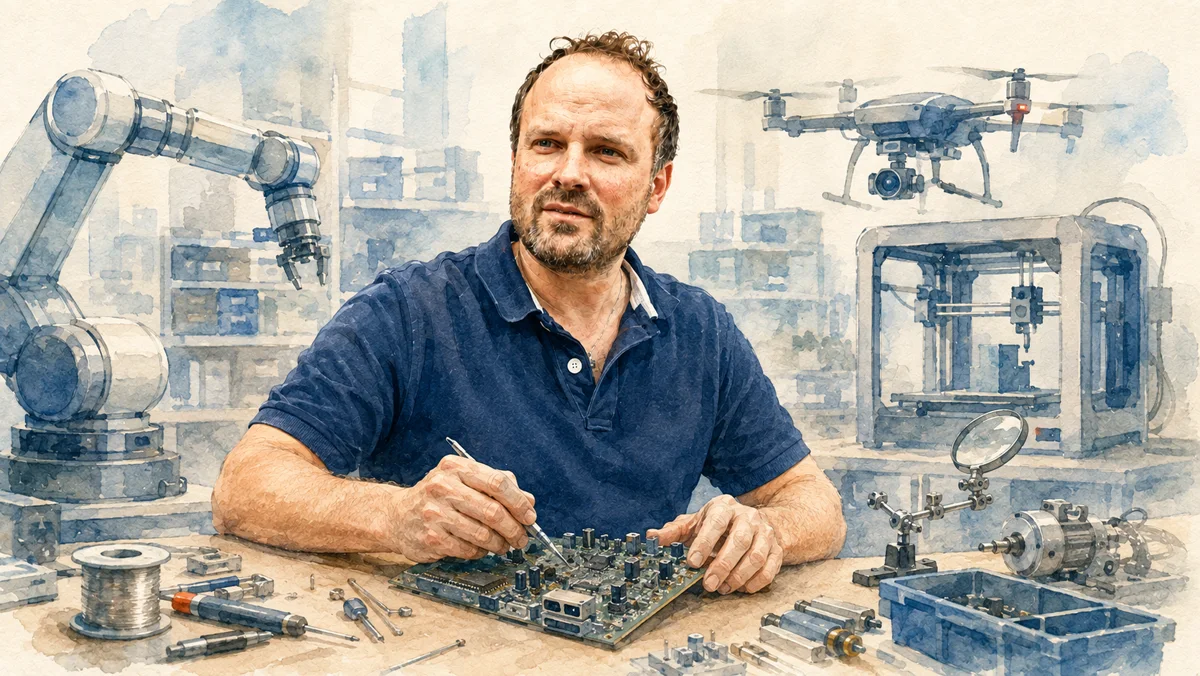
5. You are building deep tech or hardware
 AI
AISOSV/HAX (Newark, New Jersey) is the hardware counterpart to IndieBio: $250,000 to $550,000 for 8 to 16 per cent equity, with its own production infrastructure on site. Six months of programme, because hardware cycles are longer than software sprints.
Greentown Labs (Boston and Houston) is the largest climate-tech workshop network in the USA — physical prototyping infrastructure at both locations, no equity in the core programme.
On top of that come specialised tracks such as ACCEL (together with Browning the Green Space, aimed specifically at BIPOC-led climate-tech startups) and the Carbon to Value Initiative (with the Urban Future Lab of NYU Tandon School of Engineering and Fraunhofer USA).
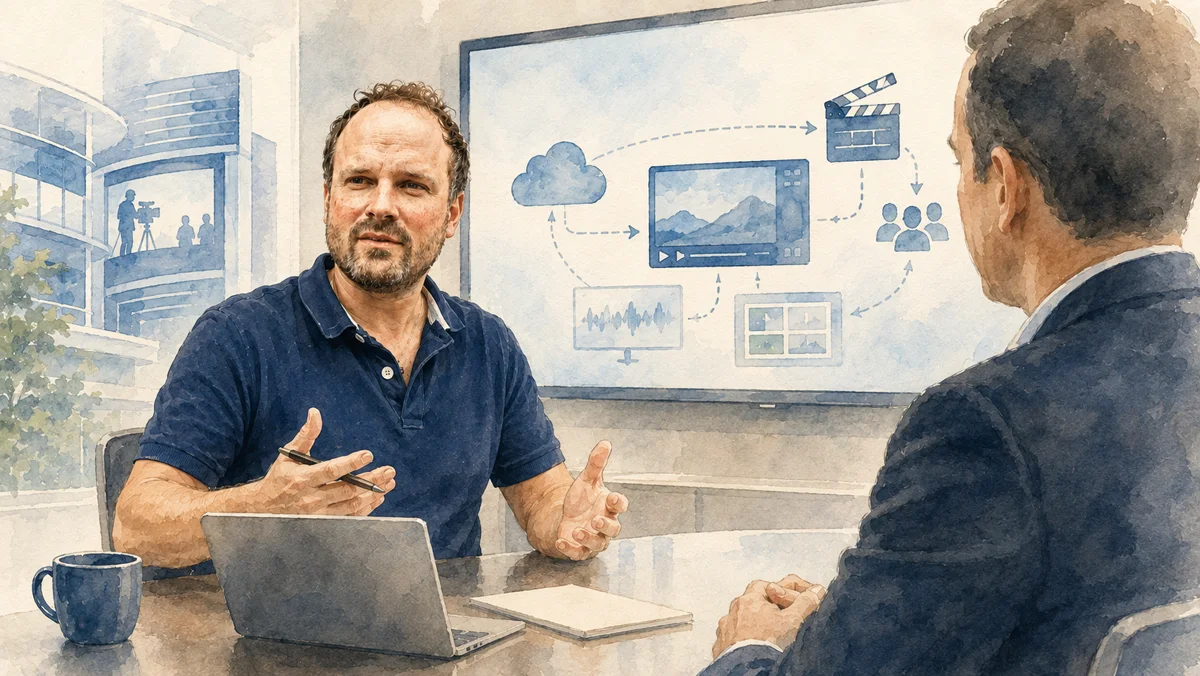
6. You specifically want a particular corporation as a pilot customer
 AI
AIDisney Accelerator (Glendale, California) takes exclusively venture-backed growth-stage startups, five to ten companies per cohort. The 2026 intake runs from July to November, hybrid with attendance required for milestone weeks.
Alumni since 2014: Epic Games, ElevenLabs, Kahoot!, StatusPro. Current focus: XR and immersive media, AI, sports tech, robotics.
Comcast NBCUniversal LIFT Labs (see scenario 3) is the equity-free alternative for everything around connectivity, media and entertainment.
7. You are building CleanTech or climate
 AI
AIHere too, first Greentown Labs (see scenario 5) — the broadest physical infrastructure offer in US climate tech.
Alongside it, Third Derivative is talked about as a pure climate accelerator; the exact current terms there vary strongly by track. I deliberately name no figure here that I have not checked directly against the programme page — a point you should verify yourself before applying.
8. You are building FinTech or want to be in the US financial centre
 AI
AIFinTech Innovation Lab New York (see scenario 3) is structurally the closest US counterpart to TechQuartier Frankfurt from my German article: fully funded, equity-free access to the country's most important financial institutions, in this case organised through Accenture and the Partnership Fund for New York City.
For the Midwest with a more direct focus on banks and insurers: SixThirty (St. Louis) — here too the current terms should be checked individually before applying.
9. You want to win US enterprise customers, not a consumer product
 AI
AIAlchemist Accelerator (San Francisco) is the pure B2B and enterprise specialist among the US programmes: six months of programme instead of the usual three, because enterprise sales cycles take considerably longer than is usual in consumer business. The core value is the corporate buyer network, not the demo day.
Comcast NBCUniversal LIFT Labs offers structurally the same promise, only industry-specific: a real pilot customer, not a pitch appointment.
10. You are an impact startup
 AI
AIAn impact startup is a company whose business model is built from the start around a measurable social or environmental effect — not as a side effect but as part of the core business, often oriented towards the UN Sustainable Development Goals (SDGs).
The difference from a classic startup: success is measured not only by revenue or exit valuation but additionally by the effect achieved, which also changes the choice of fitting investors and programmes.
Village Capital (Washington, D.C.) has a model for which Germany has no direct equivalent: peer-selected investment. The founders within a cohort assess each other against structured criteria — and this peer ranking directly influences who gets capital.
More than 70 cohorts have run on this model, with more than 110 startups funded through the associated fund VilCap Investments and over $4 billion in follow-on capital mobilised. No equity in the classic sense — partly prize money, partly fund capital allocated through the peer process.
Three programmes that rarely show up on the radar
South Park Commons is not a classic accelerator but a pre-idea fellowship with guaranteed follow-on capital. The German landscape simply has no structural counterpart — the closest would be a very informal angel network, but without the contractual capital commitment.
FinTech Innovation Lab New York is, despite 15 years of history and more than $3 billion in follow-on capital, considerably less well known than Y Combinator or Techstars — presumably because it markets itself not as an "accelerator" but as a consortium of Accenture and the largest NYC financial institutions.
Village Capital is the only case in this list where the founders themselves have a say in how capital is allocated. For impact-oriented clients that is a unique feature they will not find in any German programme.
The five questions to ask yourself before you apply
- What do you get that you cannot buy for yourself? Capital is available in many ways. Access to Comcast business units, Stanford alumni networks, wet labs or a Fortune 50 pilot is not. That is the decisive filter — even more so in the USA than in Germany, because the sheer size of the capital sum there is so much larger that it easily distracts from the real value.
- Is the corporate partner really your target customer? A media corporation like Comcast is no use to you if your customer is a hospital operator. Corporate accelerators have an interest of their own — which can be an advantage (an immediate pilot partner) or a limit on your independence. Both are legitimate, as long as you know what you are getting into.
- Does the US market access justify giving up equity? Unlike most German programmes, top-tier US accelerators frequently sit at 6 to 9 per cent, and considerably above that for hardware and biotech. The question is not whether that is a lot — it is. The question is whether the US market access you would not get otherwise is worth that price to you.
- How far along are you really? Some programmes (South Park Commons, Antler) take you before the actual idea. Others (FinTech Innovation Lab, MedTech Innovator from Series B maturity) require solid traction. Read the admission criteria as carefully as a term sheet.
- Are you ready to be there physically? Most top-tier US programmes — unlike many German counterparts — demand real presence in the USA, often for weeks or months. For founders outside the USA this is the point most often underestimated: the flight is the smallest hurdle, the visa and the time on the ground are not.
In closing
The US accelerator landscape is larger, better capitalised and harder in its terms than the German one. But the basic principle stays exactly the same as in my article on the German market:
the best accelerator is not the one with the biggest cheque or the best-known name. It is the one that opens the access you cannot get for yourself, in your concrete situation.
And here too: sometimes the result of this analysis is a different US programme from the obvious one — or none at all, at least not now. That is a legitimate decision too.
This article rests on systematic research into 153 active US incubators and accelerators (as of mid-2026), 86 of them with terms checked individually against primary sources. For the German market the parallel analysis applies: Which incubator or accelerator programme for which tech founder in 2026?. The full, filterable US database is available at luciankatzbach.de/en/us-incubators.