Product & growth
More active users, more value: how monthly active users raise your customer lifetime value – and how gamification changes that

 AI
AIWhen you build a SaaS product, two metrics stand in the spotlight more often than any others:
Monthly Active Users (MAUs) and the Customer Lifetime Value (CLV).
But how exactly do these two numbers hang together? And what real difference does gamification make?
Let us untangle that — with a clear calculation and concrete ideas for putting it into practice.
First, briefly
This text works with a few abbreviations from everyday product work. If one of them means nothing to you — here they are. After that the rest reads by itself.
- DAU, WAU, MAU
- Daily, weekly and monthly active users: how many people actually used your product in a day, a week or a month. Not signed up — used.
- Which of the three counts depends on the product. A chat tool you want to see daily, tax software once a month.
- The ratio is where it gets really interesting: DAU divided by MAU tells you on how many days of the month an average user drops in. 0.2 means every fifth day. This figure says more about your product than any absolute user number.
- Retention
- Retention — the share of users still there after a certain time. "30-day retention of 54%" means: of a hundred new users, 54 are still active a month later.
- Churn
- The flip side of retention: the share that leaves. At 54% retention, churn is 46%.
- CLV — customer lifetime value
- What a customer brings you over the whole time they stay.
- ARPU — average revenue per user
- The average revenue per user per month.
- Referral
- A recommendation: new users who come to you through existing ones.
- A/B test
- Run two versions at the same time, half the users seeing one each — then measure which does better.
- Power User
- The small group that uses your product most intensively. Often the best source of what really creates value.
- SaaS — software as a service
- Software you rent rather than buy; it runs at the provider, not at your place.
- XP, Badges, Leaderboards
- Building blocks from game design: experience points for visible progress, badges for goals reached, leaderboards for comparison with others.
1. Why MAUs are more than just "traffic"
 AI
AIMonthly active users (MAU) are not just a sign of interest. They are an early indicator of Retention — that is, of the question:
do your users come back? Do they stay active? Or do they forget your tool after the first login?
The higher the MAUs, the more likely:
- that your users get the full value of their subscription
- that they renew
- that they bring others along (referral)
 AI
AIIn other words: MAUs are the pulse of your product.
2. How do MAUs affect customer lifetime value?
 AI
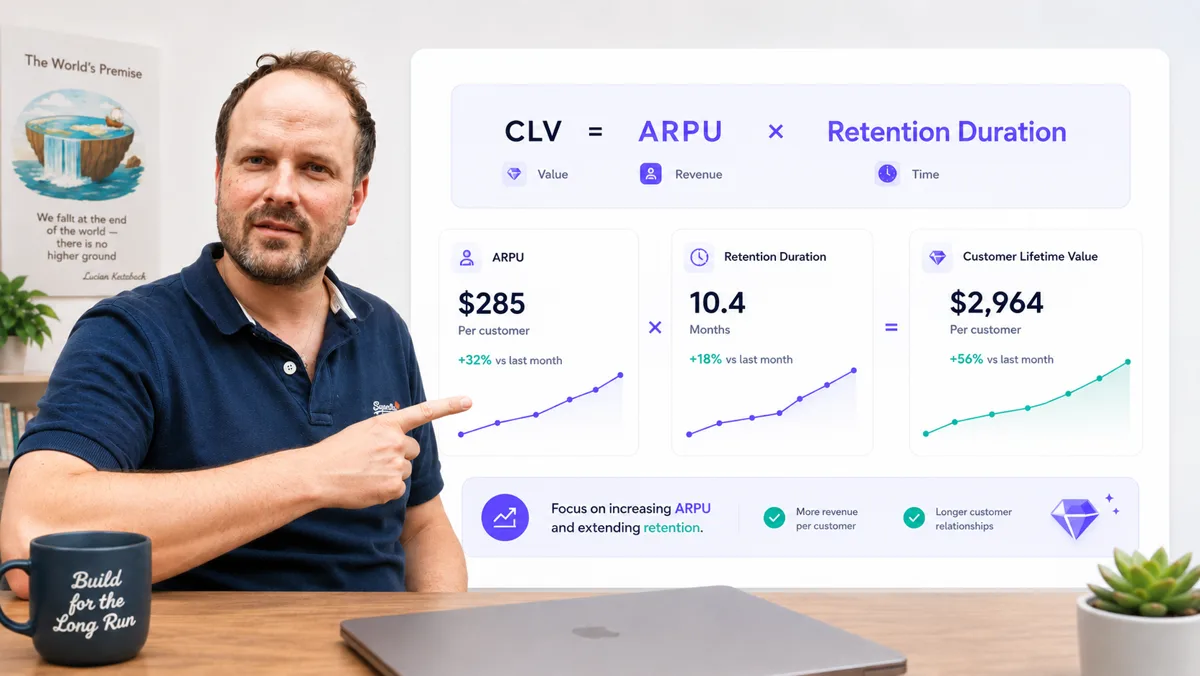
AIThe Customer Lifetime Value (CLV) is the average revenue a customer brings over the whole time they use your product. The simple formula is:
CLV = ARPU × retention period
Where:
ARPU = average revenue per user (per month)
Retention period = average number of months a user pays
But here is the decisive point:
the more active your users, the longer they stay.
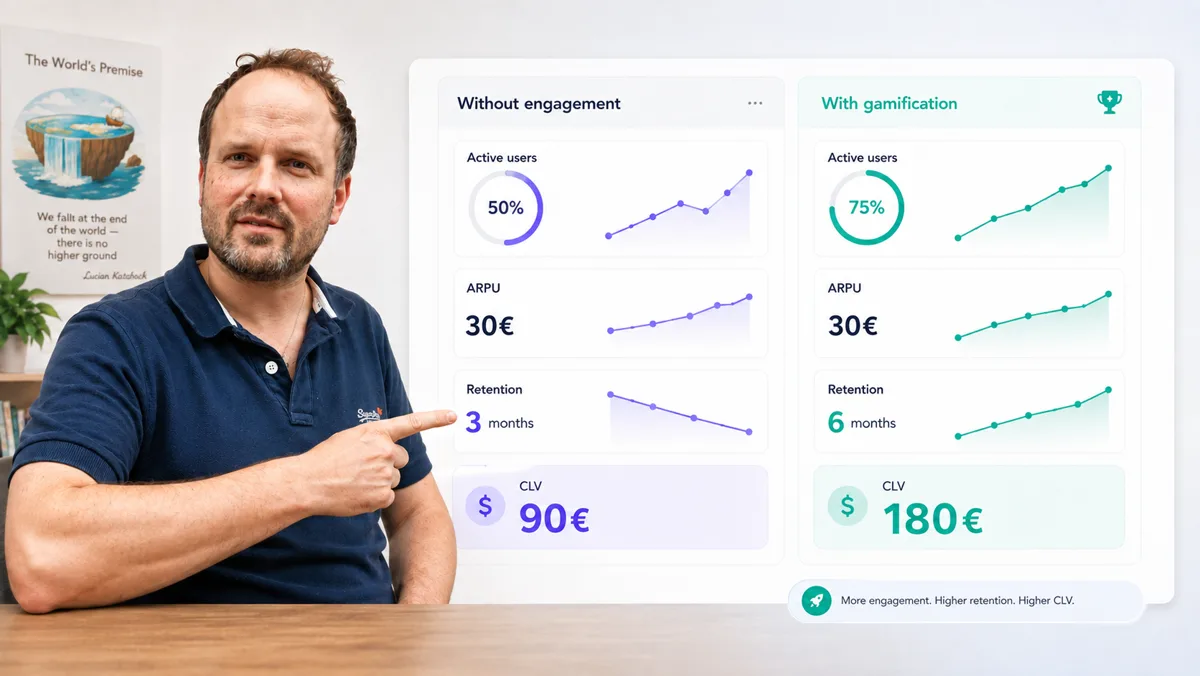
Worked example:
 AI
AI| Scenario | Active users | ARPU | Retention (months) | CLV |
|---|---|---|---|---|
| Without engagement | 50% active | 30€ | 3 months | 90€ |
| With gamification | 75% active | 30€ | 6 months | 180€ |
A difference of twice the CLV — at the same product price.
The only change: more activity through motivating design.
3. Gamification as an activity booster
 AI
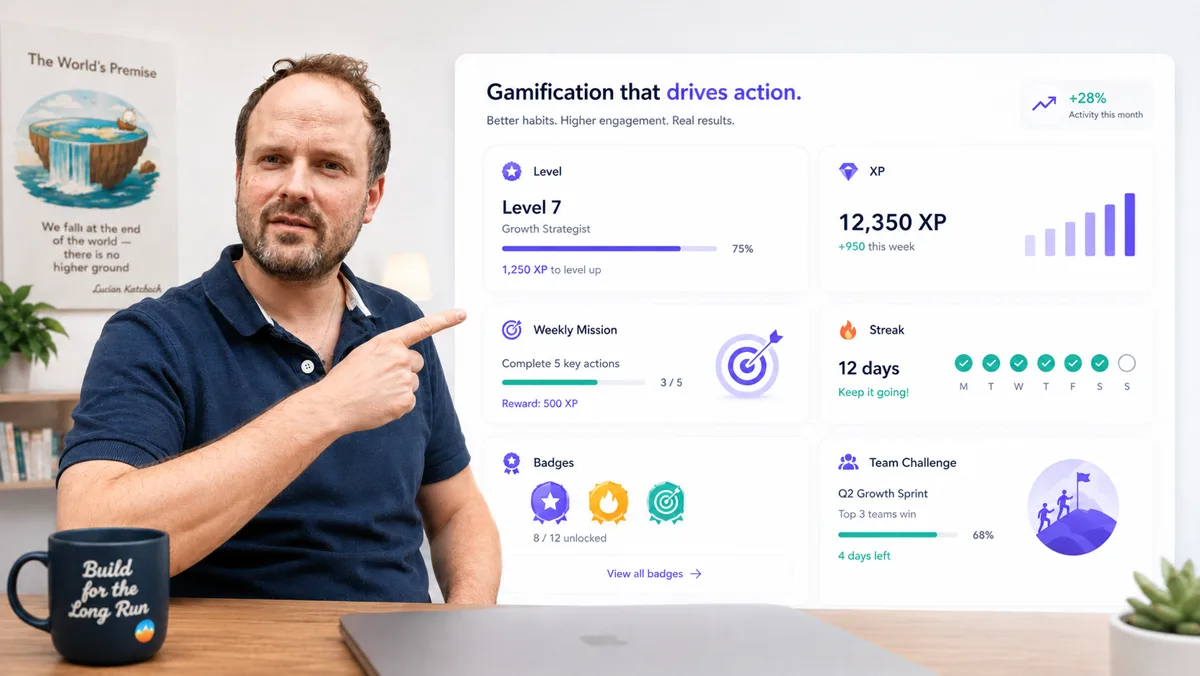
AIGamification is not a bonus feature. It is a strategic lever.
Used properly it raises retention through:
- Visible progress (levels, status, XP)
- Personal relevance (missions, challenges)
- Immediate feedback (rewards, badges, sound)
- Social involvement (teams, leaderboards, cooperation)
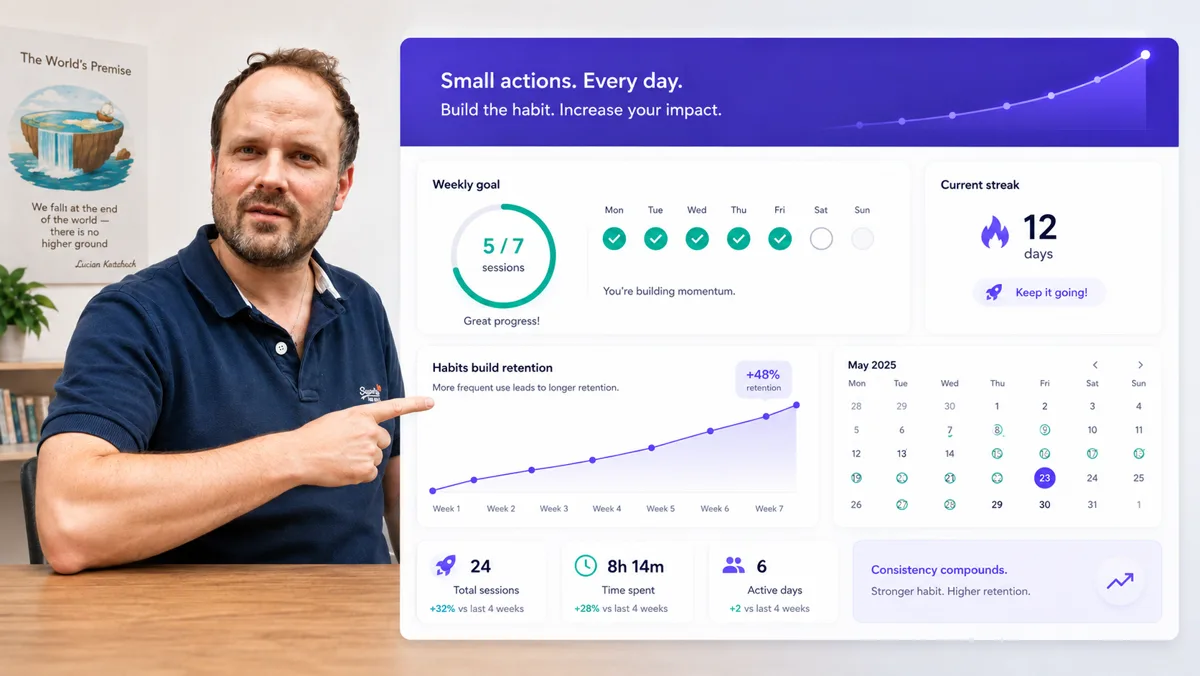
The more often your product is used, the sooner it becomes a habit — and that is exactly what lengthens retention dramatically.
 AI
AI4. The sweet spot: gamification + metrics
 AI
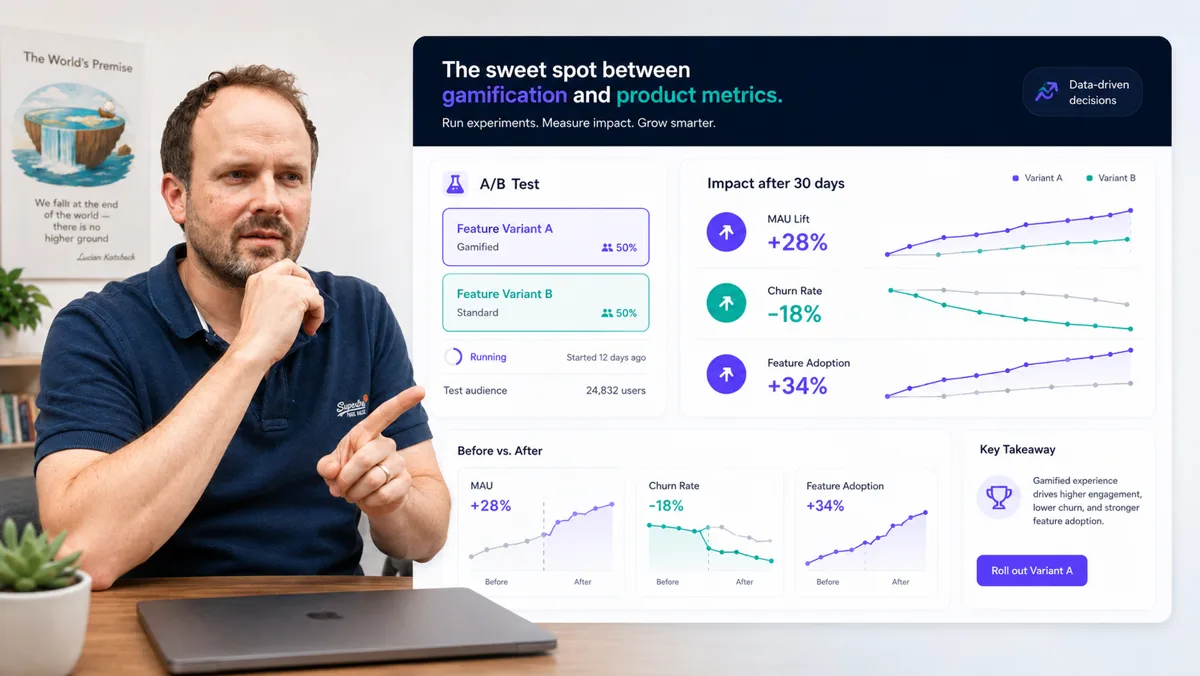
AIInstead of handing out points blindly, you should measure:
- Which gamification elements correlate with longer use?
- How does the MAU curve change after particular missions or rewards are introduced?
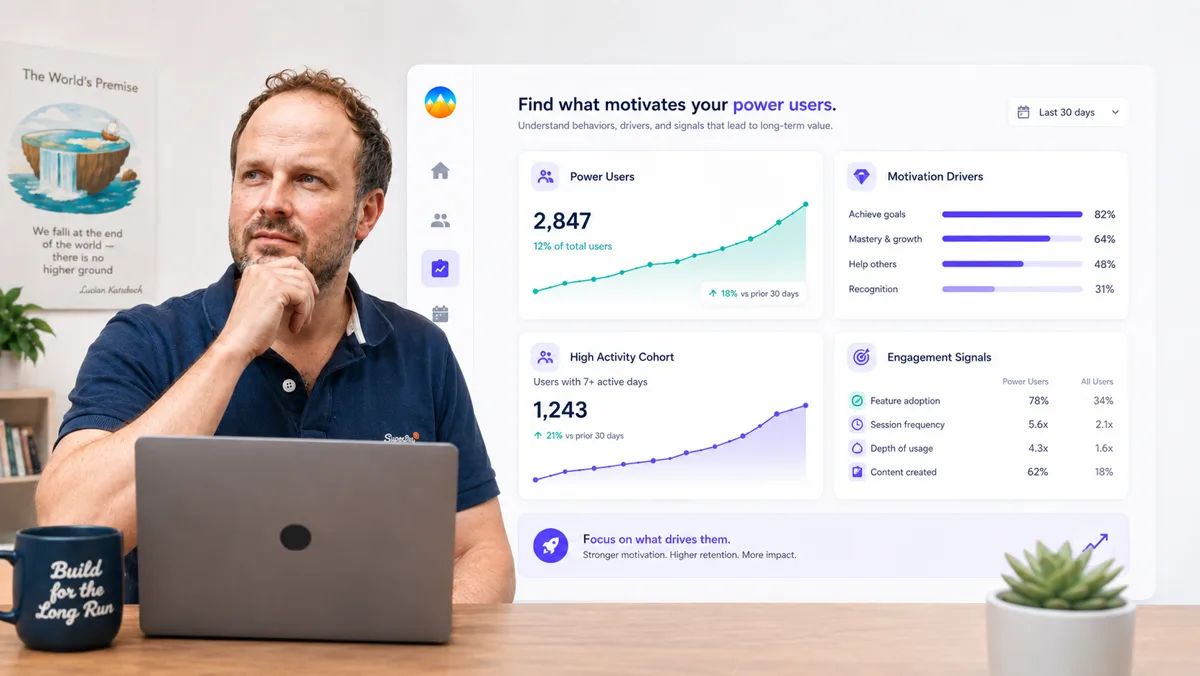
- Who are your "power users" — and what motivates them?
 AI
AITip: Start with a small A/B test:
Add a small level system or a weekly goal.
Measure how MAUs and the churn rate change.
If you build a level system, make sure the levels actually mean something and are not merely organisational units. You want a noticeable effect on your MAU.
In closing: activity is gold — and gamification the key
 AI
AIIf you take your MAUs seriously you raise your CLV measurably — not by raising prices but through real user behaviour.
And that is exactly where the potential of gamification lies:
not in gimmickry but in thought-through, psychologically grounded product design.
Whoever motivates their users today pays less for acquisition tomorrow — and builds long-term value.
Curious which gamification strategy fits your product?