Product & growth
Retention design 2025 for SaaS

 AI
AIWhy we have to stop merely winning users — and start keeping them instead.
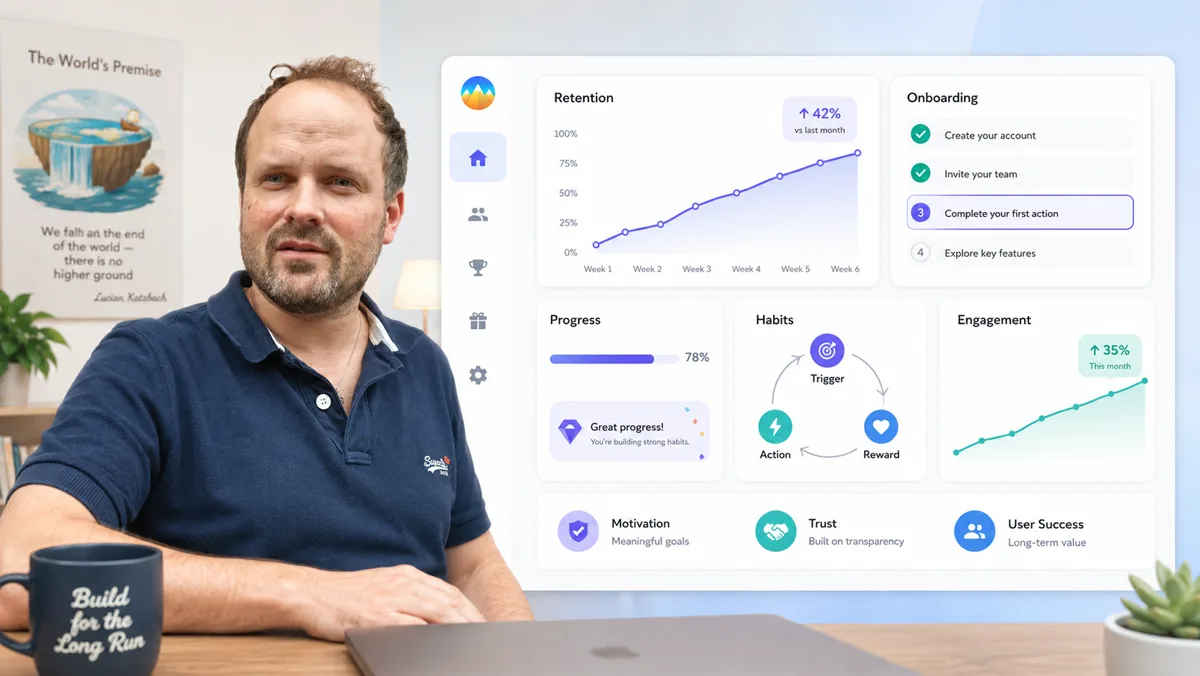
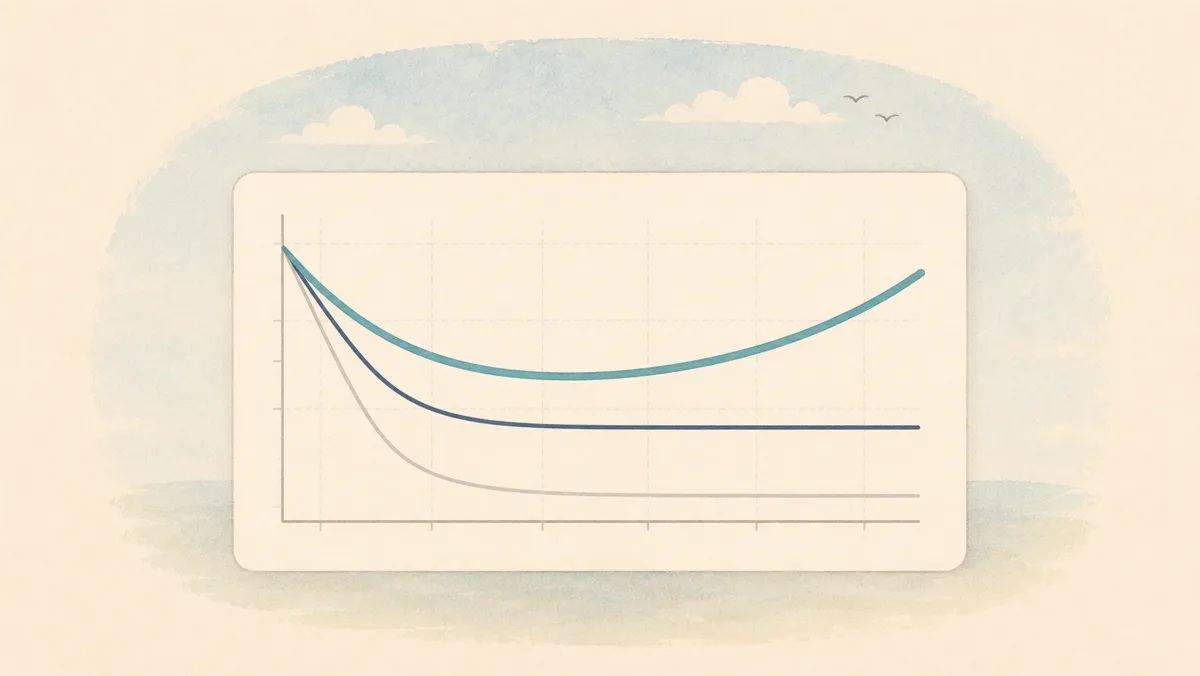
Retention is the new growth. While many SaaS products still concentrate on acquisition and first conversions, the real lever for lasting success often starts much later: in the user experience after the first login.
This is exactly where retention design comes in — a holistic approach that combines UX, psychology and gamification in order to activate, motivate and hold on to people for the long term.
2025 will not be the year of new features — it will be the year of thought-through experiences. Whoever manages to involve their users not only technically but emotionally gains more than time on the product: trust, brand attachment and recommendations.
The best SaaS products of tomorrow do not build interfaces — they build habits.
In this article we look at how modern gamification techniques already influence retention decisively today — with real examples from tools like Asana, HubSpot or ProdPad.
We show why leaderboards, badges, small rewards and smart checklists are more than "gimmickry" — and what you can take from them for your own product strategy.
"Retention design is not a UI trick but the art of keeping users where they really make progress."
Along the way we answer the central questions: what exactly is gamification in the SaaS context? How do good gamification approaches differ from bad ones? And how can retention be improved measurably — without overloading the product?
Welcome to the future of SaaS. Welcome to Retention Design 2025.
 AI
AIWhat is gamification in SaaS?
 AI
AIGamification in SaaS does not mean simply building in points, badges or levels. It is about something deeper: the deliberate design of user experiences that motivate people to change their behaviour in the interest of their own success — and thereby in the interest of the product's success too.
The point is that a tool should not only be useful but also get used. Regularly, gladly and with a sense of meaning and progress.
In practice that means gamification helps users experience a product's actual value promise more often — through routines, small goals, visible progress or targeted impulses.
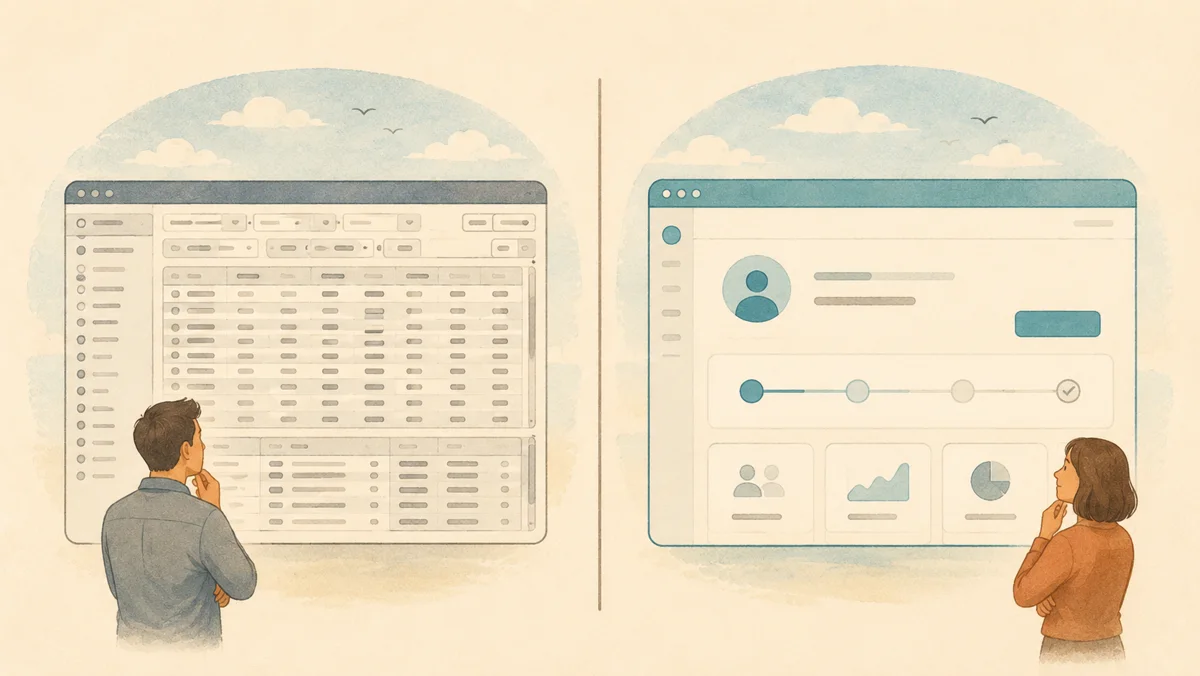
Unlike classic UX, which aims at smooth flows and comfort, gamification cares more about motivation and attachment. It is not about "more clicks" but about lasting use of the product.
A typical misunderstanding: gamification is supposed to talk users into more activity, whatever that activity is. But that falls short. If somebody uses a SaaS tool for invoicing, it is of course absurd to try to get them to write more invoices than their business actually yields.
The key does not lie in the quantity of tasks but in the quality of the relationship with the product.
Instead gamification can help create motivation at the right point — for better control of liquidity, for looking after customers or for chasing open payments. Exactly the tasks that often get neglected although they are critical to success.
Through small incentives, progress feedback or smart reminders, such activities can be made easier and more motivating. And this is exactly where gamification unfolds its strategic power: it turns pure transaction software into a digital instrument for running a business.
From a product point of view that brings enormous advantages. The customer lifetime value rises because users feel the value and stay longer. Willingness to upgrade or to recommend grows, because the product is perceived as an active partner in daily business — not just as a service provider.
And the best part: gamification can produce this effect directly at the user, through the interface — scalable, data-driven and with no extra support costs.
That is why I am convinced: in the SaaS context gamification is not a playful gimmick but a strategic lever. Used properly it turns a good tool into a daily ritual of success for the customer — and in a contested SaaS market in 2025 that is a real competitive advantage.
How do you gamify a SaaS?
 AI
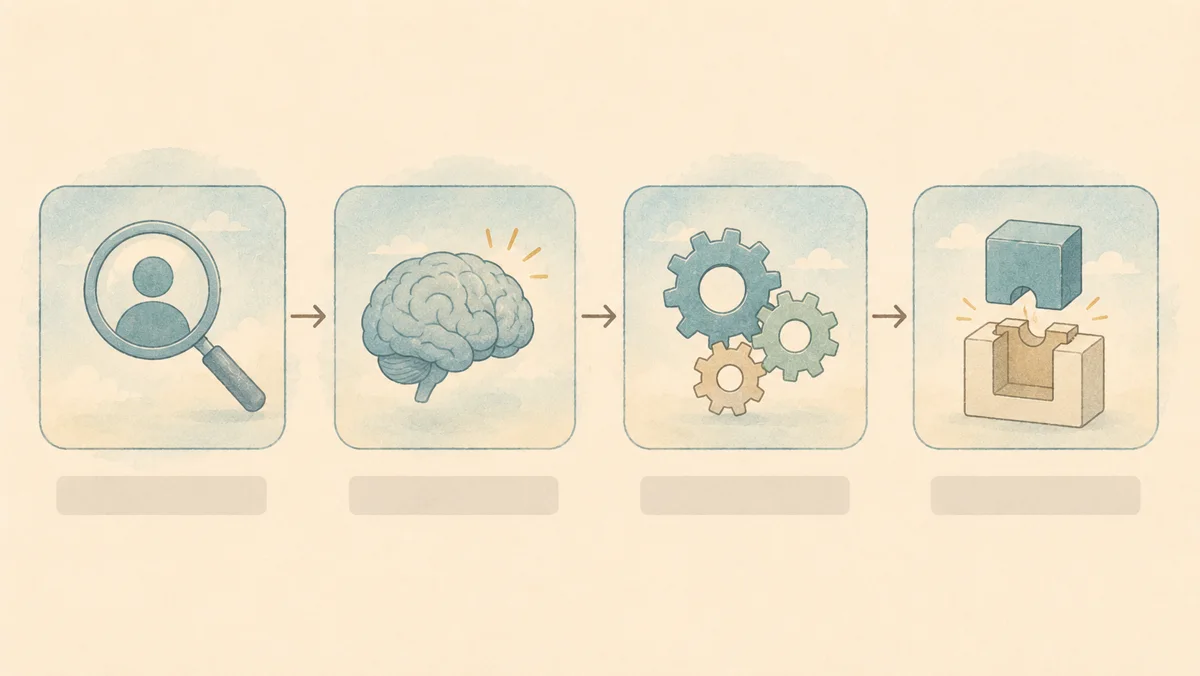
AIGamification in SaaS is more than a playful UI feature. It is a strategic means of retention, activation and long-term value creation — if you do it right. At its centre are mechanics that influence user behaviour and create positive emotions.
But careful: the line between real motivation and empty gimmick is a thin one.
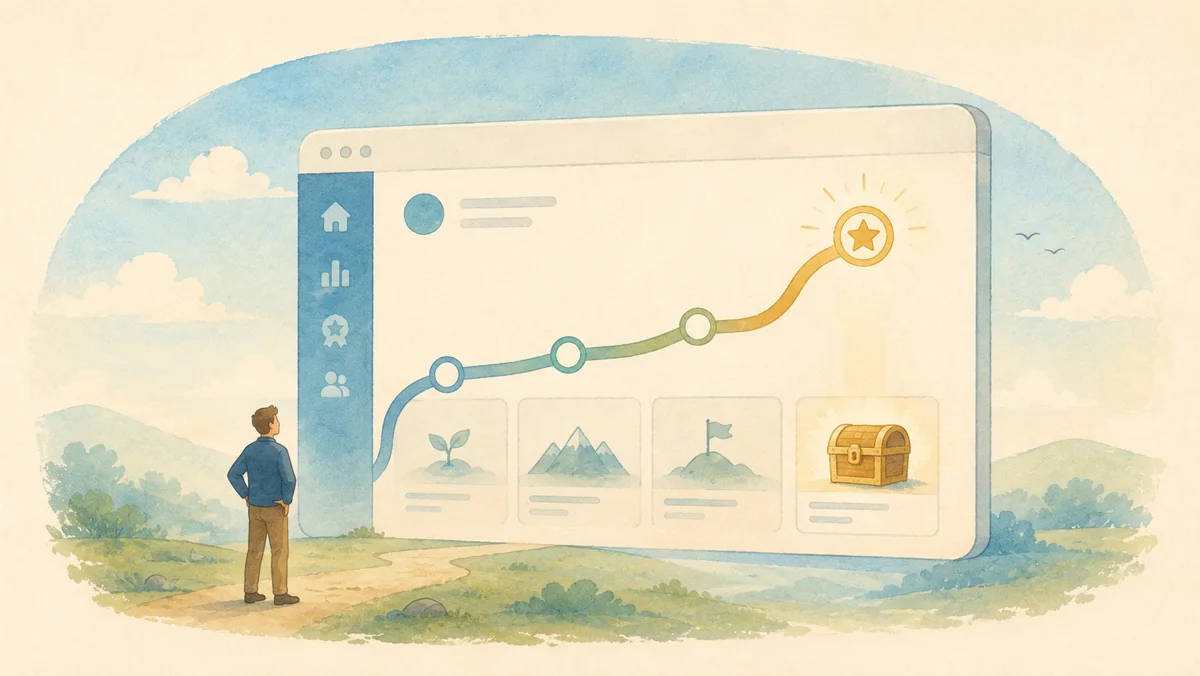
1. Make progress visible — but please with meaning
 AI
AIProgress bars are among the classics of gamification. They work superbly when used properly — namely when they help the user work towards a goal that is relevant to them.
A loading bar for an upload is nice but emotionally cold. Far better would be a progress bar towards the next status level in the product, one that says: you are on your way to becoming a pro. The lesson: progress is not simply progress — it has to sit in the context of the user's goal.
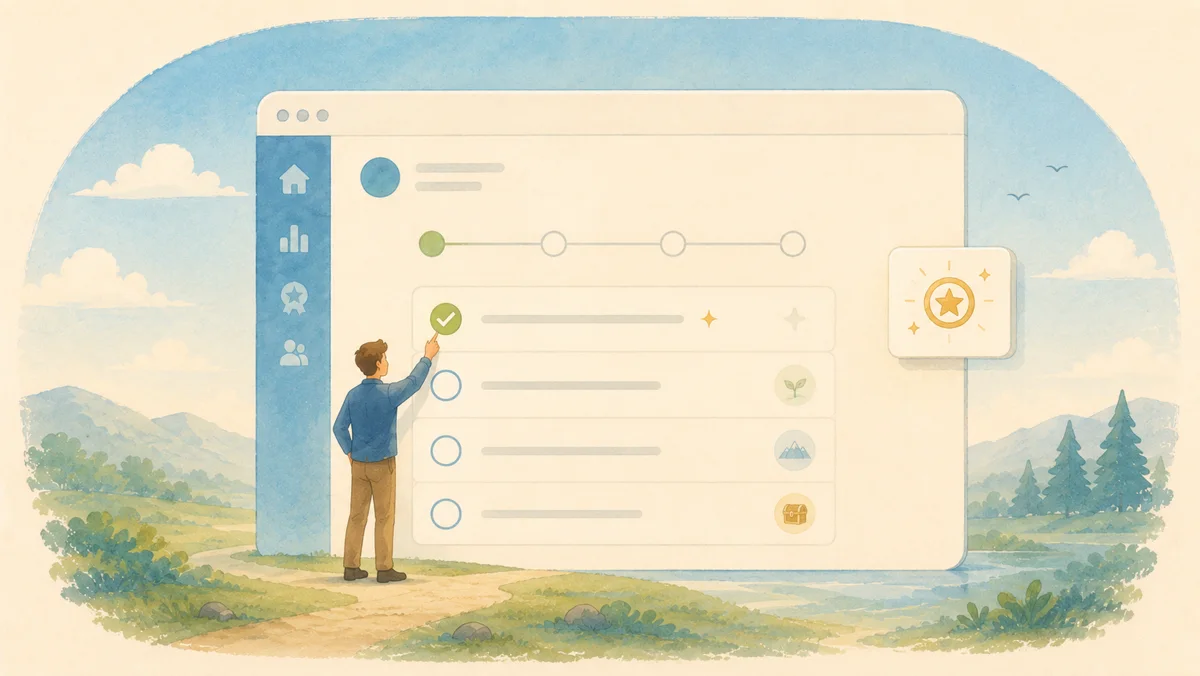
2. Checklists — activation instead of frustration
 AI
AIChecklists are especially effective during onboarding — if they are well designed. They structure the first steps, give orientation and reward small successes. But careful: a checklist must not become a recurring burden. Nobody wants to tick off the same list every day.
Good checklists tell users clearly: "you are on the right track". Tools like Calendly or Notion do this elegantly: a checklist with few, visually appealing elements, perhaps combined with small rewards or a little "success" pop-up on completion.
What matters is that it does not degenerate into an obligation but feels like a game — short, clear, visually rewarding.
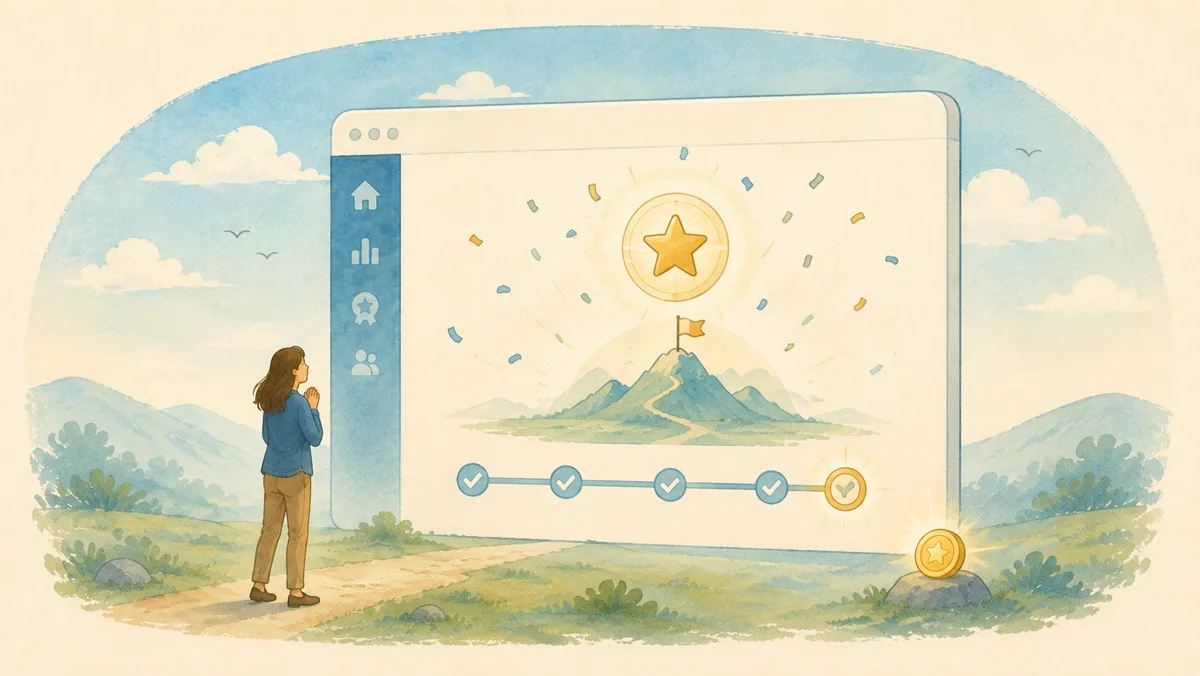
3. Celebrate milestones — but with tact
 AI
AIDigital confetti and animated congratulations have their place, as long as they are used in sensible measure and no more. Celebrations that come too often devalue the experience — like a daily birthday greeting that quickly tips into the absurd.
Good gamification recognises the moment that really has to be celebrated. Congratulating a user because they made their first sale through your platform can be a genuine wow moment — if it feels personal, earned and appreciative.
That is why it takes a sense of drama. A milestone (e.g. "your first month with €10,000 in revenue") should be celebrated not just with confetti but with a real moment — through an interactive animation, a short personalised message ("you are now in the top 5% of the platform") or an invitation to exclusive features.
Landbot and Notion show how small victories can feel great when they are staged with tact.
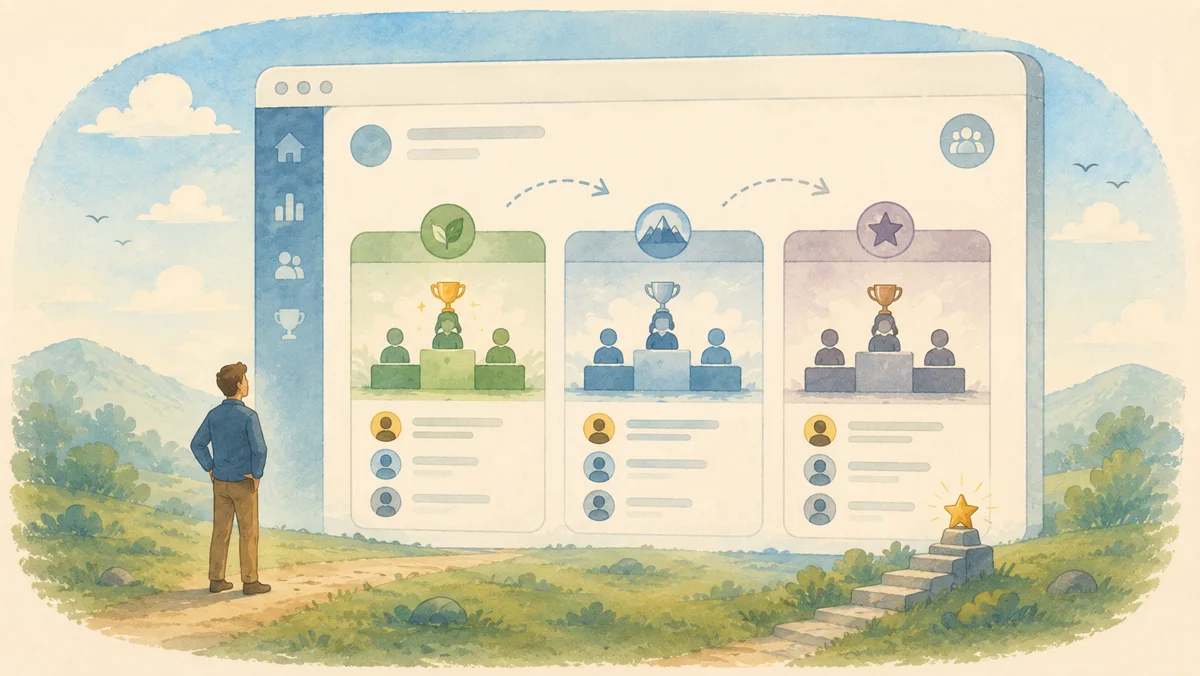
4. Leaderboards: motivation or demotivation?
 AI
AILeaderboards can motivate users enormously — or frustrate them. Because where there are rankings there are losers. The key lies in designing leaderboards so that they stay relevant and reachable.
Duolingo shows how: there is not one leaderboard but leagues, in which users at a similar level of activity compete against each other. Anyone who drops down does not immediately face the top performers again a week later.
For SaaS products this approach is worth gold. Instead of a global ranking you could show weekly "team challenges" or progress within a peer group. That creates motivation without frustration. And by taking past activity into account, newcomers can be protected from being overwhelmed.
5. Badges and trophies: easy to build, hard to make relevant
 AI
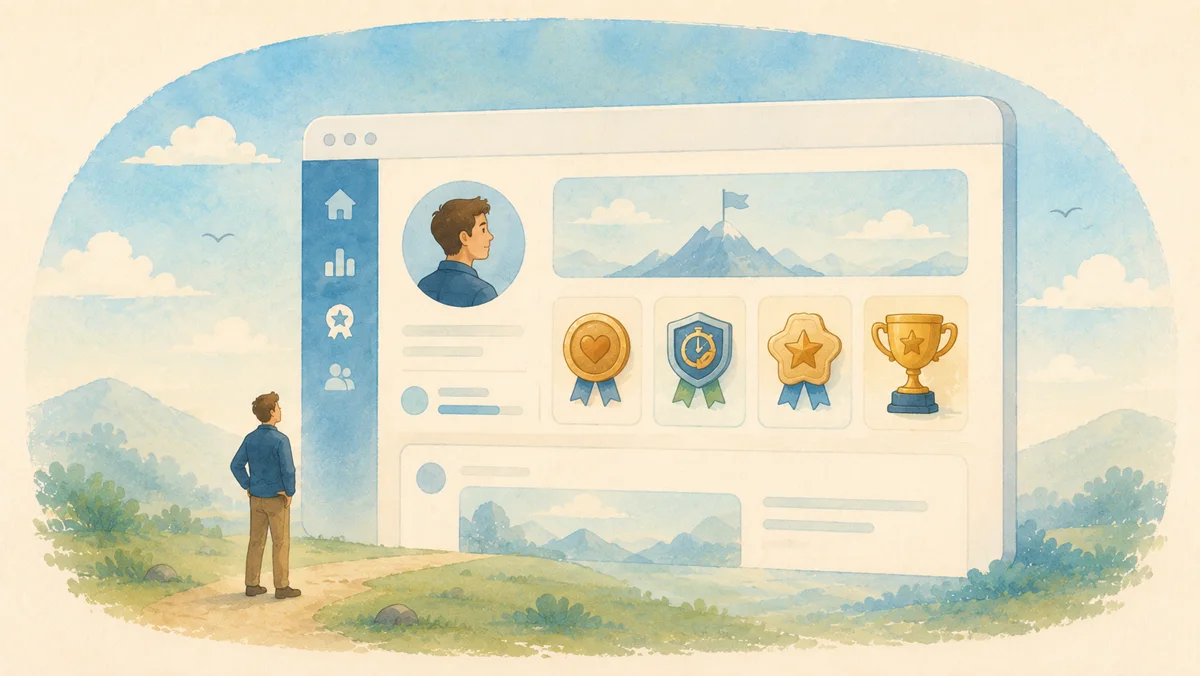
AIBadges are technically easy to integrate, but their effect depends heavily on their meaning. Not every user responds to badges — and that is where the work begins: a badge should not just be a colourful icon but should carry an emotional story with it.
Perhaps a "customer favourite" badge for top ratings, or a "punctual payer's medal"? What matters is this: the badge has to mean something — to the user, not only to the product.
A badge that simply means "account fully set up" is not an honour but an obligation. Badges have real effect when they honour individual achievements: "3 months of every invoice issued on time", "received your first customer praise" or "more than 50% of your income comes from regular customers".
It is even more effective to make badges visible — in the profile, in email signatures or on publicly shareable pages. The message is: "I achieved this, and I am proud of it."
Whoever creates such status signals will quickly see that users voluntarily do more in order to earn them.
6. Rewards: the "earned lunch" effect
 AI
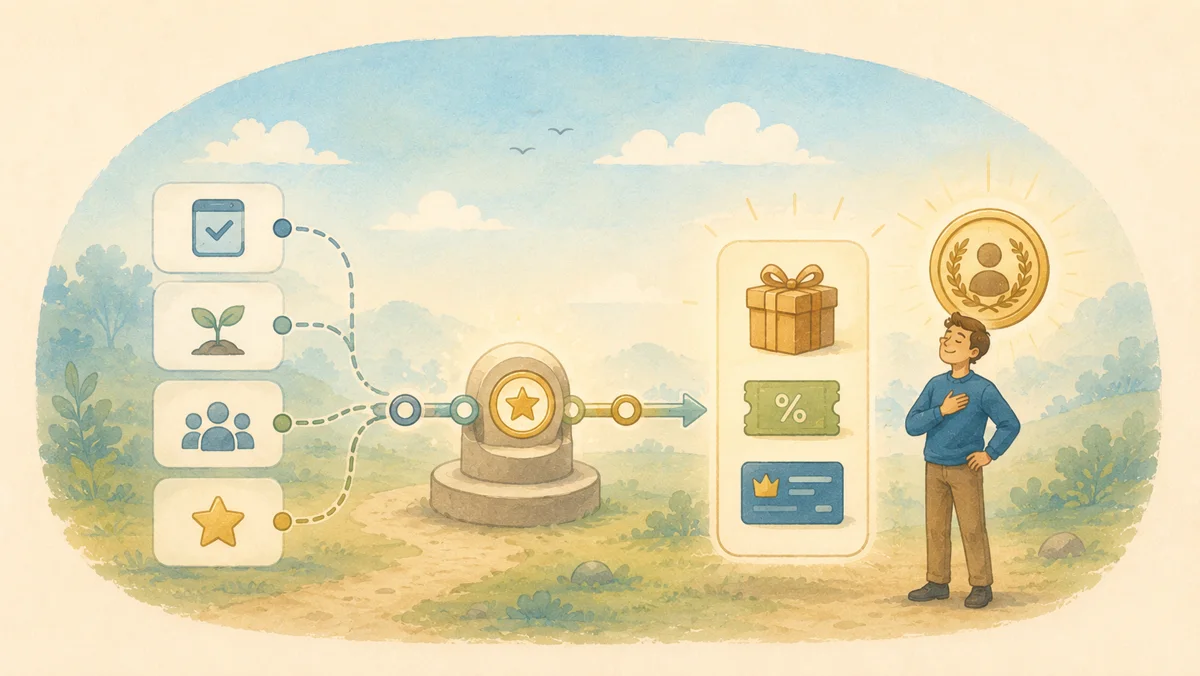
AIRewards work — but they have to be earned. The psychological effect of tying a concrete achievement to a concrete benefit ("earned lunch") is well documented. This method is pragmatic and works particularly well for extrinsically motivated tasks.
However: too much extrinsic reward can damage intrinsic motivation. The art lies in combining the two — one should not replace the other.
Classically we distinguish extrinsic (e.g. vouchers) from intrinsic (e.g. pride, status) rewards. Gamification that relies only on extrinsic reward ("do X and get Y") risks destroying intrinsic motivation. That is why rewards should be used in a way that is measured and valuable at the same time.
A good example is Vodafone's "wheel of fortune" campaign: users get to spin a wheel regularly, with 500 MB of data one time and a surprise benefit another. In the SaaS context similar "playful rewards" could be introduced — a monthly "power-user wheel", say, with exclusive features or upgrades as the prize.
7. Status points vs. exchangeable points
 AI
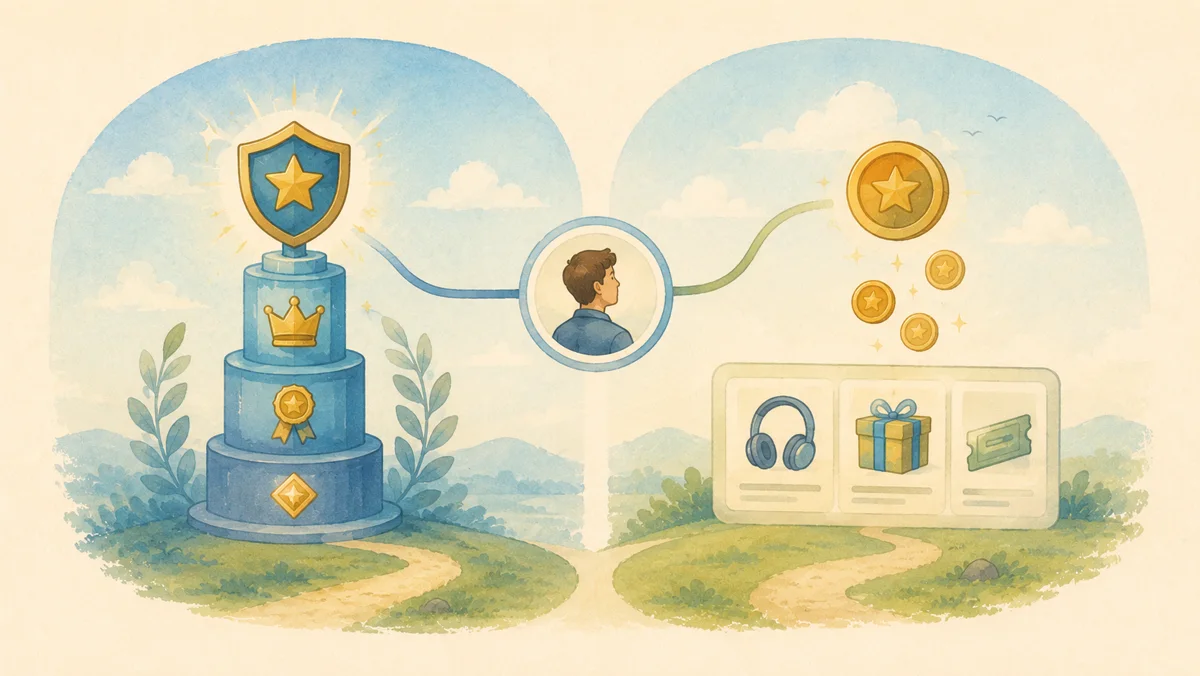
AIAn often overlooked aspect is the distinction between status points and exchangeable points. While exchangeable points act as a currency that can be traded for other benefits, status points stand for lasting recognition.
They convey prestige, belonging or expertise — as frequent-flyer programmes do. In the B2B SaaS context in particular such status systems can create deeper customer attachment, for instance when high activity or reliability on the platform is visibly rewarded.
In a SaaS environment such points could show, for example, how reliably a customer interacts with their own end customers ("your customers' payment behaviour is 20% above average") or how successfully an agency runs campaigns.
What matters is that these points do not feel arbitrary. They have to be charged with meaning — through visible levels, new unlocks or a visible display in the user profile.
8. Personalisation: gamification for the advanced
 AI
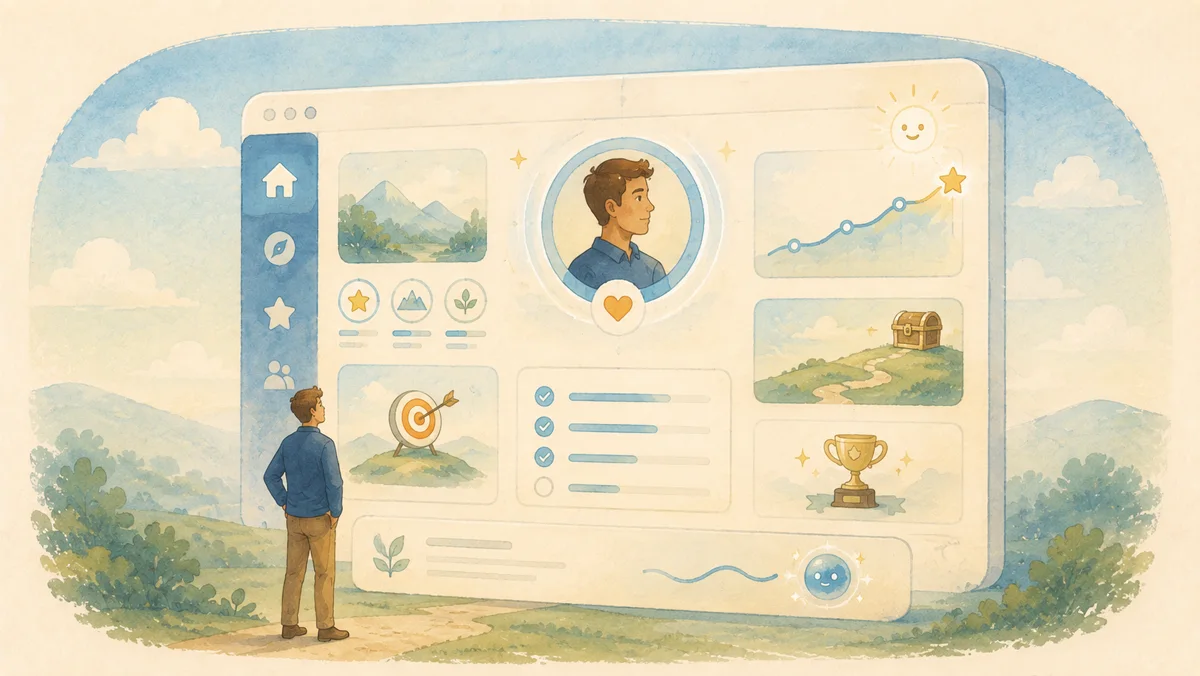
AIPersonalisation is the supreme discipline of modern gamification. If your SaaS offers the chance to adapt the user experience individually — through avatars, dashboards or recaps in the style of "Spotify Wrapped" — a strong feeling of belonging and recognition arises.
AI-based systems in particular open up new room here. Gamification does not have to be loud or shrill. Sometimes it is the subtle, personal address that makes the difference.
Individualised avatars, dynamic home screens or personalised challenges (based on past activity) also create emotional attachment and the feeling: "this app understands me." In tools with daily or weekly touchpoints (CRM, time tracking, project management) in particular, personalised gamification can make the difference between habit and enthusiasm.
In closing
 AI
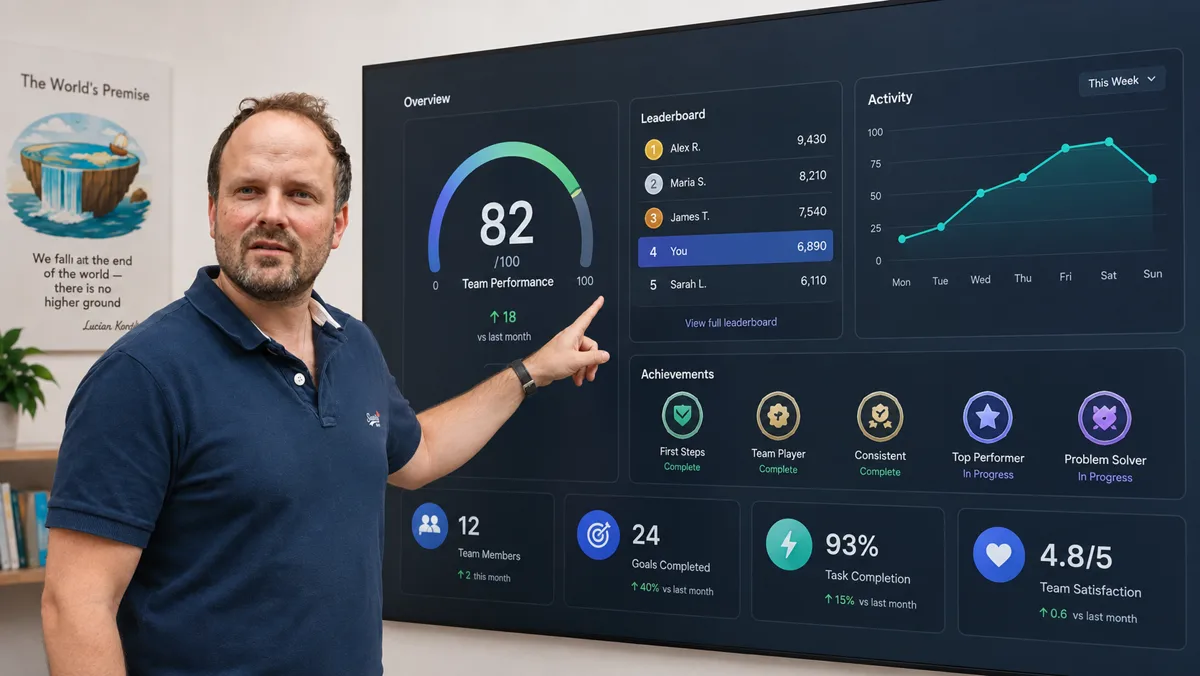
AIGamification in SaaS is not gimmickry. It is a systematic instrument that — designed with empathy — can help activate users, hold them for the long term and even improve product-market fit.
But: what works only works in the right context. Instead of implementing as many game mechanics as possible, you should ask yourself: what does my user really want to achieve — and how can I give them the feeling that they are well on the way there?
8 examples of SaaS gamification
Gamification is not an all-or-nothing game. Some tools use it in a targeted, discreet way — others build whole user experiences on it. What matters is not the amount but the fit. Which solution fits the product, the target group, the maturity of the users?
The following eight examples show how varied, effective and sometimes charming gamification in a SaaS setting can be.
1. Freshdesk — customer service as quests and levels
 AI
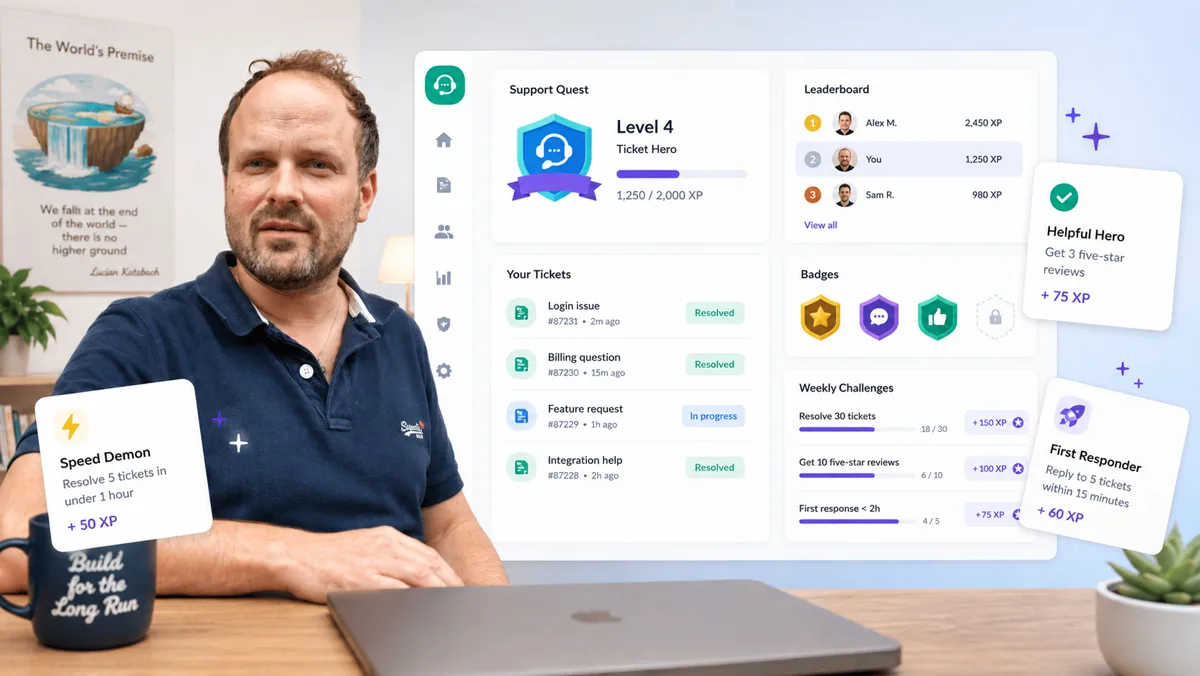
AIFreshdesk turns the daily routine of support teams into a light game with clear rules. Customer support staff collect points, level up, unlock rewards and badges — and regularly get new "quests": small challenges announced through pop-ups.
Leaderboards round the system off and create a feeling of competition — though within clear, reachable limits. That turns a repetitive activity into a playing field that makes progress, performance and fun visible.
"Freshdesk shows impressively how motivation can be awakened in daily support routines — with a system that unites reward and development."
2. Asana — unicorns for completed tasks
 AI
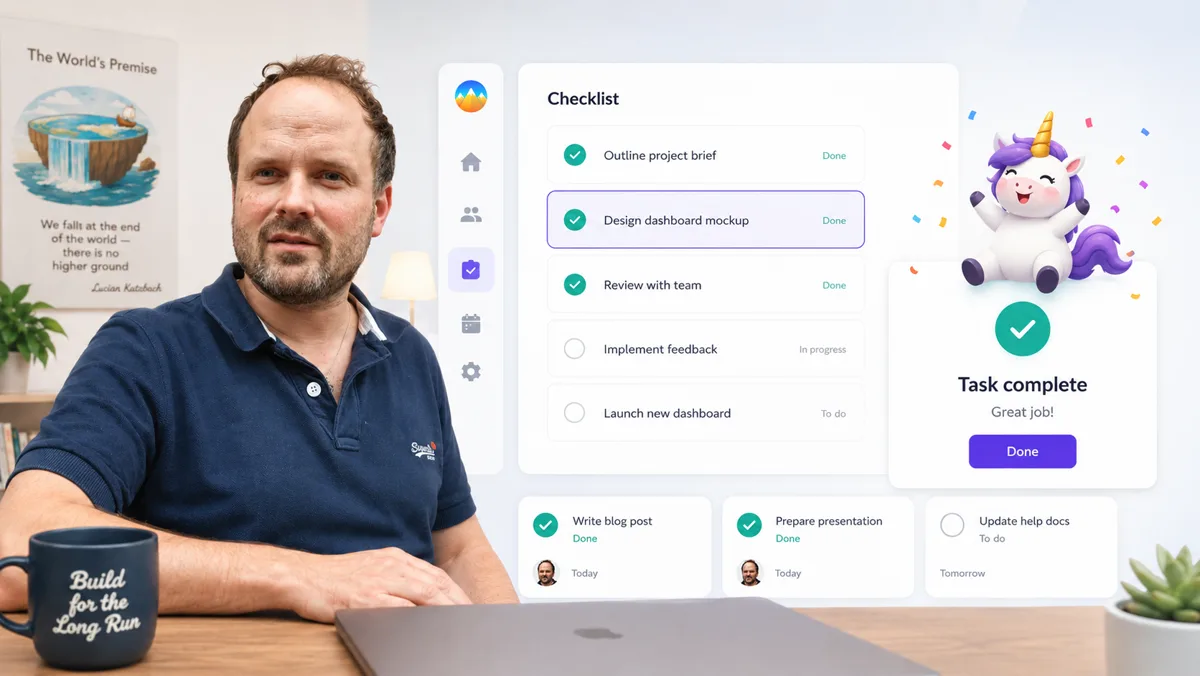
AIAsana proves that small gestures can have a big effect. Users who mark a task as done are occasionally rewarded with a screen full of unicorns, yetis or other fantasy creatures.
It happens at random, not with every interaction — and that is exactly what keeps the charm alive. Onboarding is additionally supported by checklists that are built to look appealing and give a clear structure at the start.
"Gamification does not have to be complex. A flying unicorn at the right moment is sometimes all a user needs to feel seen."
3. Keyhole — 550% more conversions from one checklist
 AI
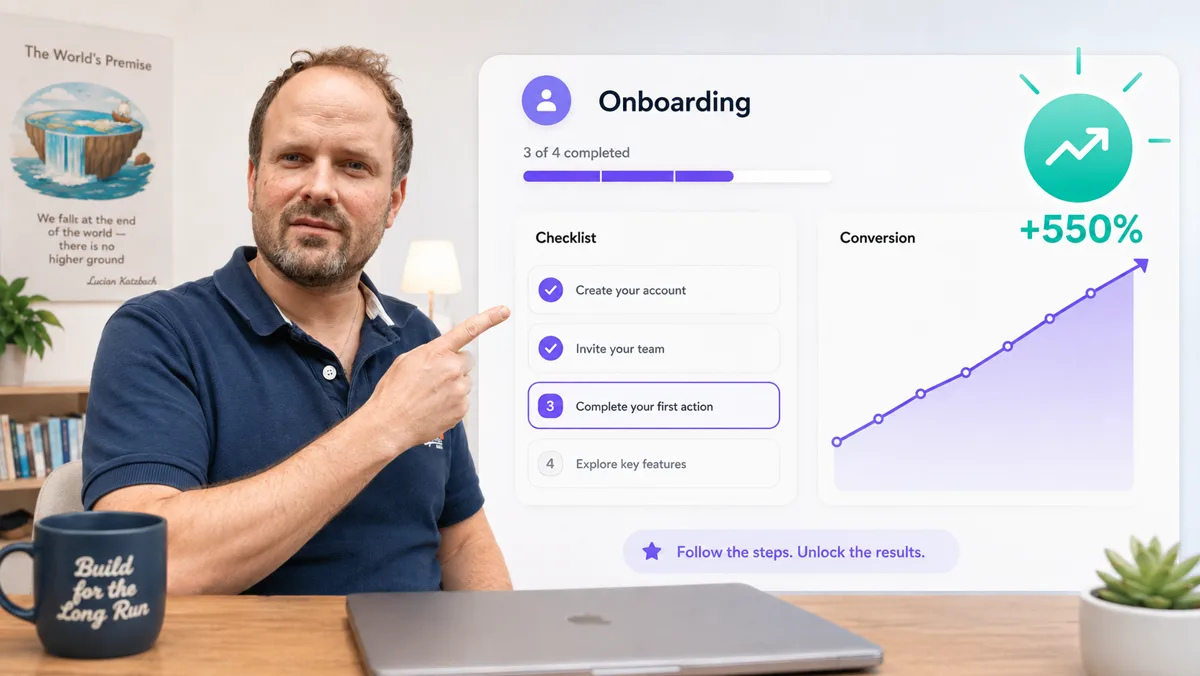
AIKeyhole, an analytics tool for social media, shows how effective even simple gamification elements can be: an interactive onboarding checklist built with UserGuiding raised the conversion rate by a full 550%.
The trick: users are led through the start process by small partial successes and clear points of orientation. This checklist was designed not only to be functional but to be motivating — a prime example of "low effort, high impact" gamification.
"Sometimes a good checklist is all it takes to turn a prospect into an enthusiastic user."
4. HubSpot — certificates with status appeal
 AI
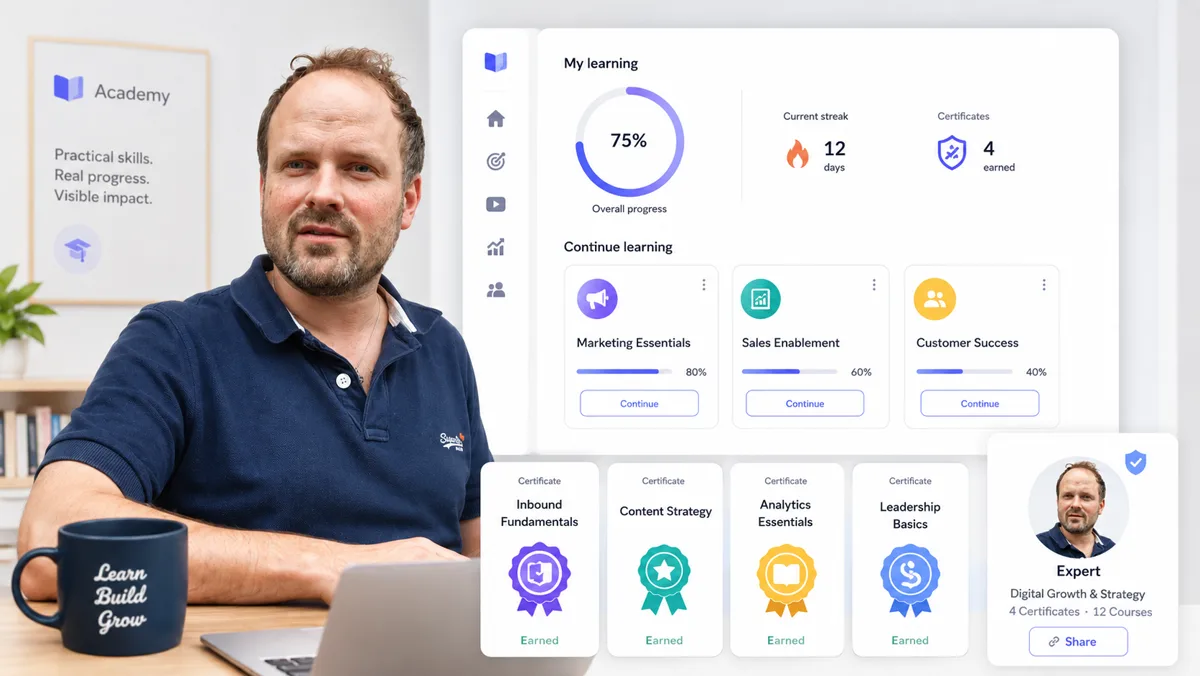
AIHubSpot Academy uses gamification on a different level: learning here is rewarded with visible status. Anyone who completes a course gets not only a badge but an official certificate — including the option to show it on LinkedIn, in a CV or on their own website.
The gamification system here does not work through points but through social recognition and personal development — a strong motivator in the B2B world.
"HubSpot shows that status and expertise can be the most valuable rewards — if you make them visible."
5. UpViral — referral marketing as a competition
 AI
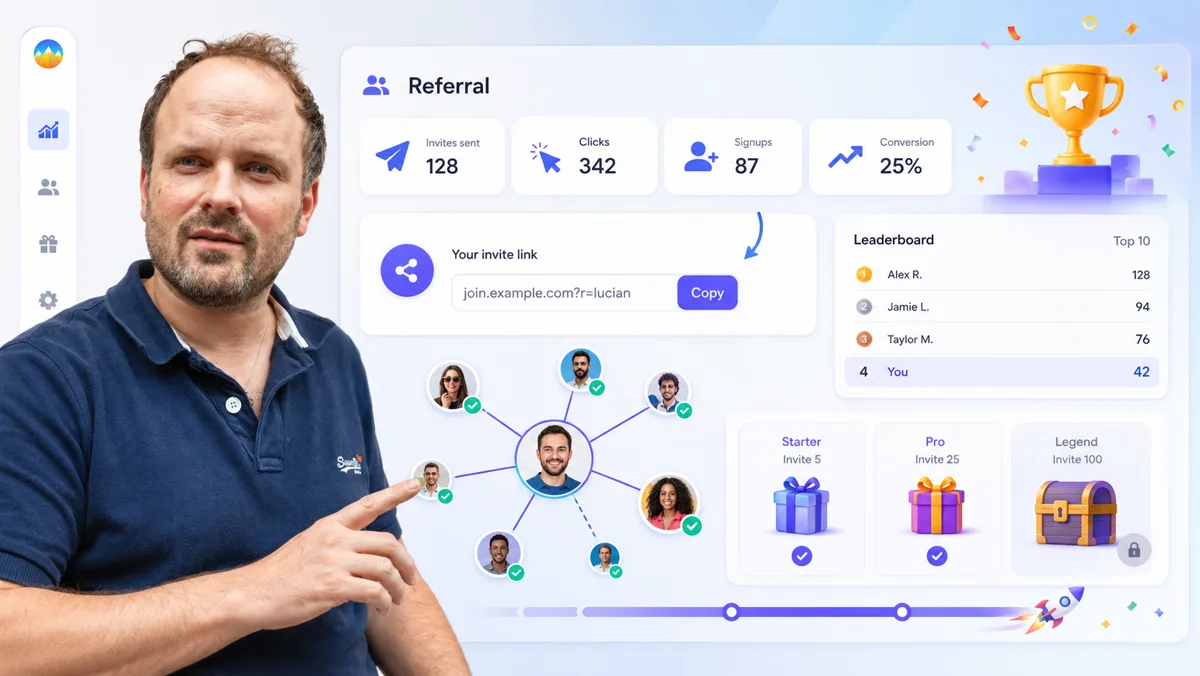
AIUpViral turns otherwise often dry referral marketing into a real competition: users get individual referral links they can share. Every lead successfully brought in earns points — and whoever collects the most wins prizes.
Leaderboards provide the overview and the tension, rewards the motivation. That turns a marketing measure into a gripping challenge people take part in voluntarily — and with real ROI.
"Gamification becomes powerful when it connects to business goals — as UpViral demonstrates with viral campaigns."
6. ProdPad — more free time through worthwhile actions
 AI
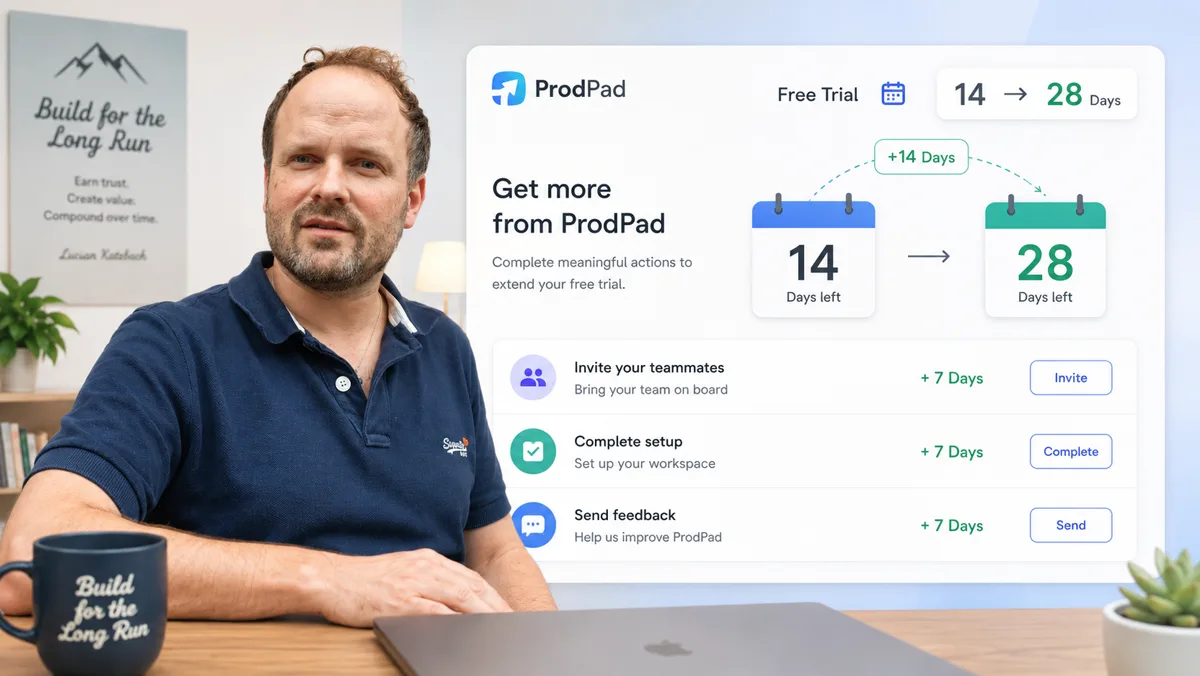
AIProdPad has a simple but brilliant model: users start with a free trial — and can extend it through certain actions. Invite colleagues, set up a user profile or give feedback, and you get extra days of free use.
The reward system works as a gentle incentive towards more intensive use and at the same time brings real value to ProdPad itself: more data, more retention, better activation.
"When users can reward themselves through worthwhile actions, a relationship arises that rests on fairness and appreciation."
7. Kaizo — support with a ninja mentality
 AI
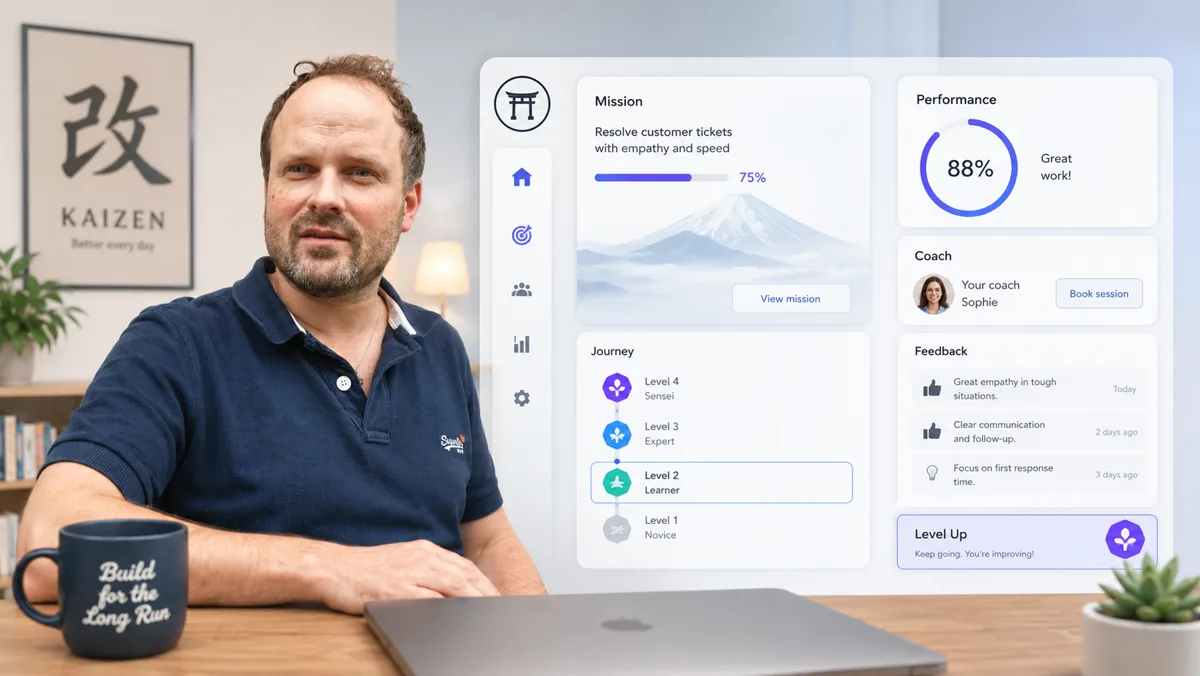
AIKaizo combines gamification with AI to make support teams more efficient and more motivated — with an unusual but charming approach: the "dojo" system. Support agents take on roles like ninja apprentice or master, level up and get regular feedback on their own performance.
The interface is visually playful but functional. By building in game mechanics, performance is not only measured but celebrated.
"Kaizo turns performance management into a journey — with missions, development paths and the feeling of experiencing progress."
8. Plecto — here gamification is not a feature but the core product
 AI
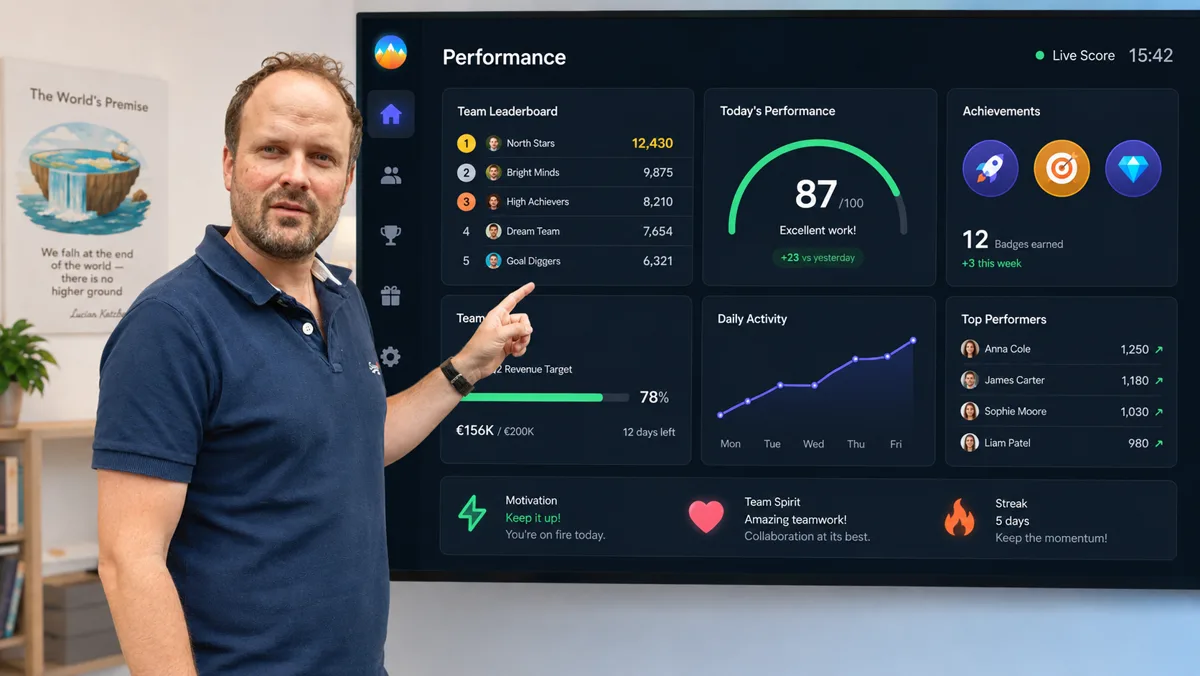
AIPlecto is not software with gamification elements — it is gamification. As a platform for visualising performance it turns company metrics into scores, leaderboards, achievements and badges. Employees see in real time what their contribution to company success looks like — and can measure themselves against others or reach goals together.
Plecto offers gamification as a management instrument — and thereby makes tangible what motivation in everyday work can look like.
"Plecto is proof that gamification does not have to be an accessory — it can be a new way for teams to work, grow and win."