Product & growth
Value as a magnet: how platform logic, user motivation and team empathy build real loyalty

Loyalty starts long before the conversion
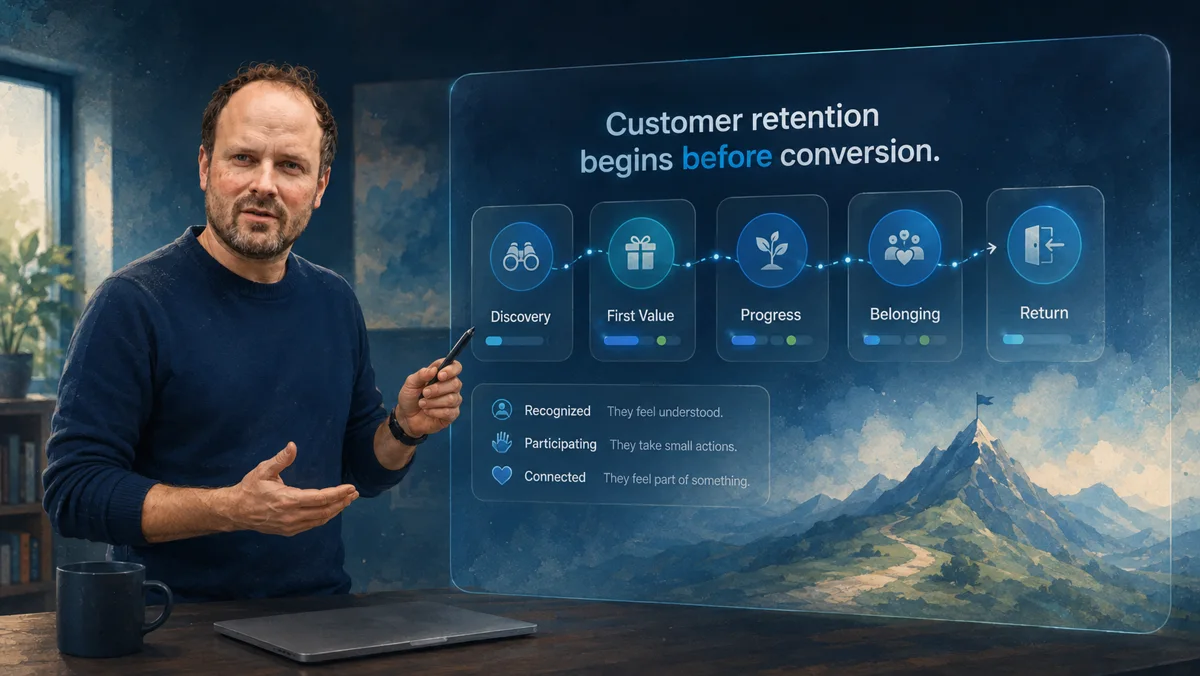 AI
AIWhy? Because features do not create attachment. Content alone does not motivate.
What sticks is what moves people: progress, participation, recognition.
Loyalty does not start with onboarding. It starts with the stance a product team takes when it thinks the user experience through with engagement in mind.
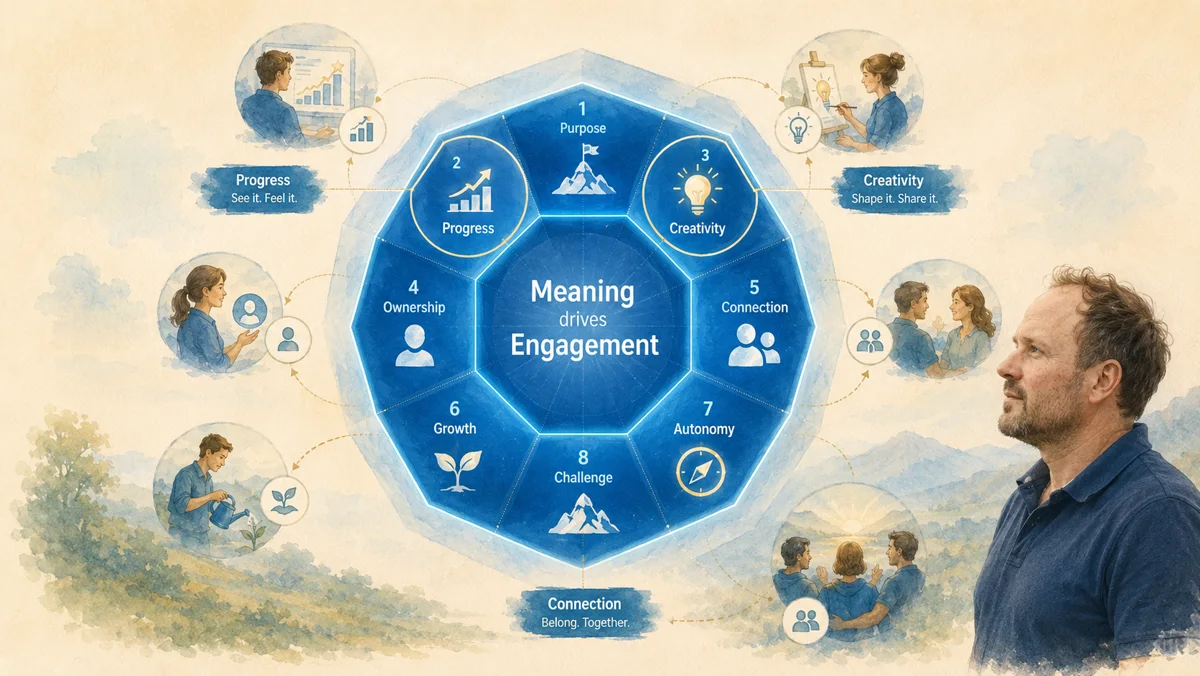
Engagement does not come from volume – it comes from meaning
 AI
AIOr it can be small and still draw people in.
The difference? Meaning.
In his Octalysis framework, Yu-Kai Chou names eight core drives that motivate behaviour. The most effective ones in digital platforms are:
- Core drive 2: development & accomplishment — "I am getting somewhere"
- Core drive 3: empowerment of creativity & feedback — "I can shape this"
- Core drive 5: social influence & relatedness — "I am part of something"
When a product touches those levels, attachment comes not from features but from motivation, a sense of agency and connection.
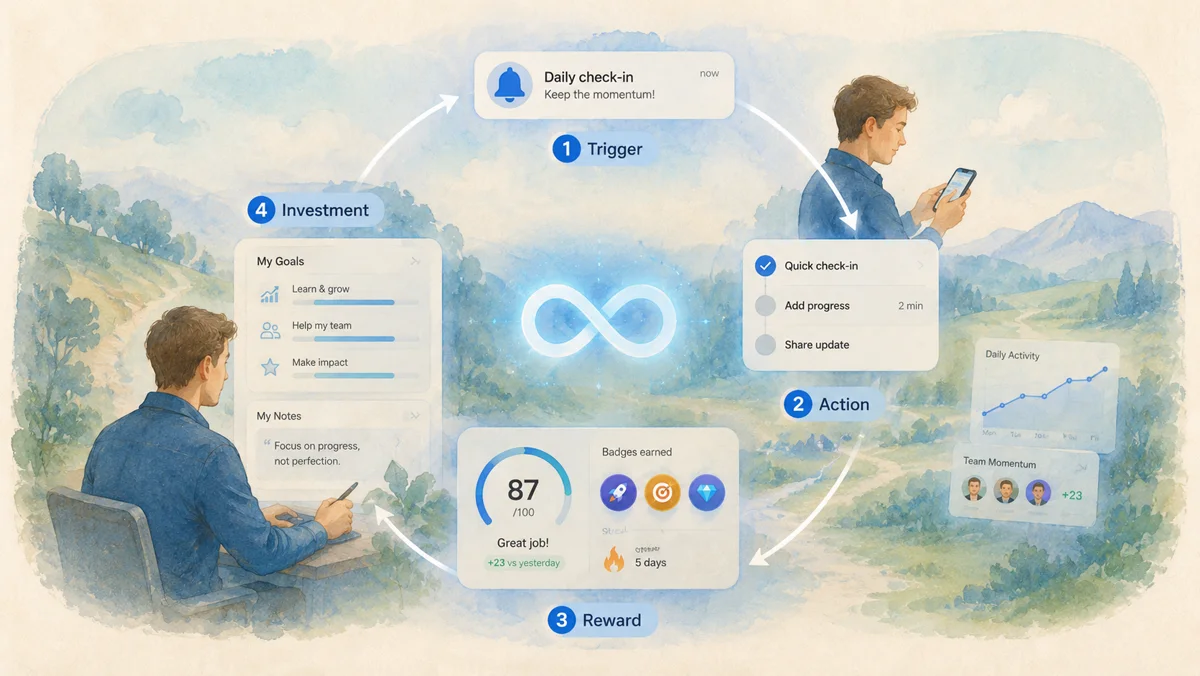
From use to habit: the Hooked model
 AI
AI- Trigger — a push notification, say, or a learning goal
- Action — a quick action, as simple as possible
- Variable reward — feedback, progress, a social response
- Investment — a contribution that creates future value (flashcards you made yourself, for instance)
Platforms that take that loop seriously grow from a tool into a daily companion.
The goal is not stickiness. The goal is a recurring experience that is worth it.
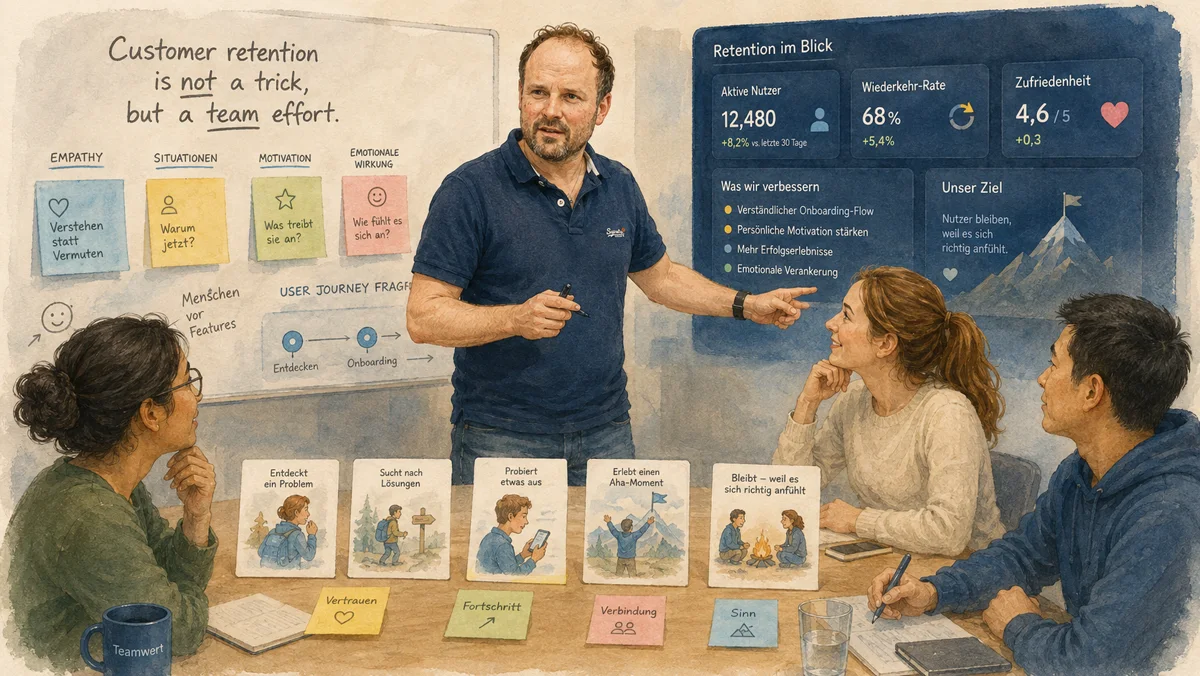
Loyalty is not a trick – it is a team achievement
 AI
AIAnd it is not an external target — it has to be thought through internally.
A product team that wants to create real attachment needs:
- Empathy — not only for the journey, but for users' daily lives
- Communication — between UX, engineering, strategy and marketing
- Responsibility — for the emotional effect of every product decision
Empathy training in a team is not a nice-to-have. It is a precondition:
you cannot design motivating experiences without feeling what users feel.
User Stories should not be read like tickets but like miniatures of real situations in people's lives. A great team sees it: delivering the function is not enough — we have to connect emotionally.
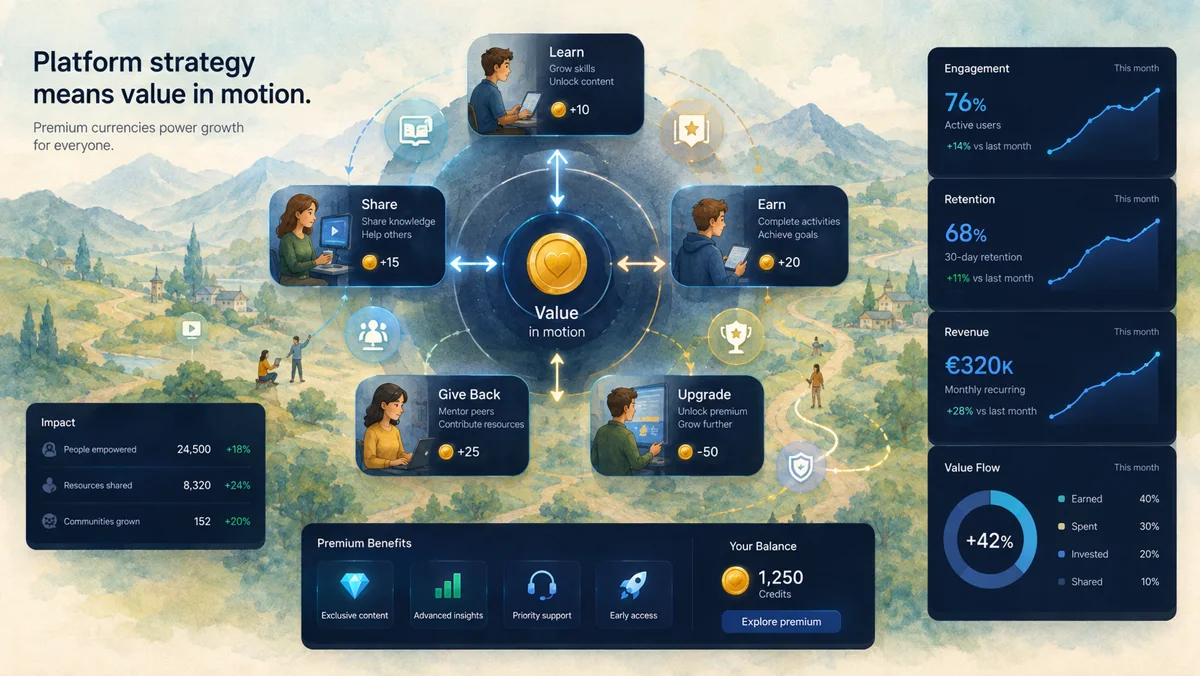
Platform strategy means putting value in motion
 AI
AIA strong example: the idea of an exchange for study materials.
At first that sounds like a losing proposition ("then they will stop buying anything"), but it is in fact an application of gamification technique #75: exchangeable points.
Users receive points or resources they can freely trade, swap or pass on.
The psychological effect: ownership, connection, participation.
The commercial effect: higher engagement, lower churn.
The trick in it: those who give, stay.
And anyone who notices that their contribution helps others experiences agency through exchange.
Premium currencies: from game mechanic to platform strategy
Long established in gaming: premium currencies, bought with real money and traded for advantages, items or status.And yes — trading characters in the MMORPG Tibia was once punished severely, and today it is commercialised, officially handled with a cut of the revenue (see CipSoft's character bazaar).
What does that mean for platforms outside gaming?
There is strong potential here too:
- Users can earn or buy points
- Those points can go towards extra content, priority or personalisation
- They create a second circuit of value beyond the subscription itself
An example:
A platform could introduce coins that buy particularly useful content or tools — or time, extra features, mentoringor certificates.
Those coins can be earned through activity, boosted by a subscription or accelerated by buying them outright.
That creates a double incentive:
- Engagement gets rewarded
- Paying stays voluntary — but attractive
And how does that help the business?
Systems like this do not only help the user. They help the provider raise revenue per active user without relying on pure sales mechanics.Instead of constantly chasing new leads, value grows inside the existing base.
Gamification mechanics also help with:
- Predictable revenue through subscription plus in-app system
- Engagement metrics as early indicators of retention
- Upsell paths that fit naturally into the experience
In closing: engagement grows on the inside, not the outside
Value is not a marketing slogan. It is a system.A system that grows out of the right thinking:
- Motivation before mechanics
- Habit before reach
- Empathy before efficiency
And that thinking only appears in teams who want to understand their users, not merely analyse them.
Teams who ask "how do we actually help?" rather than only "what can we sell?"
Work that way and you are not building products.
You are building platforms that last.